
The Seasonal Edit: A Blizzard Garden Checklist
Yesterday morning, I was at a cousin’s 50th birthday party, a full 70s theme, disco included. By noon, I learned a state of emergency had been declared. Some were comparing it to the Great Blizzard of 1978, when my cousins and I were just kids.
Still in my bright patterned blazer, bell-bottom jeans, and disco ball earrings, we stopped at the grocery store to stock up, just in case.
The Blizzard of 2026 moved in overnight.
At first light, I heard the snow plows, only to learn hours later they were being pulled from the roads because of the heavy snowfall.
Drifts rose to shed doorknobs. The wind sculpted white dunes pressed against wood fences, more Nantucket nor’easter than disco.
And suddenly, the garden — quiet all winter — was carrying weight.
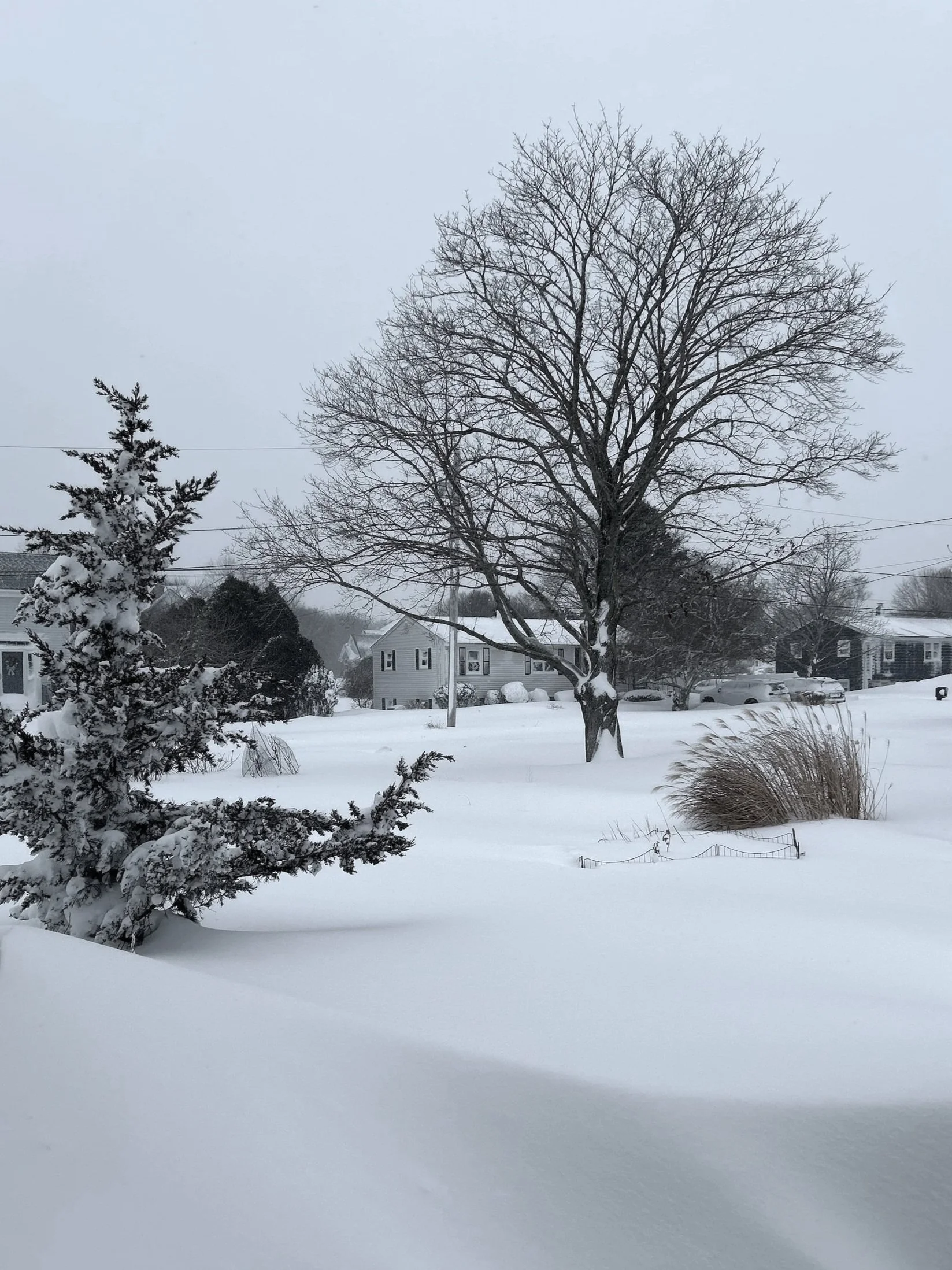
Garden with juniper, miscanthus and snow dunes after the historic Blizzard of 2026. Photo by Parsley & Petal.
Snow, on its own, isn’t the enemy. It insulates perennials, buffers roots from temperature swings, and blankets the soil in seasonal stillness.
But weight is different. Wind is different. Salt is different.
Knowing when to step in, and when to let winter do what winter does, is part of becoming a thoughtful gardener in the Northeast.
Heavy snow, strong winds, and blizzard conditions can dehydrate foliage and cause snow damage to shrubs, boxwoods, arborvitae, and other evergreens, but knowing when to intervene can prevent long-term harm.
What To Do During a Blizzard or Heavy Snowstorm
(And What To Leave Alone)
1. Leave Ice Alone
If branches are encased in ice, resist the urge to knock it off. Striking frozen limbs often causes more damage than the ice itself. If it doesn’t release easily, it’s not ready.
2. Gently Brush — Don’t Shake
If snow is light and branches are severely bent, use a broom and lift upward from underneath. Stop if you need force. Never shake a tree. Never hit it with a shovel.
3. Watch Columnar Evergreens
Arborvitae and upright junipers are prone to splaying. If they’re bending but not split, wait. Many rebound once weight is gone. If fully opened, loosely wrap with soft twine after the storm. Support, don’t constrict.
4. Snow Can Be Protective
Perennials buried under drifts are often insulated. Resist the urge to uncover them.
What to Do After a Blizzard
This is triage, not renovation.
5. Assess Before You Act
Walk the garden. Look for cracked limbs, hanging branches, split shrubs, exposed roots. Take notes. Avoid heavy pruning.
6. Prune Only What Is Clearly Broken
Remove torn or hanging branches with a clean cut just outside the collar. Do not reshape dormant plants. Large limbs near structures? Call a professional.
7. Mind the Salt
Keep salty snow out of planting beds. After melt, sweep visible salt and flush soil once thawed. Damage often appears weeks later.
When Heavy Snow Begins to Melt
Patience matters most.
8. Expect Delayed Damage
Bronzing evergreens and lifeless hydrangeas may recover. Wait before cutting anything that isn’t clearly broken.
9. Re-Tie, Then Release
Remove temporary twine supports in early spring. Plants need air and movement.
10. Resilience Is Built In
Established Northeast gardens are stronger than they look. Snow is weight. Wind is pressure. But dormancy is also design.
Yesterday, I was adjusting disco ball earrings in the grocery aisle. Today, I’m studying snow pressed against boxwoods.
The shift feels abrupt, but the rhythm is familiar. Celebration. Preparation. Endurance.
The garden will carry this weight for a while. And then, quietly, it will let it go.
For those who like a clear plan when the weather turns, I’ve put together The Blizzard Edit (PDF), a simple, printable garden checklist to guide you through the storm and its aftermath.
Get the printable
Get The Seasonal Edit checklist to keep by your potting bench.
The Seasonal Edit
A growing collection of seasonal notes, observations, and printable checklists throughout the garden year.