
What I’m Learning by Not Overplanting
I thought more plants would make the garden feel finished.
When we first moved into our house, every bare patch of soil looked like a problem to solve. I was a city girl who knew nothing about growing grass, much less a garden. If there was space, surely something should go there. A hydrangea. A salvia. At minimum, a hopeful little annual I’d convince myself was “just temporary.”
I’ve never met an empty space I didn’t want to style.
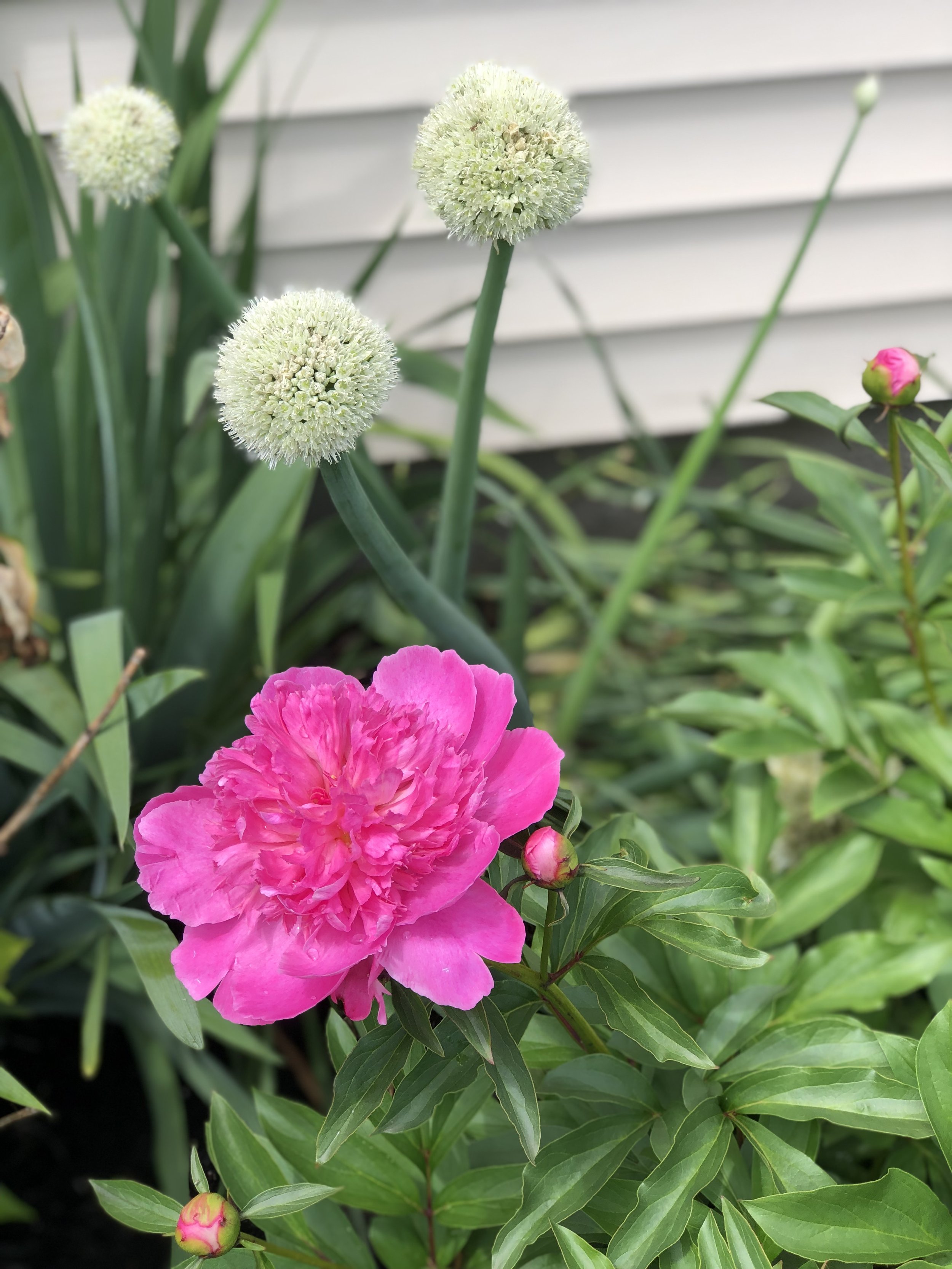
Proof that restraint can still be pink. Photo by Parsley & Petal
Gardens, like wardrobes and rooms and layouts, don’t reward urgency. They reward restraint — which is significantly less exciting when you’re holding a Sneeboer spade and a tray of new plants.
When I overplant, everything competes. Leaves blur together. Heights flatten out. What I thought would feel lush ends up feeling crowded — like I dressed the garden in every accessory at once and called it a look.
So I’ve started pulling back.
Not dramatically. I’m not staging some minimalist intervention. I’ve just begun leaving space between hydrangeas. Resisting the urge to tuck something into every open inch. Letting a bed look slightly unfinished instead of immediately “fixing” it.
And something interesting happens in that restraint.
The eye slows down.
You notice structure instead of just color. The curve of a path. The rhythm of repetition. The way one full section makes a quieter one feel intentional instead of empty.
It feels less like decorating and more like editing.
Editing requires trust — trust that what’s already there is enough, or will be. Trust that space isn’t failure. Trust that restraint isn’t neglect.
This spring, I’ll be leaving things alone a little longer.
To watch how the light moves before adding more. To see what fills in naturally.
To resist solving something that isn’t actually broken.
The garden doesn’t need to be packed to feel abundant.
Sometimes it just needs room.
For my mother—still planting beauty, in soil and in people.