
Stop and Smell These Roses
I was thinking about airplanes the other day. More specifically, I was thinking about the housing crisis, which somehow led me to airplanes.
Stay with me.
For most of human history, where you lived was constrained by how far you could travel on foot or horseback. Then we invented the wheel and built trains, cars, highways, and eventually airplanes. Suddenly distance became less of an obstacle.
Then came the internet and remote work. Now you can earn a living in one place and live in another. You can own a house thousands of miles from your primary residence, turn it into a business from your phone, and shop for property anywhere in the country without ever leaving your sofa.
None of these things is inherently bad. Most of them are wonderful. That's the problem.
We’ve become very good at inventing things that give us what we want, but we’ve also become less interested in asking what happens after we get it.
We wanted to travel farther and faster, so we did. We wanted everything delivered to our doors. Hello, FedEx, Amazon, DoorDash. We wanted to talk to everyone, everywhere, all the time. Nice to meet you, FaceTime, WhatsApp, and Zoom.
We wanted fame without Hollywood, shopping without stores, work without offices, entertainment without waiting, youth without aging. Done, done, done. Now we want answers without having to figure them out ourselves. How do you do, AI?
Each invention has led to some incredibly powerful and efficient solutions. And because we are human, the immediate reward is more compelling than some theoretical consequence twenty years down the road.
Instant gratification. It's such a childish impulse when you think about it. I want it. I want it now. I'll worry about the rest later.
Except we've become extraordinarily sophisticated at satisfying a remarkably unsophisticated part of ourselves. Somewhere along the way, we've begun removing nearly every bit of friction from our lives. Waiting? No need. Distance? Why deal with it? Effort, boredom, and uncertainty? Delete. Delete. Delete.
Technology keeps promising to eliminate friction. But lately I've been wondering whether some of that friction was actually doing us a favor.
A fast car is exhilarating until speed becomes normal. Money can buy security, freedom, comfort, and convenience, but somehow, the number that once sounded like enough keeps going up, up, up.
Fame looks fantastic from the outside until being seen becomes something you can't turn off. A facelift might make you look younger, but it cannot stop you from getting older. Social media gave us connection, along with an apparently bottomless appetite for attention.
AI can make some jobs stunningly easier while also being spectacularly wrong, with complete confidence.
We get the thing, we adjust to having the thing, and then we want the next thing. Psychologists and economists have a name for part of this: the hedonic treadmill. It has excellent customer retention.
And lest this sound like an observation about everybody else, I'm as susceptible as anyone. I built a publication because I wanted to and almost immediately started watching the numbers. How many people are reading? Is it growing? What happens next? Apparently, creating the thing wasn't enough. I needed to know where the thing was going.
There will always be somewhere else to go: another number, another goal, another purchase, another improvement, another thing that promises to make life easier, faster, prettier, richer, younger, more interesting or more complete.
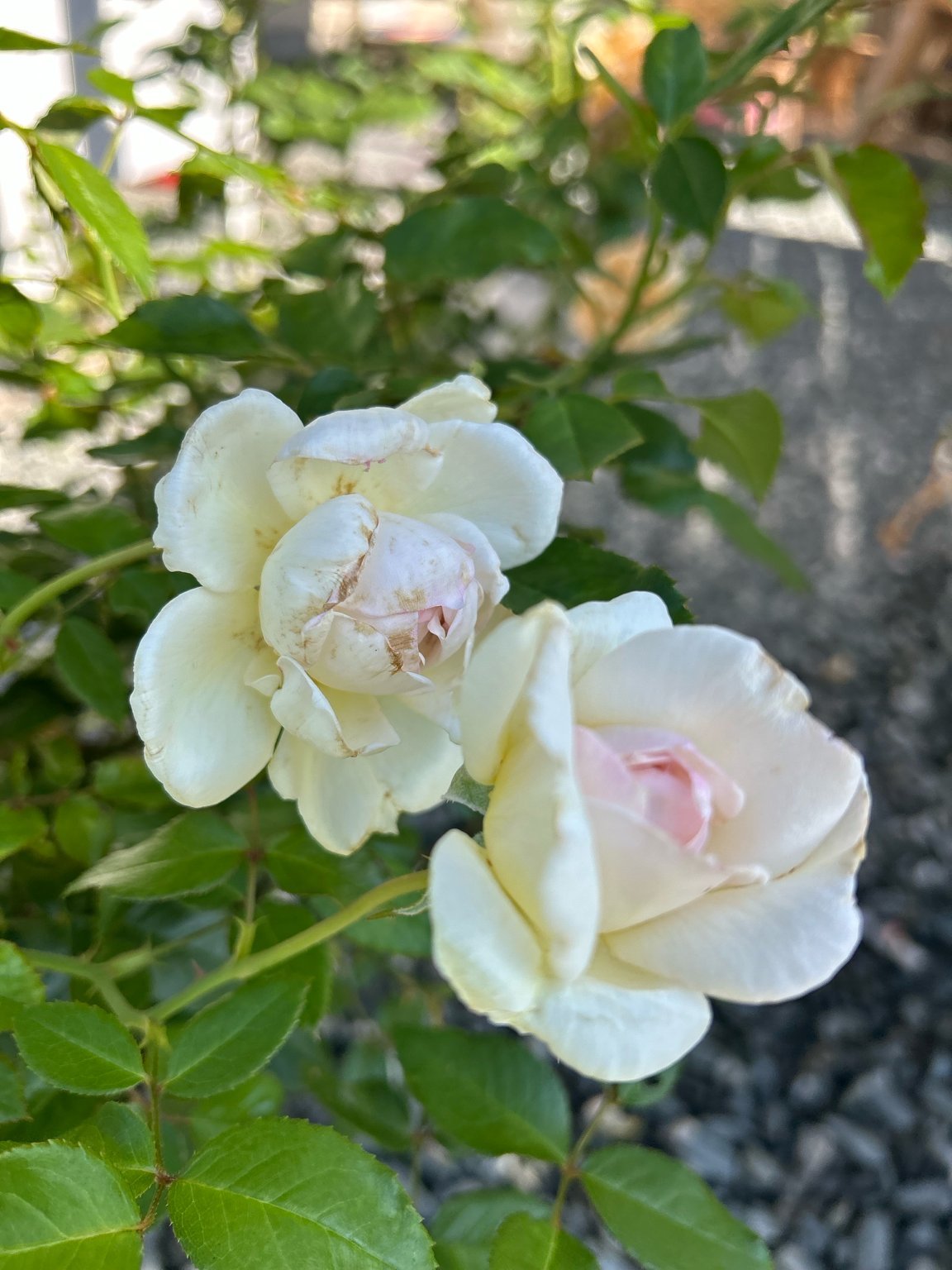
Maybe that's why an expression we've repeated into meaninglessness has survived for so long: stop and smell the roses. We've heard it so many times that we barely hear it anymore. But think about what it's actually asking us to do.
Stop.
Not so you can become more productive later, return refreshed, and accomplish more. We're perfectly capable of turning even stopping into another activity: photograph the rose, post the rose, count the likes, find out what variety everyone else is growing and order three more.
Whatever comes next can wait until another day. In the meantime, the roses are right there.
Continue ReadingThe Seasonal Edit
The Seasonal Edit is a free, printable checklist of what’s emerging, what can wait, and what deserves attention now. Practical tasks. Clear structure. Timed to the season as it unfolds.