
When to Apply Pre-Emergent in Northeast Lawns (Timing Guide)
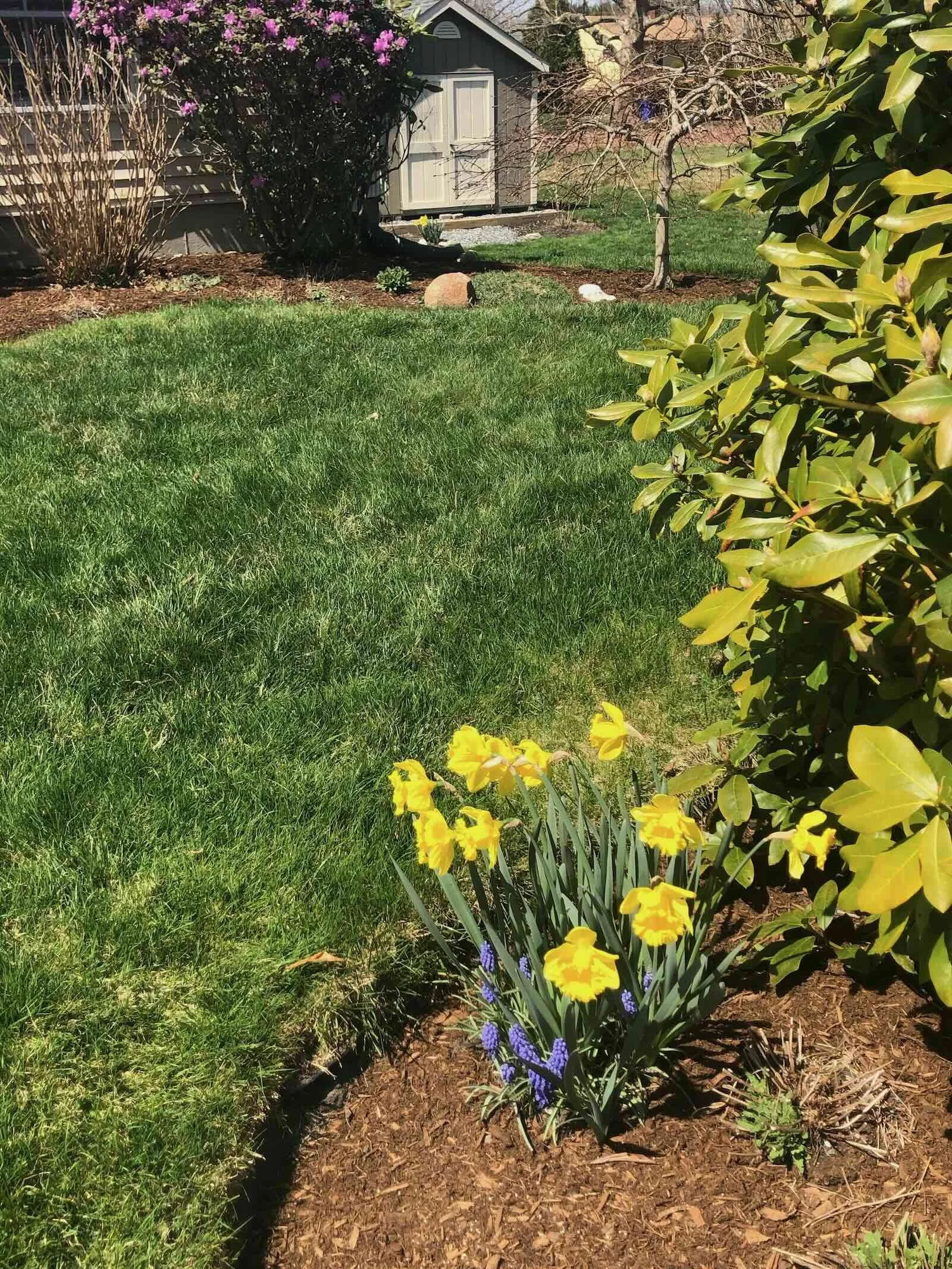
For me, part of having a beautiful garden is maintaining a healthy, well-kept lawn.
It’s the canvas for everything else, the quiet green that allows the plantings to read clearly, and it deserves the same care.
That attention begins early, often before the garden fully announces itself.
Tasks like applying pre-emergent, used to prevent weeds like dandelions and crabgrass, are less about reacting and more about timing.
This spring, temperatures have been inconsistent. One day, near 60, two days later, flurries.
But the signals are there: the snow has receded, the days are lengthening, and the lawn is beginning to wake.
Parsley & Petal
This post contains affiliate links. I may earn a small commission at no additional cost to you.
And somewhere in that transition, there’s a small window that matters more than most people realize.
Pre-emergent isn’t about the product.
It’s about the timing.
The One Thing That Matters: Timing
Pre-emergent works by preventing the weed seeds, like crabgrass, from germinating.
Not after. Before.
That window is tied to soil temperature, not the calendar.
I apply when soil temperatures hold between 50–55°F for several consecutive days. Too early, and it breaks down before it’s needed. Too late, and the seeds have already begun to grow.
It’s a narrow window. But once you know what to look for, it becomes very clear.
How I Actually Track It
I check soil temperatures using GreenCast every few days as we move into early spring.
It’s simple, and it removes the guesswork.
Once temperatures start approaching that range, I pay closer attention. When they hold steady, that’s my signal.
There are visual cues people often reference, like when the forsythia begins to bloom. I notice it, but I don’t rely on it.
For me, soil temperature is the more consistent measure, especially in years like this one, when spring doesn’t follow a predictable pattern.
When That Happens in the Northeast
In my Northeast garden, this usually falls in early April, give or take.
Some years, it comes a little earlier. Other years, it takes its time.
A few warm days aren’t enough. It’s the consistency that matters.
That’s why I don’t apply based on a specific date. I wait until the conditions are actually there.
What I Use to Apply It
Once soil temperatures settle into that window, you need to apply it evenly and quickly.
I use a simple broadcast spreader for this task. It’s nothing complicated, just something reliable that covers the lawn evenly without overthinking it.
The Scotts Turf Builder EdgeGuard DLX Broadcast Spreader mini has done the job well for me.
If You Miss the Window
It happens.
If you’re late, applying pre-emergent won’t have the same effect.
At that point, I leave it.
I focus on mowing high, keeping the lawn dense, and addressing anything that needs attention later in the season.
There’s always another opportunity in the fall to strengthen the lawn in a more lasting way.
A Small Window, Done Intentionally
By the time the lawn fills in, it can feel like everything happened overnight.
But most of it came down to a small window, approached a little more carefully.
Once you understand what to watch for, it becomes part of the rhythm of the season.
Not complicated. Just timed well.
Early Spring, Beyond the Lawn
Applying pre-emergent is just the beginning. It’s part of how the garden comes back into focus each spring.
Nothing happens in isolation this time of year; the grass, the beds, the pruning, the clearing all move together.
The Seasonal Edit is where I’ve gathered that full early-season rhythm as it unfolds, with everything I’m doing in the garden this time of year.
Continue ReadingJoin Parsley & Petal
If you purchase through affiliate links, I may earn a small commission at no additional cost to you. As an Amazon Associate, I earn from qualifying purchases. I only recommend tools I genuinely use and love.