
How I Prune Hydrangeas in My Rhode Island Garden (Mophead & Panicle Guide)
Hydrangeas are one of the easiest shrubs to get wrong this time of year, not because they’re difficult, but because they don’t all behave the same way.
When should you prune hydrangeas?
It depends on the type. If you have mophead hydrangeas (the classic blue or pink types), don’t prune them in spring beyond removing dead wood. You risk cutting off this year’s blooms. Panicle hydrangeas are different and can be pruned more freely without affecting their blooms.
The key is knowing which type you have. Here’s how to identify your hydrangea type and what to do next.
You can also read about the most commonly asked questions about pruning hydrangeas at the end of the post, here.
My History with Hydrangeas
It was the first official day of spring recently—hellebores were blooming—and it was finally warm enough to do some light cleanup in the garden.
I cut back what was clearly dead, being careful not to disturb any overwintering pollinators—the temperatures still haven’t stabilized.
I finally cut down my ornamental grasses; wisps of ‘Blond Ambition’ are already greening up.
In the next week or so, I’ll start pruning my hydrangeas, something that used to confuse me until I eventually understood how to prune hydrangeas properly.
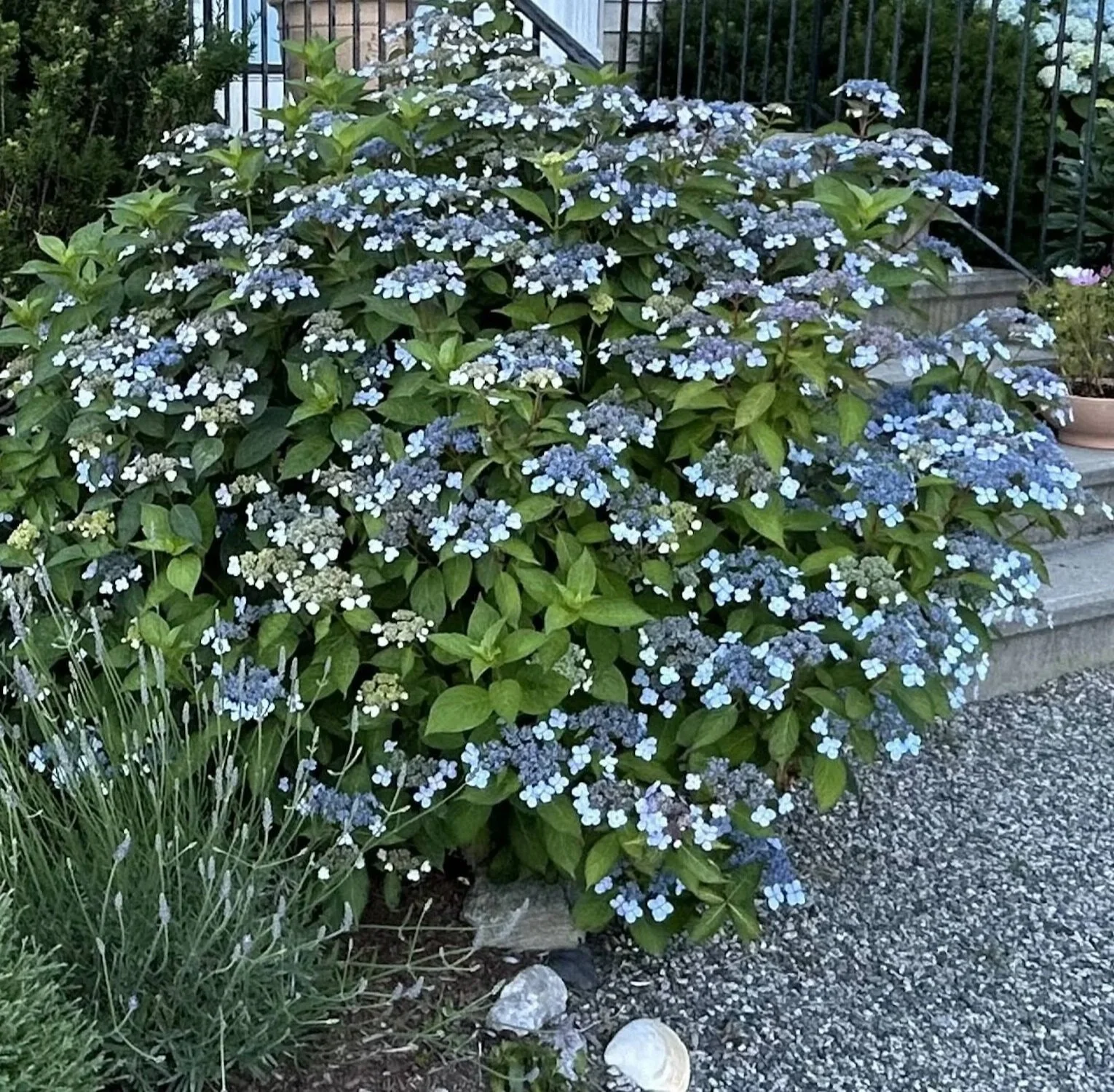
A lacecap variety of the popular mophead hydrangea (H. macrophylla). Photo by Parsley & Petal.
This post contains affiliate links. I may earn a small commission at no additional cost to you.
When we first moved in, a half dozen of traditional New England mophead hydrangeas, including a lacecap, were scattered along the foundation plantings of the house.
I didn’t realize I had to do anything to them until the home inspector informed us, “You’re going to want to move these bushes at least three feet further away from the house because they’re going to grow much larger than this.”
And then a neighbor remarked one day, “You planning on pruning your hydrangea? It looks kinda big.”
And down the rabbit hole I went. New wood. Old wood. Panicle. Mophead. Blue. Pink. What had I gotten myself into? So I just chopped away that first season and hoped for the best.
A few years and a few Phantom and Tidbit panicle hydrangeas later, I’ve fallen in love with these beloved but mystifying shrubs.
And I’ve learned how to prune them properly.
For the complete story of how I transformed our Empty Corner Lot into the Botanical Corner Lot it is today, you can read about it here.
Below is my guide to the hydrangeas I grow in my Rhode Island garden, and how I prune them.
Pruning Primer 101
For those new to pruning, here are a few helpful terms:
Pruners/Secateurs: Hand pruners (or secateurs) are tools used to cut stems and small branches.
Bypass pruners make clean cuts; anvil pruners are better for tougher, woody stems. I use Felco 6 pruners for my smaller hands.
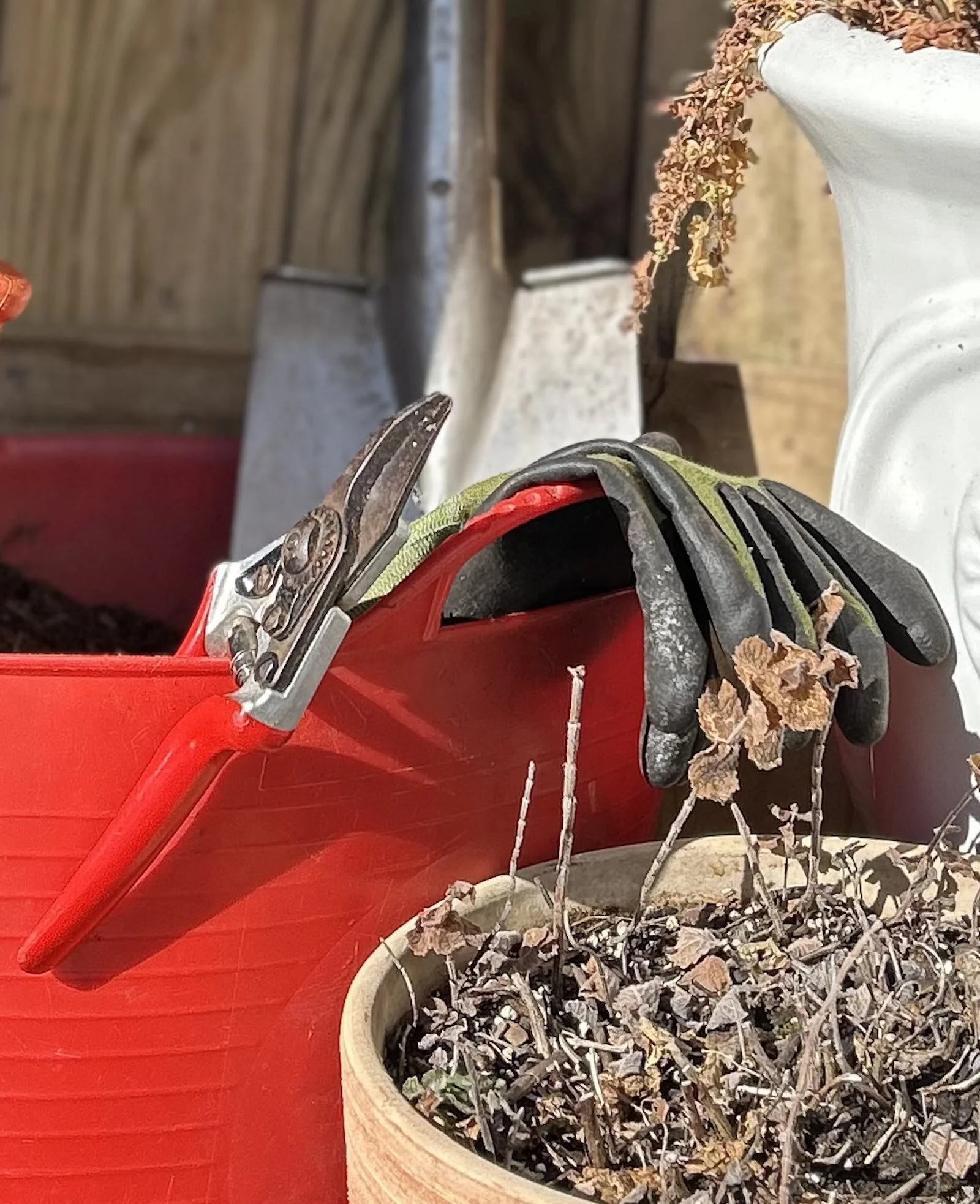
My go-to pruners for early spring cleanup. Photo by Parsley & Petal.
Loppers: Long-handled pruners used for cutting thicker branches that are too large for hand pruners.
Deadheading: Removing spent flower blooms either by pinching them off with your fingers or cutting them with pruners.
Pruning: Cutting away dead, diseased, damaged, misplaced, or overgrown stems or tree branches in a way that stimulates the plant to grow and produce buds and/or branching.
Pruning maintains plant health, increases airflow, and improves plant structure.
If you’d like to follow along with me each season and know what I’m cutting back, leaving alone, and paying attention to as things progress, you can read about it in The Seasonal Edit, a recurring garden checklist.
Before You Prune: Know Your Hydrangea Type
Before you prune, you need to know what kind of shrub you’re working with and whether they bloom on old or new wood, the importance of which I explain further here.
Mophead Hydrangea (Hydrangea macrophylla)
Round, pom-pom-like flowers
Typically blue (in acidic soil) or pink (in alkaline soil), though white and reddish varieties exist
Includes lacecap variety (flat, delicate blooms)
Blooms on old wood
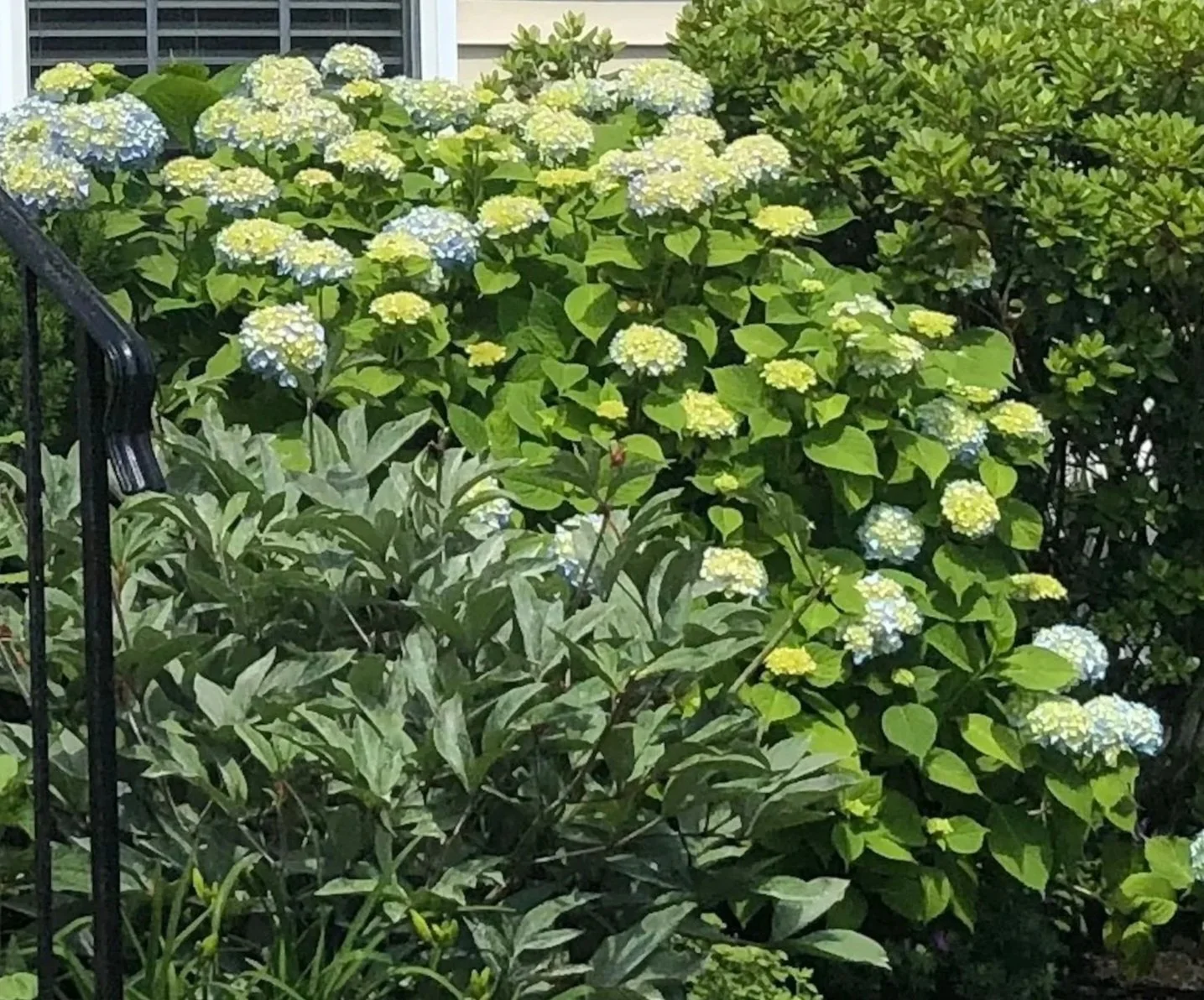
Mophead hydrangea (H. macrophylla). Photo by Parsley & Petal
Smooth Hydrangea (Hydrangea arborescens)
Rounded blooms
Primarily white or cream
Blooms on new wood
Panicle Hydrangea (Hydrangea paniculata)
Cone-shaped blooms
Whites, creams, lime-greens, to pinks, roses, berries, deep-burgundies, and reds
Blooms on new wood
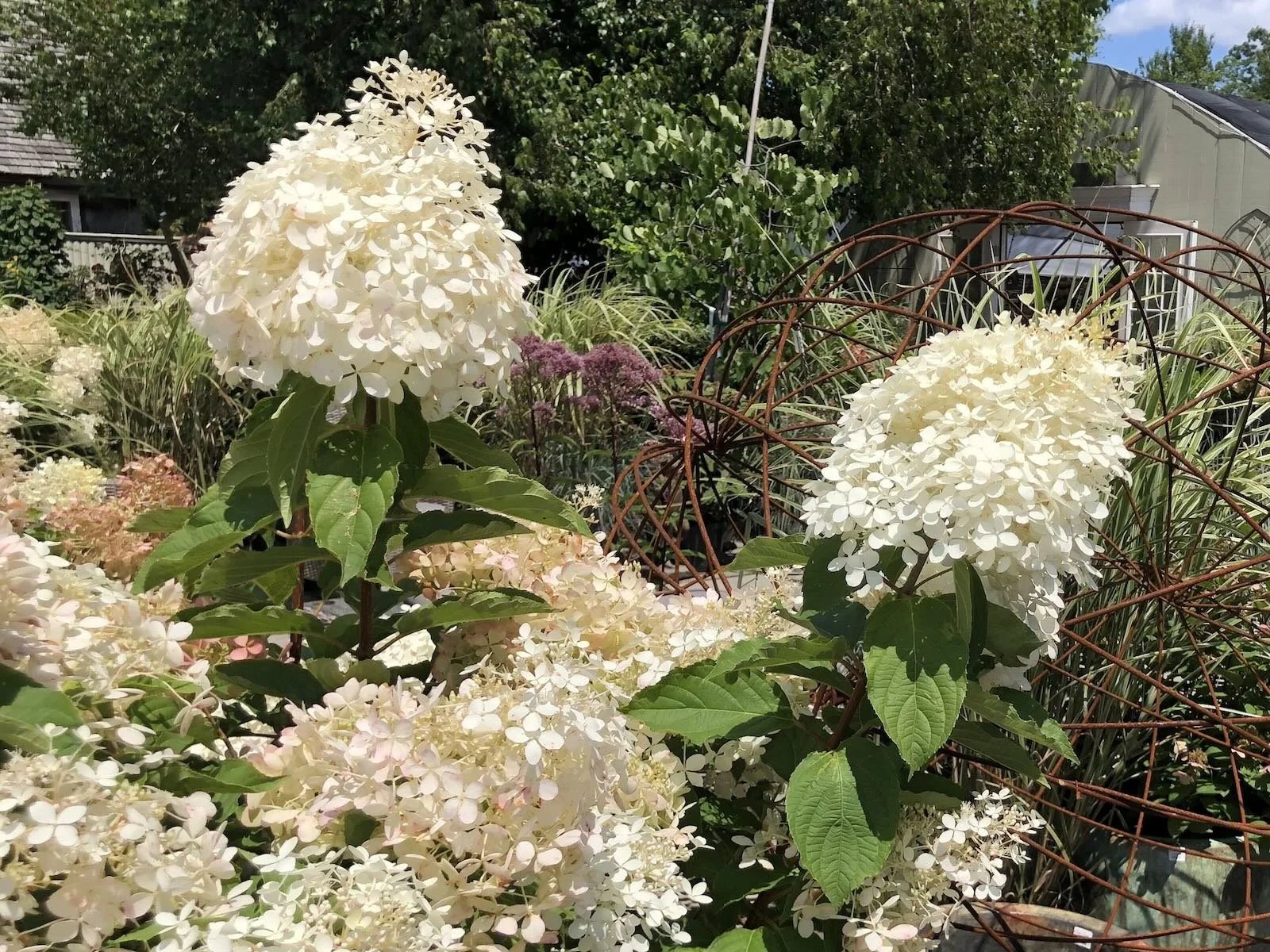
Panicle hydrangea (H. paniculata) in summer, showing cone-shaped blooms. Photo by Parsley & Petal.
Oakleaf Hydrangea (Hydrangea quercifolia)
Deeply lobed, oak-leaf shaped leaves
Blooms on old wood
Requires minimal pruning in spring
Climbing or Mountain Hydrangea (Hydrangea petiolaris)
Slow-growing vining plants
Blooms on old wood
Requires some deadheading and light pruning immediately after flowering
What “Old Wood” Means When Pruning Hydrangeas
The mophead hydrangeas I have bloom late spring through mid-summer (June-August), with some re-blooming into fall. They bloom on old wood. What does that mean?
Blooms on old wood means:
It sets buds after blooming, usually in late summer/early fall, and if you prune it in the springtime, you are cutting off the buds. So:
If deer snacked on your shrub over the winter, they most likely ate a bunch of your buds off, and you will have fewer blooms this year.
If cold winter winds or a late spring frost nip your buds dead, you may get fewer or no blooms that year.
So, when—and why—would you prune mophead hydrangeas?
I recommend leaving the shrubs alone after they’re done blooming and allowing the spent blooms to remain for frost protection and winter interest.
For a cleaner look, you can deadhead them.
If you must prune these, prune right after blooming, usually no later than mid-August. Otherwise, you risk losing your buds and your flowers for the season.
But my mophead hydrangea is too big for my space. Can I prune it back to make it smaller?
Personally, I don’t hard prune mine for size. Ever.
If you have the shrub in the wrong place (too big for the space), I recommend moving it. Pruning a plant signals it to grow and become bigger, and it tends to make the problem worse.
So, before you plant something as substantial as a shrub, make sure you know how large it gets and site it properly.
How to Prune Mophead Hydrangeas (Old Wood)
The only maintenance I perform on these types of hydrangeas is:
Removing dead, damaged, diseased, or weak, misplaced wood, which can be done at any time of year.
I usually do this when the shrub is clearly congested and needs air circulation.
Deadheading, or removing the spent blooms with pruners, in the spring, late March or early April, when the garden starts to wake up.
I leave the spent blooms on for frost protection and winter interest.
The short answer: Do not prune these in spring. If anything, I just deadhead.
How to Prune Panicle Hydrangeas (New Wood)
After struggling to understand mopheads, panicle hydrangeas, which bloom on new wood, were a revelation.
Since they bloom on new wood, they can bounce back more easily from cold snaps and deer damage.
They’ll simply put out new growth, behaving more like perennials that way, more forgiving.
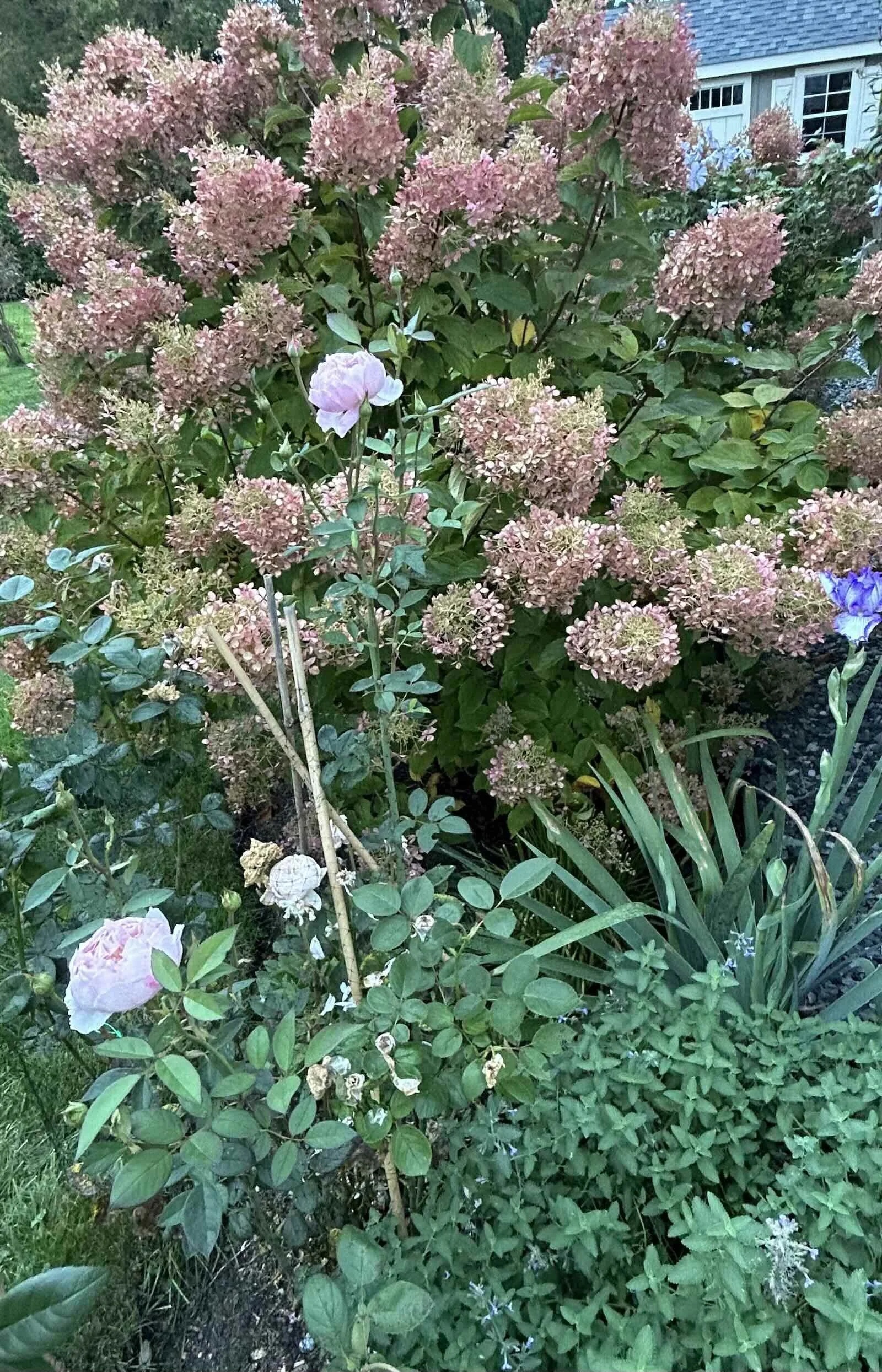
‘Phantom’ (Hydrangea paniculata) in fall. Photo by Parsley & Petal.
You can prune panicle hydrangeas in late winter or early spring, but I prefer to leave mine up for winter interest and prune as the buds begin to swell.
My essential guide to pruning panicle hydrangeas in the spring:
Prune stems to the ground when they are dead, damaged, diseased, weak, or misplaced.
Cut the remaining branches back to a healthy bud (node).
(I usually count 3–4 nodes down from the tip—whatever looks right, roughly reducing the plant by about one-third—and make a clean cut about ¼" above a healthy node.)Shape the plant into a balanced framework.
How to Prune: What to Look For
It’s easier to see it than to describe it.
Here’s a quick look at what I’m looking for as I prune and where I cut.
Once you understand how your hydrangeas bloom, everything else starts to fall into place. It’s less about rules, more about timing.
In my mostly sunny garden, my panicle hydrangeas thrive, blooming from mid-summer through fall, from June through October, emerging lime-green to white and fading into pinks, mauves, berries, and beiges as temperatures drop.
Some of my favorites include:
(In bloom order)
‘Quick Fire Fab’ — early color
‘Fire Light Tidbit’ — compact and adorable
‘Phantom’ — large, dramatic blooms
‘Vanilla Strawberry’ — classic white to berry tones
‘Bobo’ — compact and delicate
‘Limelight Prime’ — beautiful fall color
‘Limelight’ — bold, reliable, statement plant
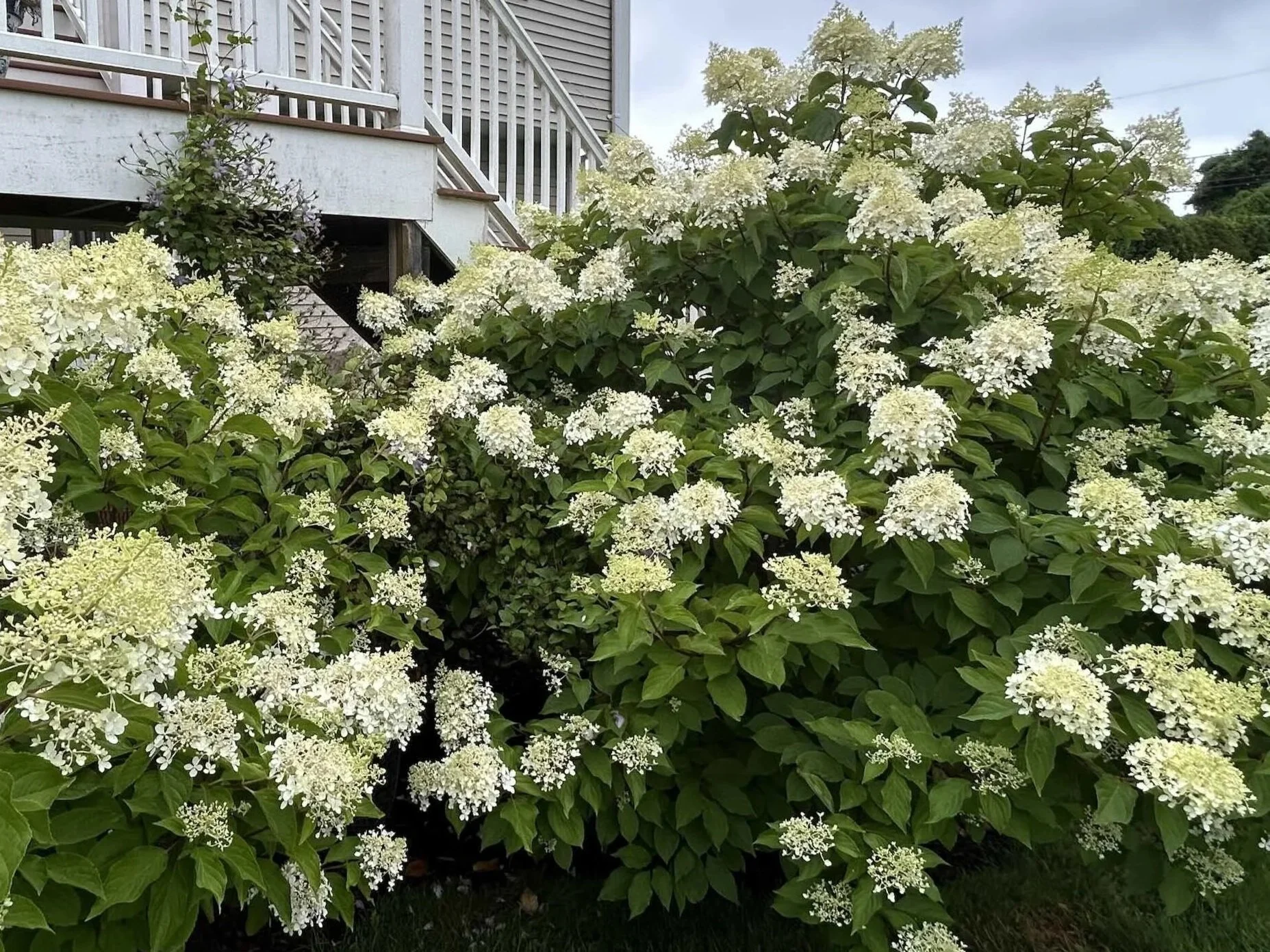
‘Phantom’ (Hydrangea paniculata) in summer. Photo by Parsley & Petal.
Hydrangea Pruning Frequently Asked Questions
These are the most common questions I had when I first learned how to prune hydrangeas.
Can I prune hydrangeas in spring?
Yes, you can prune hydrangeas that bloom on new wood, such as panicle hydrangeas (H. paniculata) and smooth hydrangeas (H. arborescens), in spring.
Since they push out new growth each year, you won’t lose any blooms that season.
But if you prune hydrangeas that bloom on old wood, such as mophead and lacecap hydrangeas (H. macrophylla), in spring, you’re cutting off buds and risk few or no blooms that year.
Why didn’t my hydrangea bloom this year?
Hydrangeas may not bloom for a variety of reasons. Site conditions such as insufficient sunlight, deer damage, late frost, extreme winter cold, pruning at the wrong time, excessive fertilization, and drought can all contribute.
Do all hydrangeas need pruning?
All hydrangeas benefit from some level of maintenance, but not all require regular hard pruning.
Removing dead, damaged, or diseased stems helps maintain plant health and air flow. Selective cuts can also encourage stronger growth and better structure.
What happens if I prune at the wrong time?
Hydrangeas are hardy plants. If you prune at the wrong time, they will usually recover. You may have a season with fewer or no blooms, but if you leave the shrub alone the following year, it should rebound, provided it’s sited properly and growing in suitable conditions.
Hydrangeas used to confuse me completely. Now, they’re one of the easiest, most rewarding shrubs in my landscape. Once you understand how they grow, the rest falls into place.
Continue ReadingMentioned in This ArticleMy Essential Garden Tool Kit: The Tools I Actually Use (Including my favorite pruners)
Hellebores (Helleborus orientalis)
Want to see the garden behind these decisions?