
Hellebores (Helleborus orientalis)
Plant Spotlight
An Early Spring Deer-Resistant Perennial
My mother gifted me a plant just before my March birthday a few years ago, as she has done with many of the plants now growing in my garden.
At the time, I didn’t even know what it was. Only later did I learn it was a hellebore, or Lenten rose. They call it a Lenten rose because it blooms during the Lenten season, typically February through April.
It has since become one of the earliest plants to stir each spring in my garden.
I’m always surprised by how tough this plant is. Its leathery leaves are remarkable — large and evergreen, and resilient even in cold weather.
When the Blizzard of 2026 hit two weeks ago, I was certain it hadn’t survived.
But after the snow melted, I was shocked to see four buds peering up through the winter leaves of its neighboring Japanese maple.
Sure, the foliage had browned on the edges. But what a sight — vibrant red buds, burgundy stems, and a few healthy leaves pushing through.
I guess spring has arrived in this little corner of the garden after all.
Hellebores (Helleborus orientalis), or Lenten roses, are one of the earliest perennials in Northeast gardens, appearing in late winter and early spring when little else is awake.
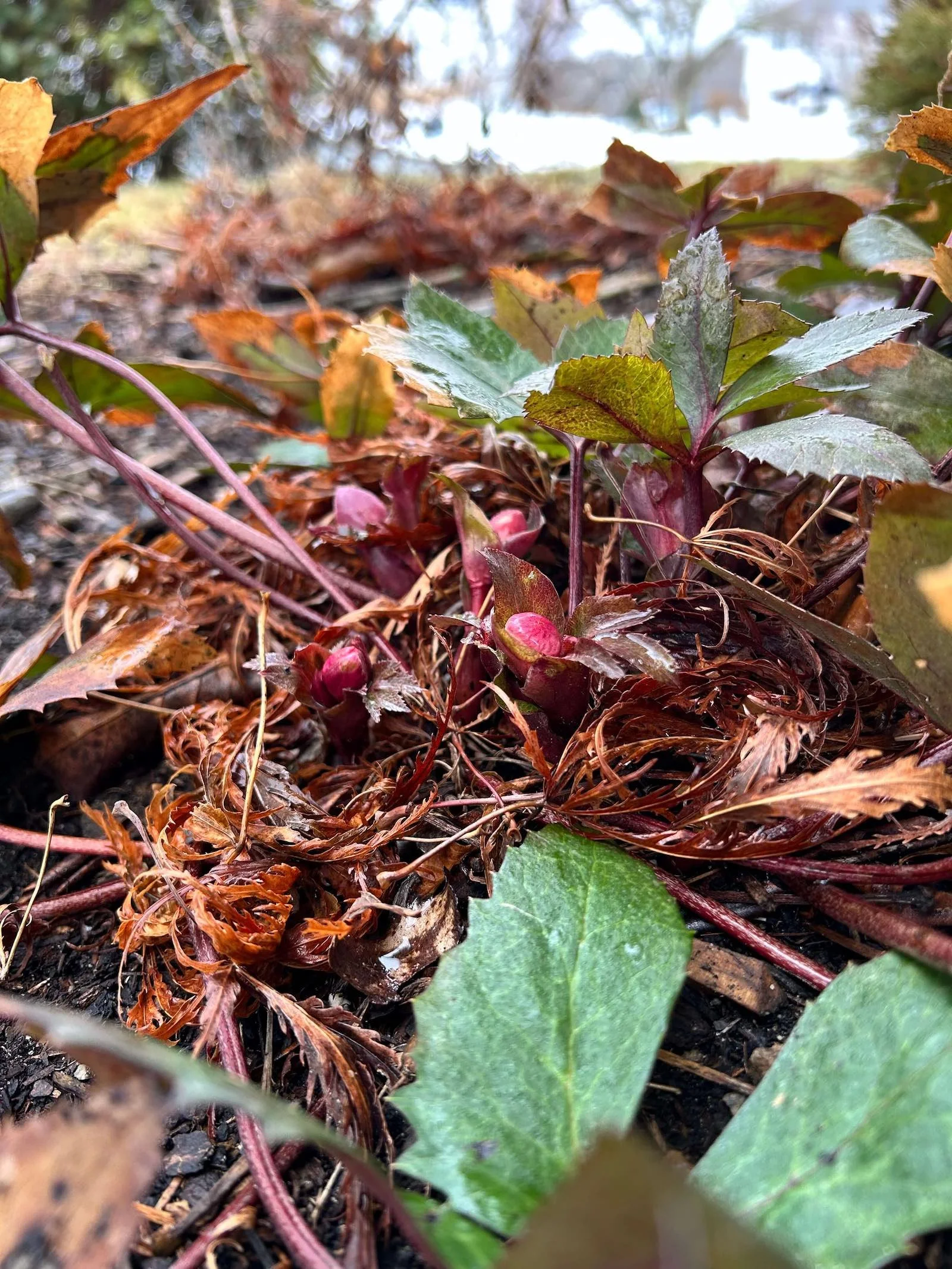
Hellebore buds (Helleborus orientalis) in the early spring garden. Photo by Parsley & Petal
Hellebores at a Glance
(In My Garden)
Botanical name
Helleborus orientalis
Common name
Hellebore, Lenten rose
USDA Zones
3-9
Bloom time
Late winter to early spring (February–April in Northeast gardens)
Light
Partial to full shade, sun
Deer resistance
High
Rabbit resistance
High
Size
12"–24"
Shape
Mounding
Garden role
Ideal for shade or woodland gardens. Excellent for foliage contrast and early-season interest.
In My Garden
I grow mine under an azalea bush in the front bed of the house, in loamy, well-draining soil beside some bigroot geranium, dianthus, salvia, and black-eyed Susans, near the Japanese Tamukeyama maple.
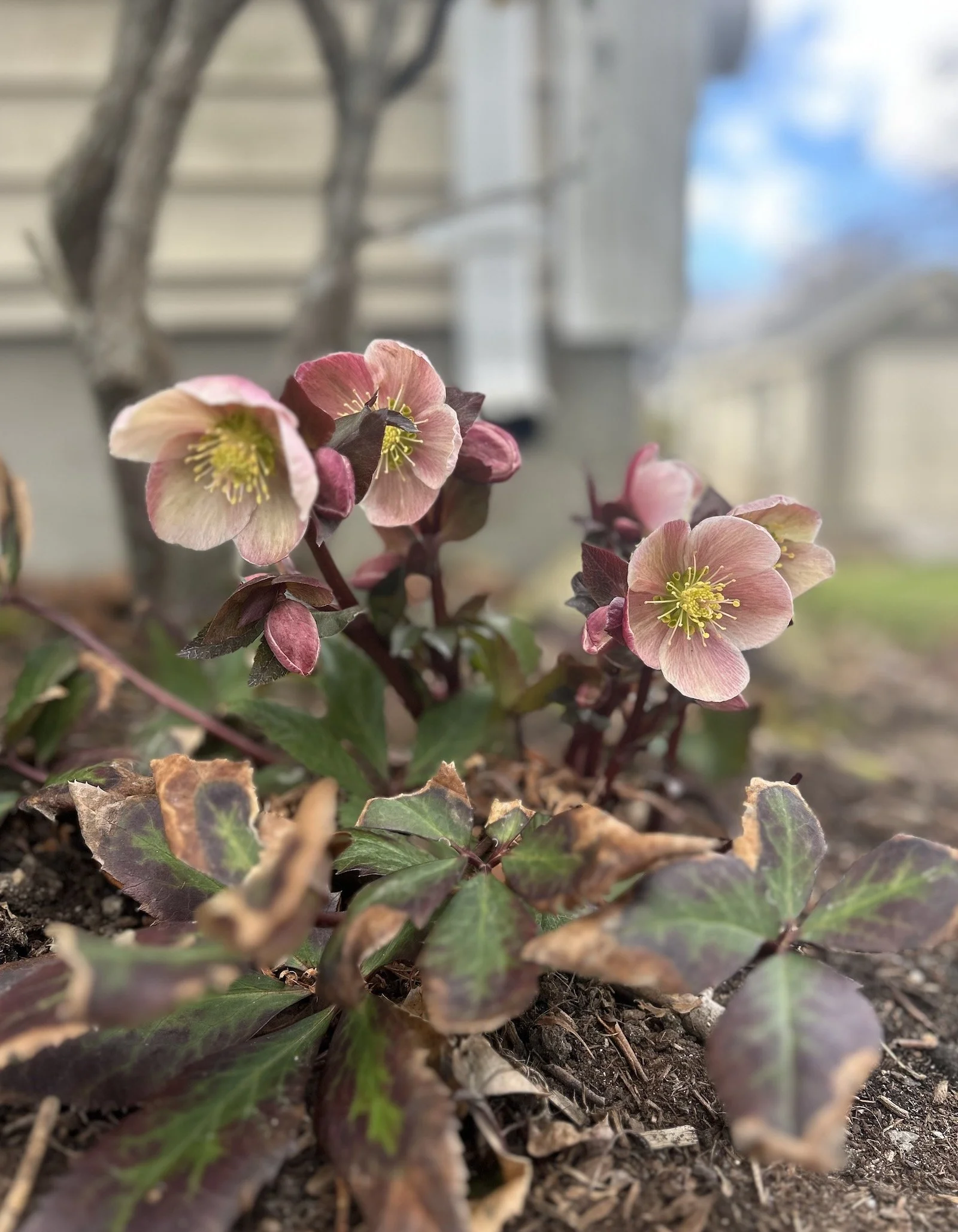
It receives a bit of winter protection there. Though the bed gets morning sun, it sits in a spot with dappled sun, and the plant seems perfectly happy.
My garden is mostly sunny, so shady corners like this are hard to come by.
Parsley & Petal
Later in the season, I’ll prune some of the browning foliage to make room for new growth.
When hellebores bloom, the nodding, cup-shaped flowers sway gently atop red, wiry stems. Their serrated foliage is plentiful, giving the plant structure even before flowers appear.
They’re wonderfully low-maintenance and largely fuss-free.
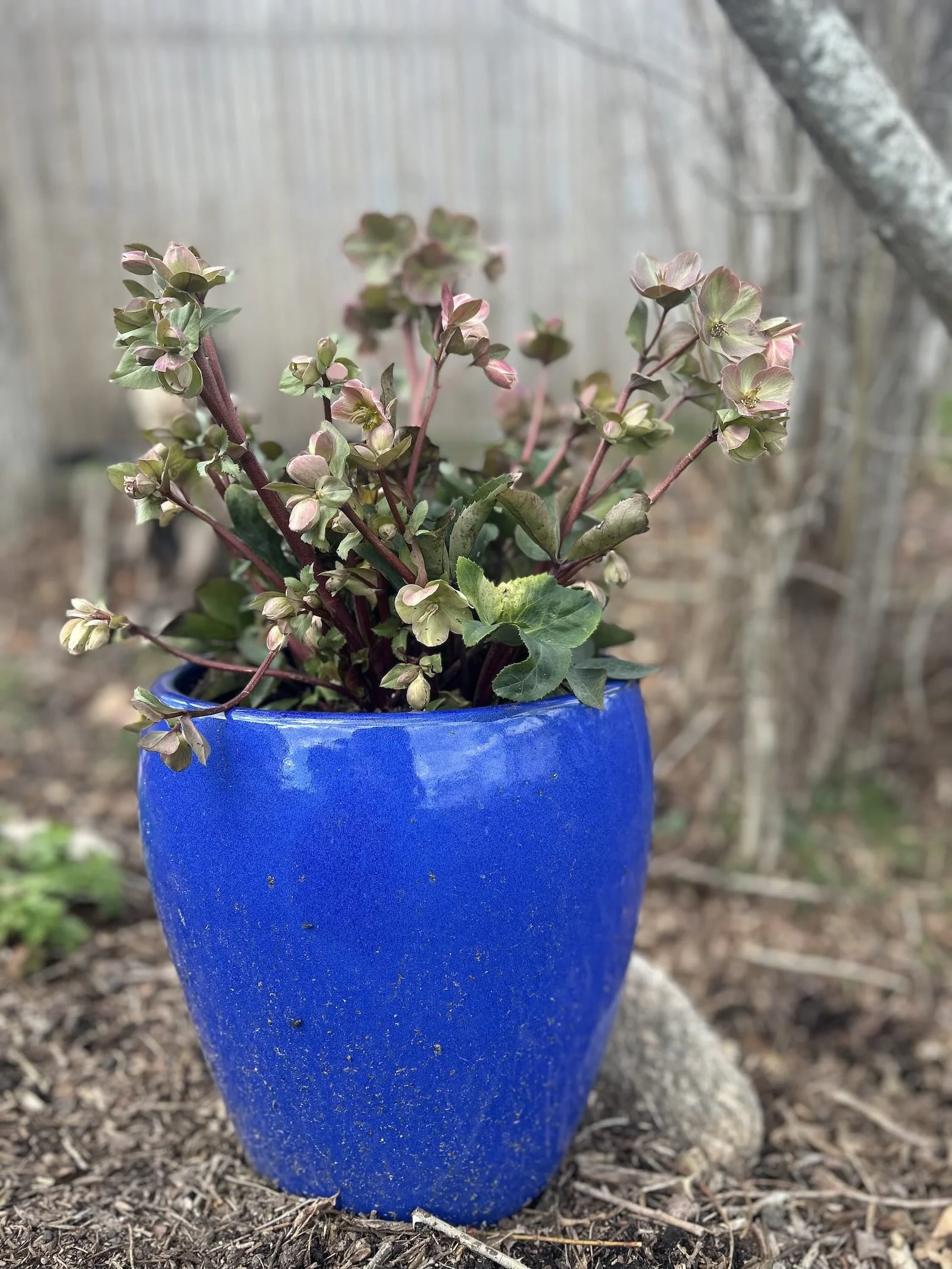
I recently picked these up and discovered they make beautiful early spring containers. Photo by Parsley and Petal.
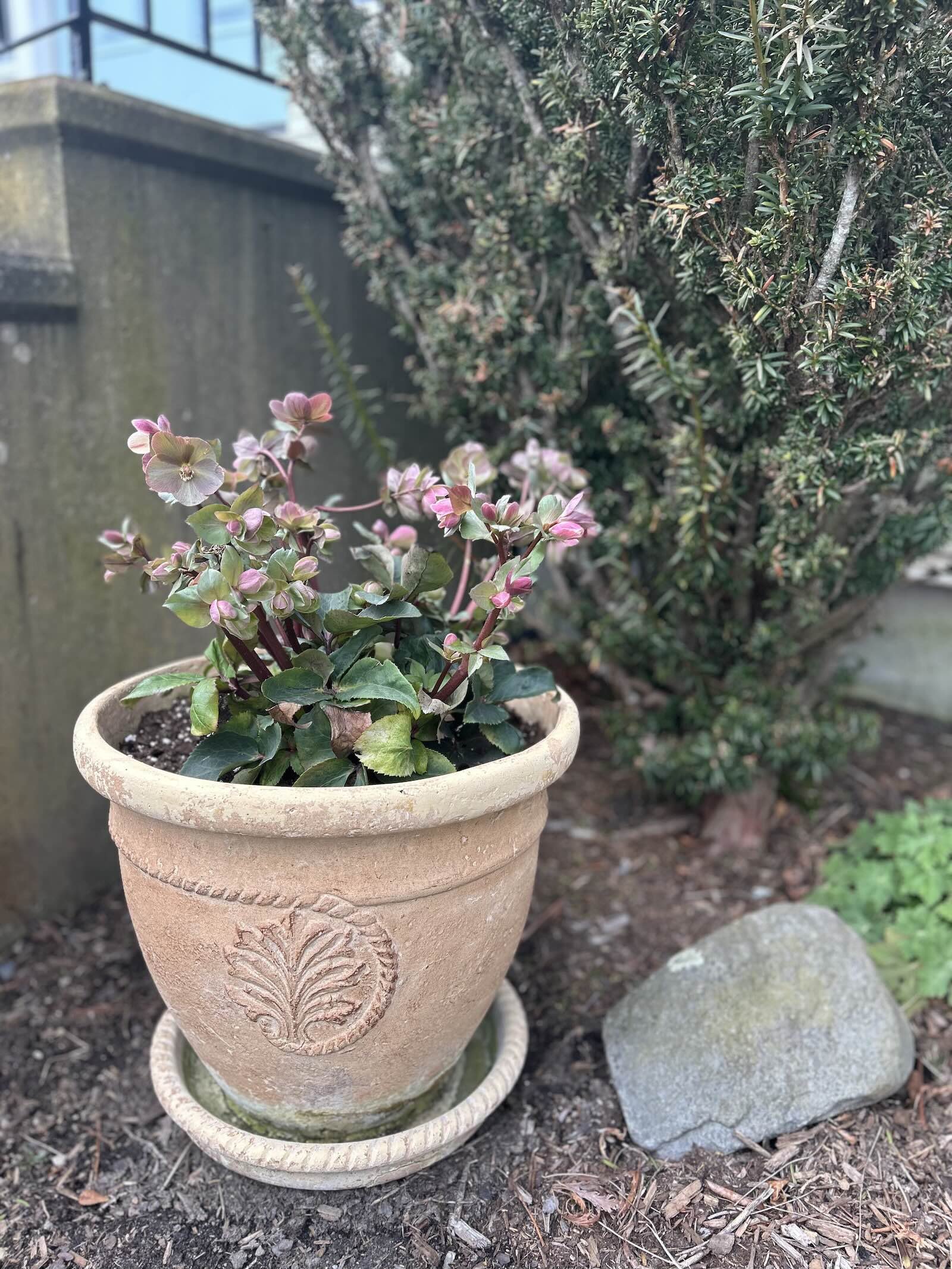
Parsley & Petal
The deer seem to leave hellebores alone, which is always a welcome discovery in my garden.
Its thick, leathery leaves likely help. I especially love how the soft pink petals contrast against the tough, dark green foliage. The plant also offers a long season of interest, which is always a plus in early-spring gardens.
Hellebores come in a remarkable range of colors and markings — shades of green, pink, burgundy, and even near black, along with speckled and white varieties.
One I would love to add someday is the hybrid ‘Royal Heritage’, which produces flowers in a beautiful range of light to dark tones.
I don’t have many hellebores in my garden yet. They can be surprisingly hard to come by.
But a local nursery, Clark Farms, in Matunuck, RI, will be opening this weekend with hundreds available, and they’re offering online ordering for pickup.
So Mom, if you're reading, my birthday is coming up.
To see how this Rhode Island garden has evolved since we first moved in, read My Botanical Corner Lot.
Continue ReadingA Spring Visit to The Farmer’s Daughter Nursery in Rhode Island
Deer and Rabbit Resistant Plants for a Northeast Garden (What Actually Survives)
Join Parsley & Petal