
What Deer and Rabbits Eat First (and What They Leave Alone)
Originally published March 6, 2026. Updated August 2026.
I used to believe those plant tags.
“Deer resistant,” they promised in tidy print, as if that were a contract.
The deer did not agree.
Over time, I’ve learned that “resistant” is a flexible term, especially in a Rhode Island garden bordered by woods and long winters.
Some plants are ignored completely.
Some are sampled politely.
And some are reduced to stems overnight.
What I’ve ultimately discovered after years of trying to answer questions like “What are the best deer-resistant plants?” or “Will rabbits eat dianthus?” is this:
1) “Resistant” rarely means untouched. It usually means they might not start there.
2) Deer and rabbits don’t browse the same way:
Rabbits stay low to the ground, targeting tender new growth and soft spring foliage.
Deer browse higher and more opportunistically, especially during dry spells, late winter, or periods of heavy pressure.
3) The biggest difference in my garden hasn’t just been plant choice. It’s been understanding the pattern of what they prefer, when they browse most aggressively, and which plants are actually worth protecting.
Here’s what they’ve mostly ignored here: hellebore, daffodil, lavender, salvia, catmint, and boxwood, but no plant is completely deer- or rabbit-proof.
For what has actually held up, what hasn’t, and how I manage deer and rabbits browsing in my garden, keep reading, or go straight to what’s actually helped here.
This list continues to evolve as I test and observe what holds up in my Zone 7A coastal Rhode Island garden.
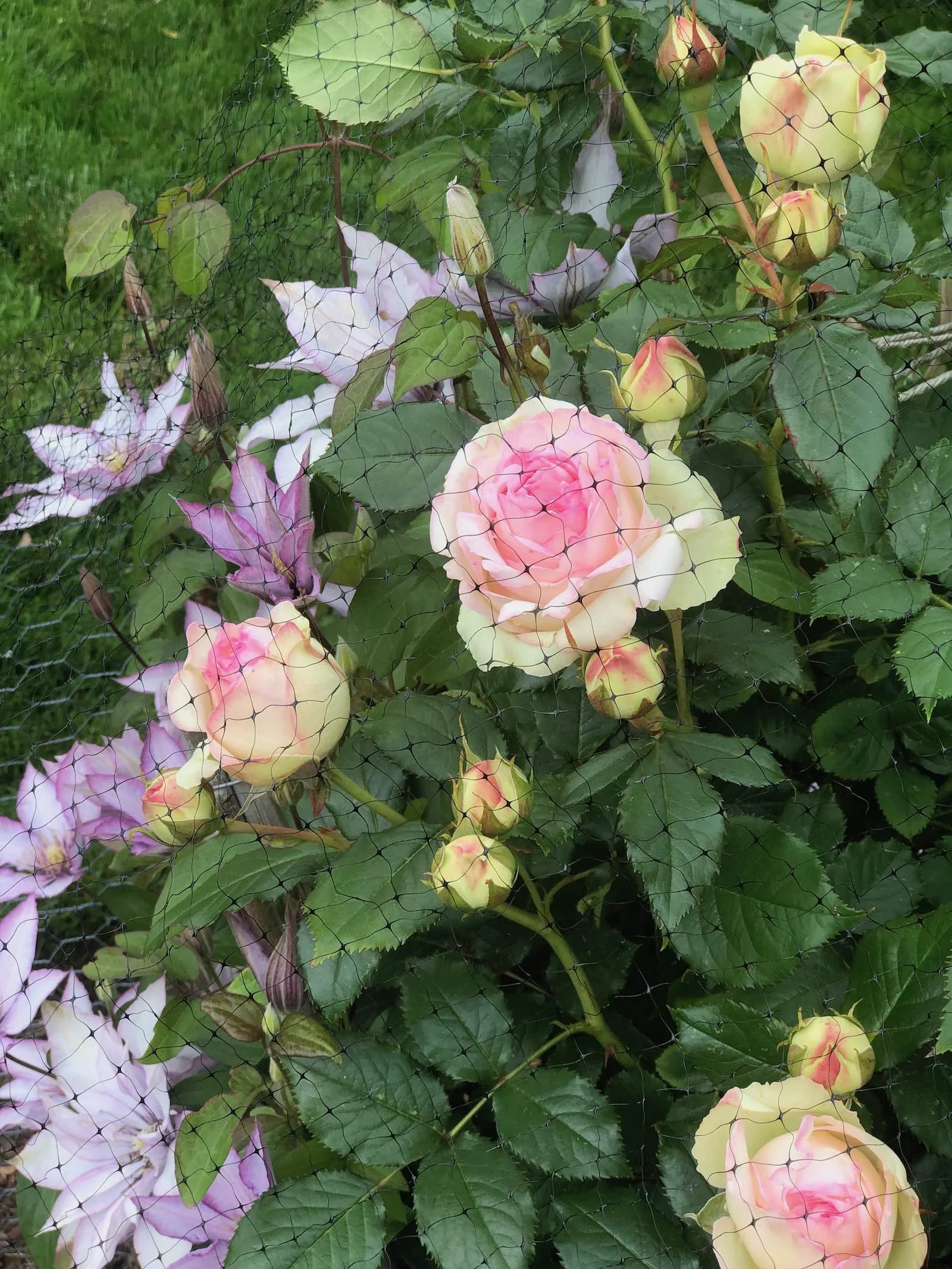
Roses (Rosa) protected with bird netting, one of the many methods I use to keep deer from browsing. All photos by Parsley & Petal.
This post contains affiliate links and advertising. I may earn a small commission at no additional cost to you.
AdvertisingPlants Deer and Rabbits Usually Leave Alone
These are the plants that have consistently survived in my garden with little to no browsing damage, even near woodland edges and high-pressure areas.
Resistant to Both Deer and Rabbits
Hellebore / Lenten rose (Helleborus orientalis)
One of the earliest bloomers in my garden, and one of the few shade plants in my mostly sunny space. Survives tough winters and troublesome wildlife.
Daffodil (Narcissus)
Completely reliable. I’ve stopped worrying about them.
Iris (Iridaceae)
Never disturbed.
Bigroot Geranium (Geranium macrorrhizum)
A reliable groundcover, always intact.
Peony (Paeonia)
Foliage and buds left alone.
Russian Sage (Perovskia)
Strong scent. Zero interest.
Salvia (Salvia)
Never sampled.
Catmint (Nepeta)
Never touched, even when planted beside more tempting neighbors.
Lavender (Lavandula)
Strong aroma. Consistently avoided.
Tickseed (Coreopsis)
Always standing.
Heather (Calluna vulgaris)
Fuzzy to the touch; consistently ignored.
Hyssop (Agastache)
Licorice scent. No bites.
Montauk Daisy (Nipponanthemum nipponicum)
Hardy. Thumbs up.
Shrubs
Forsythia (Forsythia)
One of spring’s earliest blooming shrubs and never harmed.
Lilac (Syringa vulgaris)
Lovely scent. Always avoided.
Smokebush (Cotinus coggygria)
Not bothered.
Boxwood (Buxus sempervirens)
Largely left alone, even in winter. (I no longer plant them due to boxwood blight.)
Inkberry Holly (Ilex glabra)
Dependable, especially near woodland edges.
Juniper (Juniperus)
Ignored here.
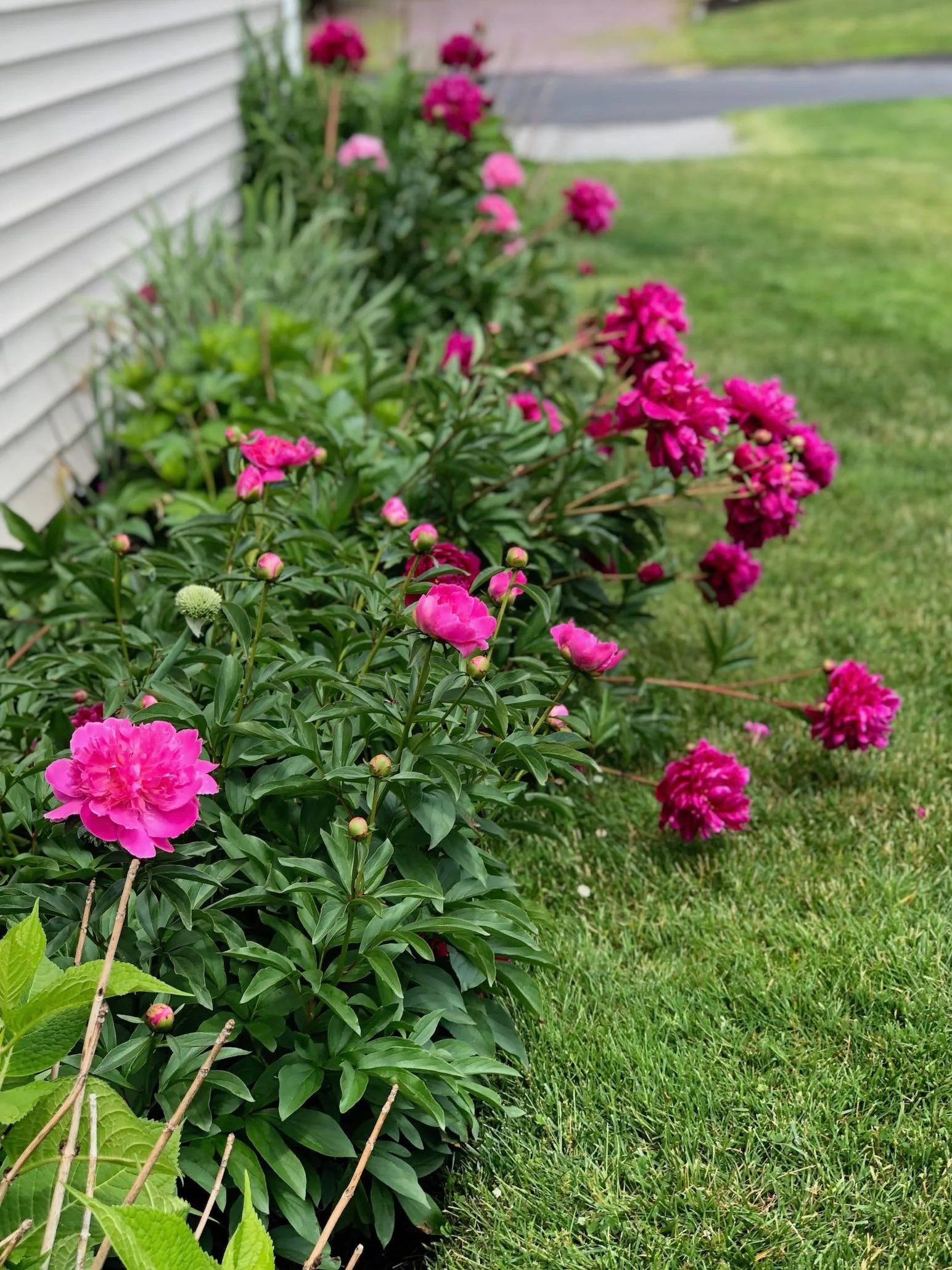
Peonies (Paeonia) are among the perennials deer consistently leave alone in my garden.
Plants Rabbits Generally Prefer
These are plants rabbits will nibble, especially in early spring when tender new growth is emerging close to the ground.
Pinks (Dianthus)
Nibbled early in the season, when food is scarce. Mature plants usually recover quickly.
Geum (Avens)
Sometimes eaten, particularly during spring flushes.
Clematis (Clematis)
Rabbits love tender new clematis shoots here, especially before vines have a chance to climb.
Yarrow (Achillea)
Rabbits often strip the flowers before bloom, so I keep them in containers.
Coneflower (Echinacea purpurea)
Regularly browsed.
Black-eyed Susan (Rudbeckia)
Not safe here.
Japanese anemone (Anemone hupehensis) I grow ‘Honorine Jobert,’ which blooms for weeks in fall and is one of my favorites. Rabbits will occasionally take a bloom or two.
Plants Deer Frequently Dine On
These are the plants I protect most carefully, especially during spring emergence and periods of drought or winter scarcity, as they are most likely to be reduced to stems overnight by deer.
Daylily (Hemerocallis)
New growth disappears quickly.
Plantain lily (Hosta)
A deer favorite, possibly tied with roses.
Rose (Rosa)
Relentless.
Asiatic lily (Lilium asiatica)
Why do I bother? Because they were among the first things I planted, a gift from my mom, so I protect them from both deer and the occasional rabbit.
Shrubs
Azalea (Rhododendron)
Winter damage is common.
Arborvitae (Thuja occidentalis)
Winter browsing can be severe, especially during harsher seasons.
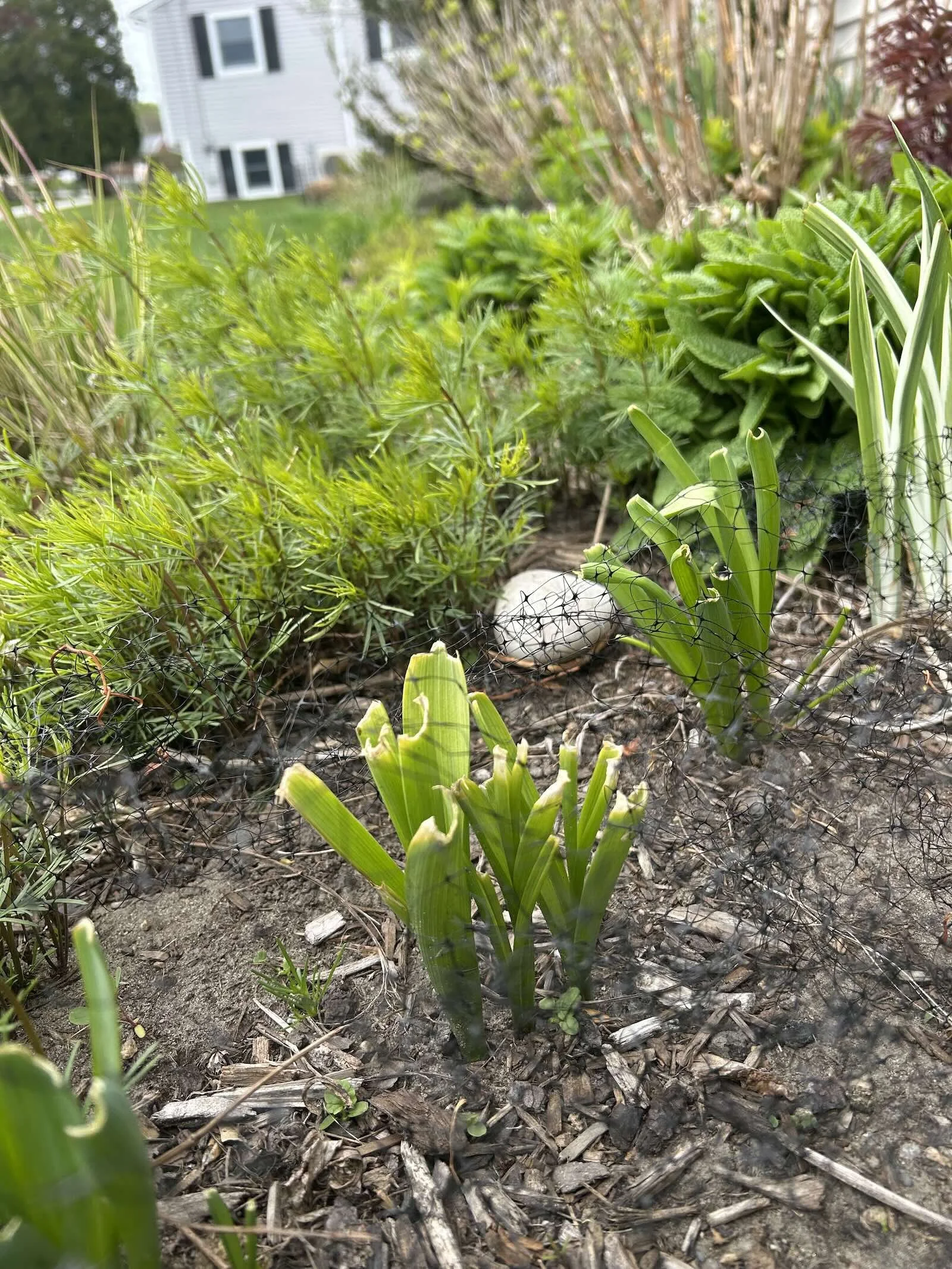
Allium suffering from early spring rabbit damage.
Plants Damaged Depending on Timing, Hunger, and Placement
These are the plants that remind me “resistant” is never absolute. Some years, they’re untouched. Other years, they’re tested heavily. Often, placement matters as much as the plant itself.
Allium (Allium)
Despite their reputation, rabbits occasionally nibble mine, including ‘Purple Sensation’ and ‘Millennium.’
Sedum (Stonecrop)
Usually safe, though tender growth can occasionally be sampled by deer.
Garden Mums (Chrysanthemum)
Usually left alone by rabbits until late season, when food sources begin disappearing.
Shrubs
Mophead hydrangea (Hydrangea macrophylla)
A deer favorite, especially before bloom, but these are placed close to my house and are surprisingly spared, 95% of the time. Perhaps the deer are too busy eating my daylilies and roses.
Panicle Hydrangea (Hydrangea paniculata)
Generally more resistant than mopheads, though soft spring growth can still attract deer browsing.
Yew (Taxus baccata)
Highly toxic and is a foundational planting, yet deer will browse in winter. It recovers.
‘Tater Tot’ arborvitae (Thuja occidentalis)
Untouched for years, but deer took a noticeable bite this winter. Given how often they damage arborvitae locally, I’m watching these.
I've been making real-time decisions in my own garden about what holds up and what doesn't under deer pressure.
Want to see the garden behind these choices? Read My Botanical Corner Lot, a look at how this Rhode Island garden evolved over the past decade.
These are the questions I find myself answering most often, both in my garden and beyond.
Deer and Rabbit Resistant Plants: Frequently Asked Questions
What’s eating my plants? How can you tell deer damage from rabbit damage?
Deer leave ragged, uneven tears because they lack upper front teeth. Rabbits make cleaner cuts close to the ground.
Do rabbits eat dianthus?
Sometimes. Rabbits are most likely to nibble tender young dianthus growth in spring, especially when food is scarce.
Is catmint deer-resistant?
Yes. Catmint has been one of the most reliable deer- and rabbit-resistant perennials in my garden.
What plants do deer and rabbits leave alone most consistently?
In my garden, it’s rarely about a single plant. It’s about patterns. Plants with a strong scent, fuzzy foliage, or toxicity tend to be ignored. The most reliable are the ones listed above: hellebores, daffodils, lavender, salvia, and catmint, among them.
Why do deer sometimes eat “deer-resistant” plants?
Hunger, weather, competition, and seasonal pressure all change browsing behavior. “Resistant” does not mean immune.
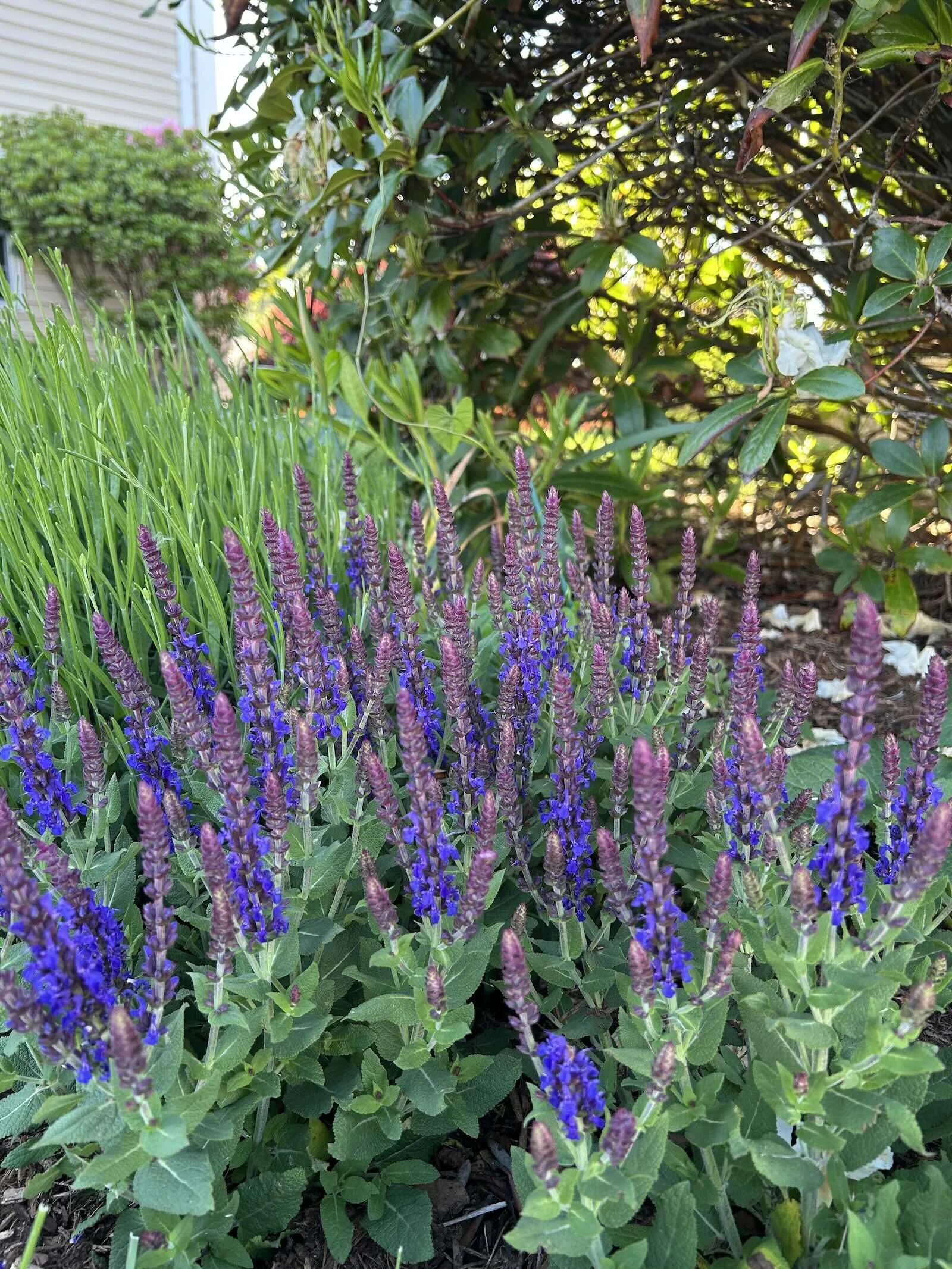
Lavender and salvia’s strong scent profiles keep the rabbits and deer away.
What Actually Works to Protect Plants from Deer and Rabbits in a Northeast Garden
Repellents I Tried (and Why They Failed)
After about a year or two of living in deer and rabbit country, I stopped trusting those labels. I knew those deer and rabbits were coming. So I started experimenting.
I tried almost everything — short of calling Animal Control or resorting to actual voodoo.
Cinnamon.
Cayenne pepper.
Homemade rotten egg mixtures.
Noise machines.
German Shepherd fur tucked into beds.
A radio left playing overnight.
Irish Spring shavings scattered like some suburban spell.
Some of it worked briefly. Most of it did not.
What I’ve learned is this: if they’re hungry enough, novelty does not matter.
What Finally Helped
Over time, I stopped trying to save every square foot of the garden.
I still plant the things I love. I’ve just learned where they belong.
Tender favorites and high-value targets now live in containers on the deck, where deer and rabbits can’t reach them. The yarrow, some of the roses and clematis I refuse to give up —they’re elevated or behind discreet fencing, protected and thriving.
At the outer edges of the garden, near the woods, I’ve taken a different approach.
There, I sometimes plant sacrificial favorites: daylilies, black-eyed Susans, or sedum. Plants I can easily propagate or divide, that I know I can easily replace.
Plants I know they prefer and that draw attention away from more structured beds. It doesn’t stop browsing entirely, but it often slows it down. The first bite happens at the perimeter instead of at the heart of the garden.
That shift changed everything.
The garden feels calmer when I stop trying to outwit hunger and start designing around it.
In the end, the solution wasn’t a clever one. It was layered.
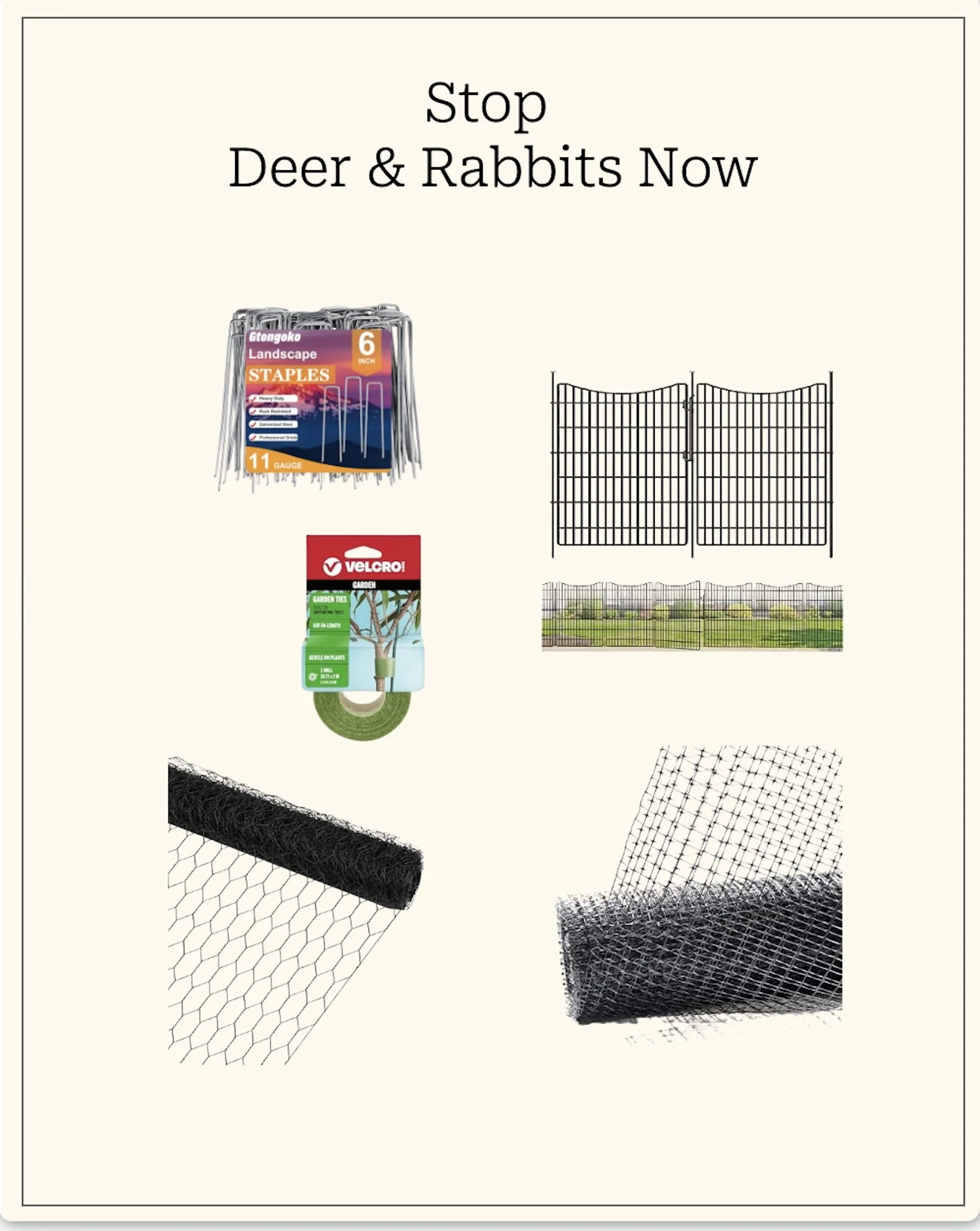
Deer and rabbit protection. Shop here.
A combination of:
Garden cloches
Placed over tender growth and favorites. These cloches are nice because they are extra large, and this version is great because the bird detail is charming. Both give a vintage-inspired feel to the garden.This is not made of wire but of plastic. It comes in different thicknesses. I use the Heavy Duty around larger plants and shrubs because you can shape it, which I find useful. I use it around my roses in hard-to-reach areas. I sometimes use the Light Duty around smaller, tender young growth.
Black Wire Netting
Useful for larger areas that need temporary protection.
Discreet fencing
Used around roses, where browsing is heaviest.Deer and rabbit repellent
Consistently rotated and reapplied.Strategic container and garden bed plantings.
Some of it isn’t invisible. But it blends in enough. And it works.
And working is what matters.
I haven’t stopped planting what I love.
I’ve simply learned where to plant it, how to protect it, and when to let go.
There are still mornings when something disappears overnight. But there are far more mornings when the catmint is blooming, the peonies are untouched, and the structure of the garden holds.
That’s enough for me.
Protecting my garden from wildlife is just one of the ways I take care of my outdoor living space. If you want to read more about my broader seasonal approach, I write about it in The Seasonal Edit series.
ADVERTISEMENT
Continue Reading:
Do Deer Eat Hydrangeas? What to Expect (and What I’ve Learned)
What Rabbits Eat First in Spring (and Why)
Mentioned in This Article:
Want to see the garden behind these decisions?
Join Parsley & Petal
If you purchase through affiliate links, I may earn a small commission at no additional cost to you. As an Amazon Associate, I earn from qualifying purchases. I only recommend tools I genuinely use and love.