
From the Test Garden: July Propagation Experiments
Before we get to this month's propagation trials, here's a quick update from the Test Garden.
🌱 The Burpee Pickler cucumber plants have flowered and are beginning to climb.
🌱 The Blue Lake Bush beans are recovering.
🌱 The cosmos are bouncing back after an early run-in with the rabbits.
🌱 The herbs are continuing to grow, albeit slowly. The rabbits have been enjoying the thyme and tarragon.
This article is part of the ongoing Test Garden series. Browse all Test Garden updates here.
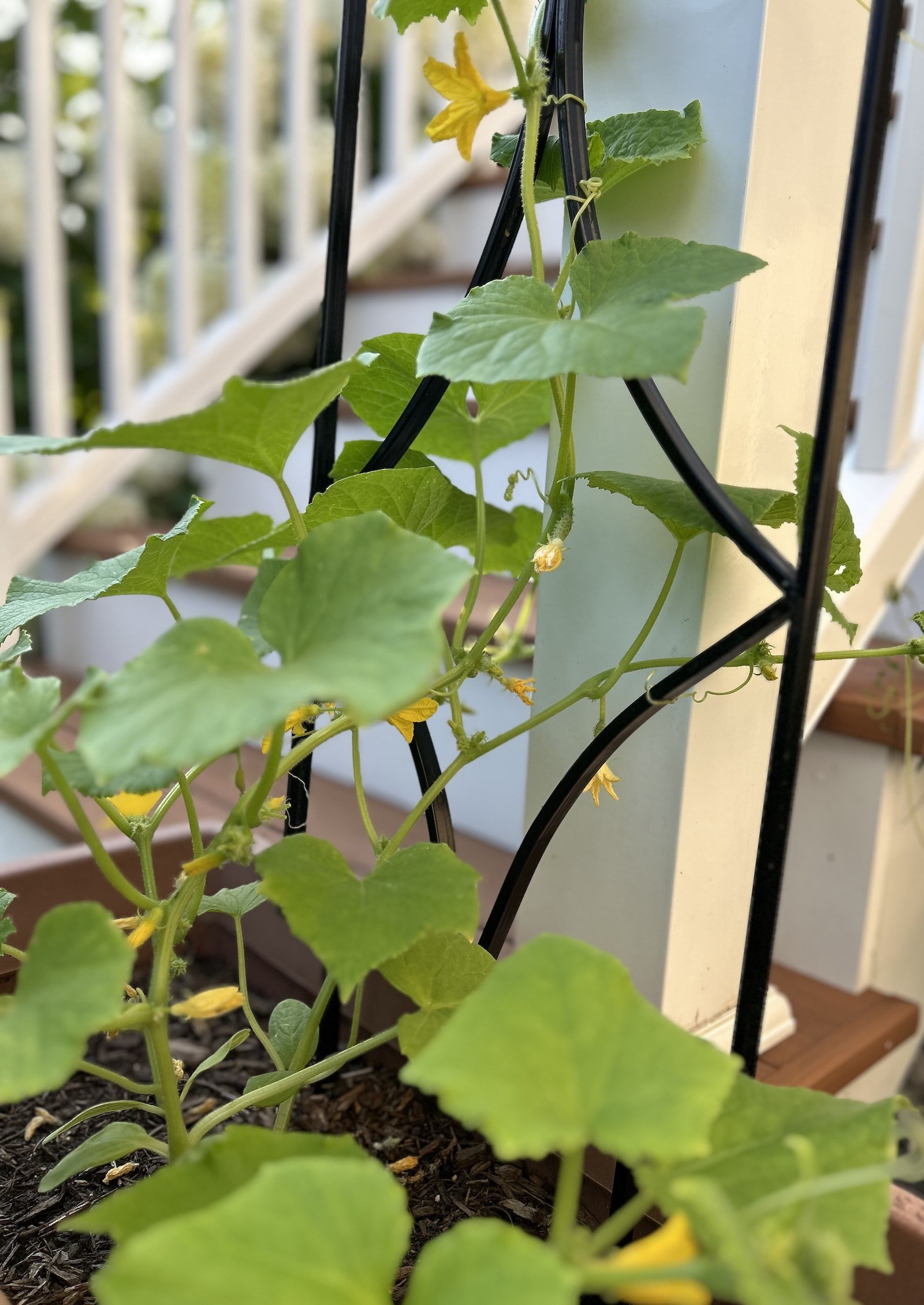
The cucumber plant beginning to climb. All photos by Parsley & Petal.
This post contains affiliate links. If you purchase through these links, I may earn a small commission at no additional cost to you. As an Amazon Associate, I earn from qualifying purchases. Every product featured here is one I use in my own garden and would happily recommend to a fellow gardener.
New Propagation Experiments
And now, a new experiment begins.
Every July, the heat slows the garden down. The first flush of flowers begins to fade, and I usually realize I've managed to exceed my gardening budget once again.
That's when I start looking at the garden a little differently.
Instead of asking, What should I buy next? I start wondering, What can I make from what I already have?
Do I really need to make do with the one Veronica plant because it was all the nursery had?
Some cuttings root easily. Others refuse. Every year I learn something new.
This year I'm experimenting with six summer perennials to see which ones are easiest to multiply.
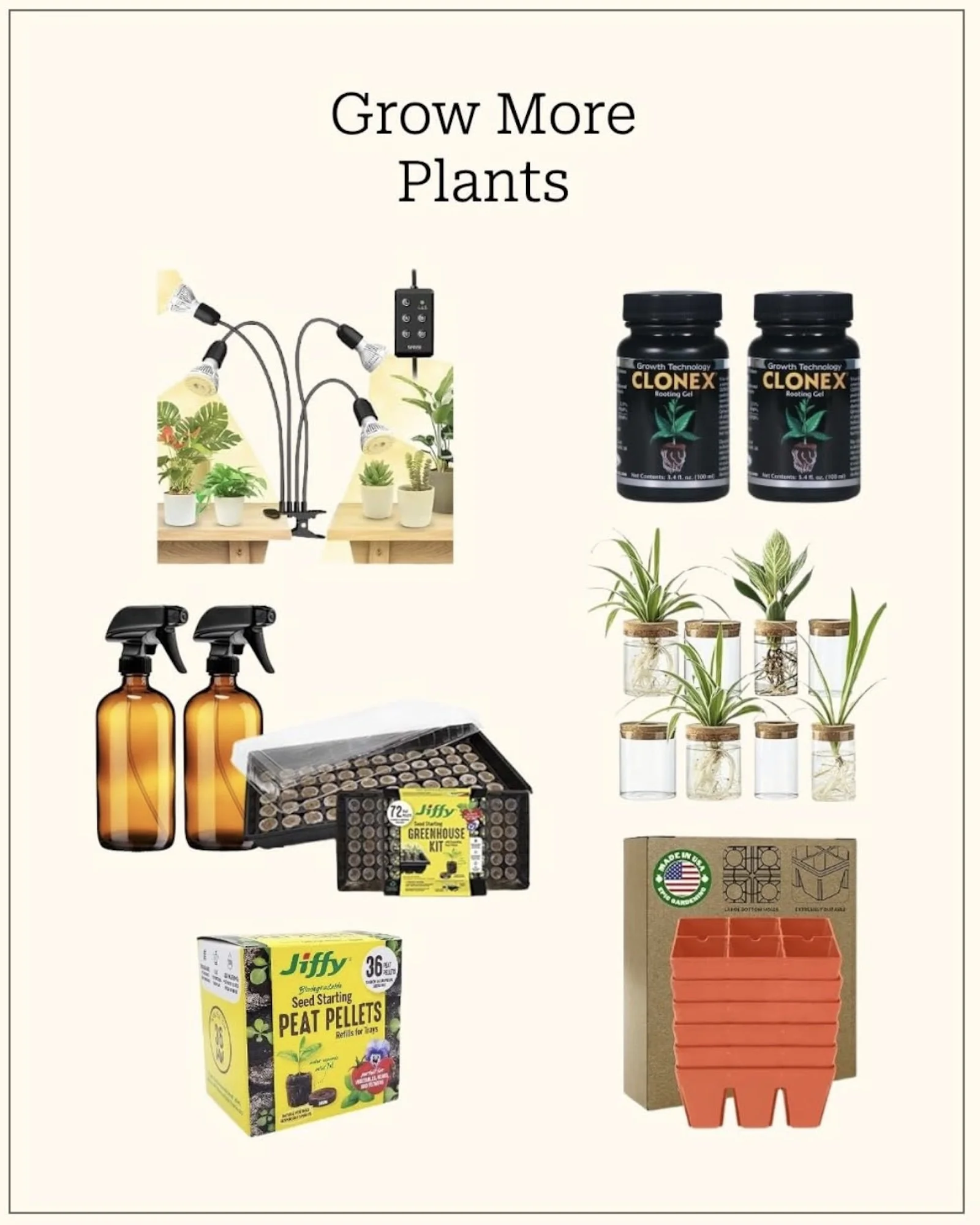
For starting seeds, rooting cuttings, and keeping the propagation experiments going. Shop here.
My Method
Every gardener has a slightly different way of propagating plants. This is simply the method that has worked well for me.
All of these cuttings were taken from healthy, non-flowering stems with at least one leaf node with my favorite Felco 6 pruners. I removed the lower leaves, dipped some in rooting hormone, and planted them in a moist potting mix with extra drainage.
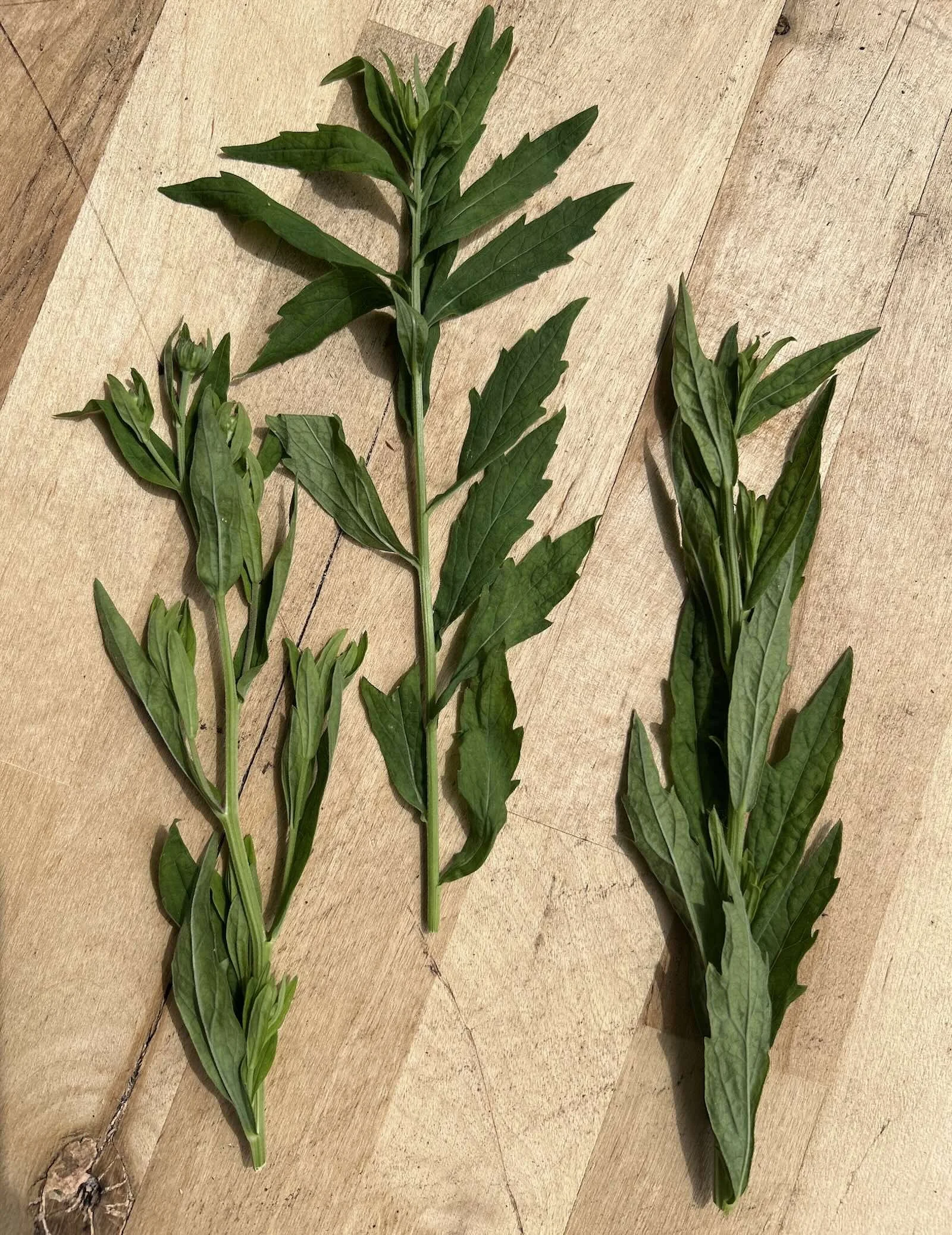
Step 1: Stem cuttings (4-6 inches) taken from aster plant.
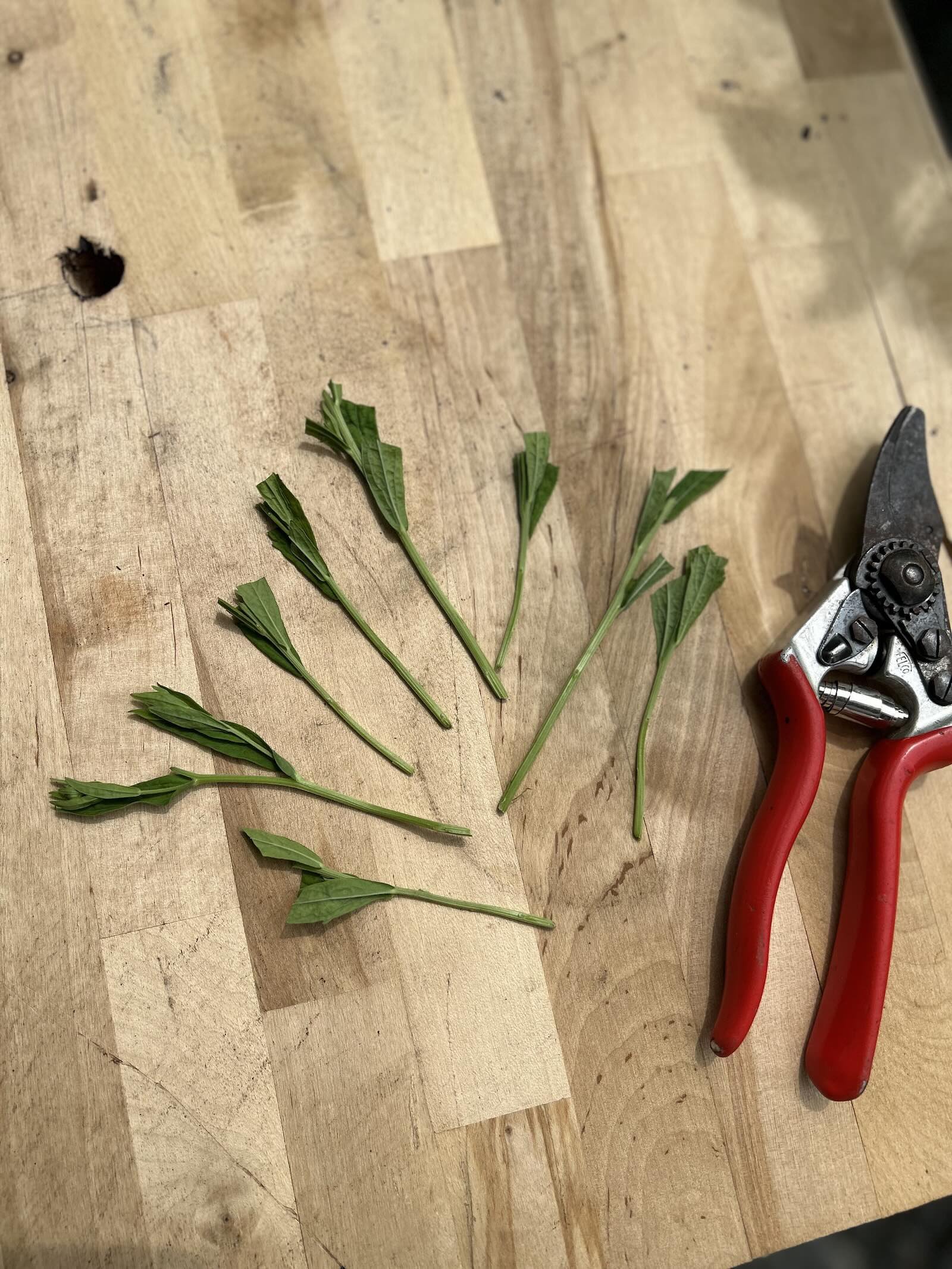
Step 2: Strip the lower leaves off and remove any flowering parts, making sure there are at least 2 leaves remaining. (Optional: Cut half off the remaining leaves and dip the lower inch or so of the stem in rooting hormone.)
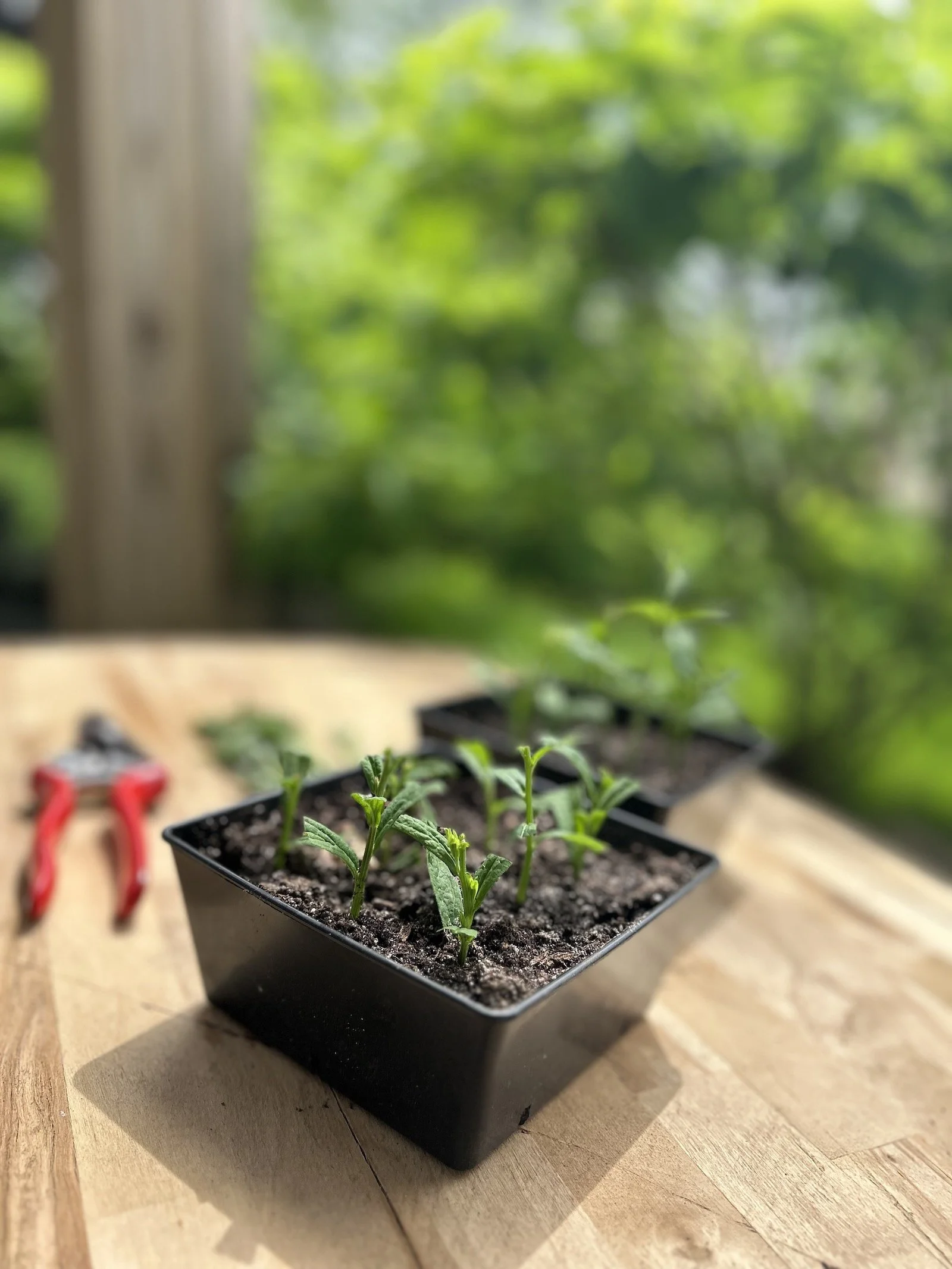
Step 3: Place cuttings in moist soil/coarse sand mixture, ensuring at least one leaf node is buried beneath the soil. Leave in a sheltered area that receives bright, indirect light and keep evenly moist, but not soggy.
What I'm Testing
🌿 Japanese Aster (Kalimeris integrifolia):
I planted Japanese Aster ‘Daisy Mae’ last year as a trial before committing to more. After one season, I knew I wanted to repeat it throughout the garden. It blooms for months with regular deadheading, rabbits mostly ignore it, and it's cheerful without demanding much.
Status: Started several weeks ago. They have rooted already, and I have started a third batch.
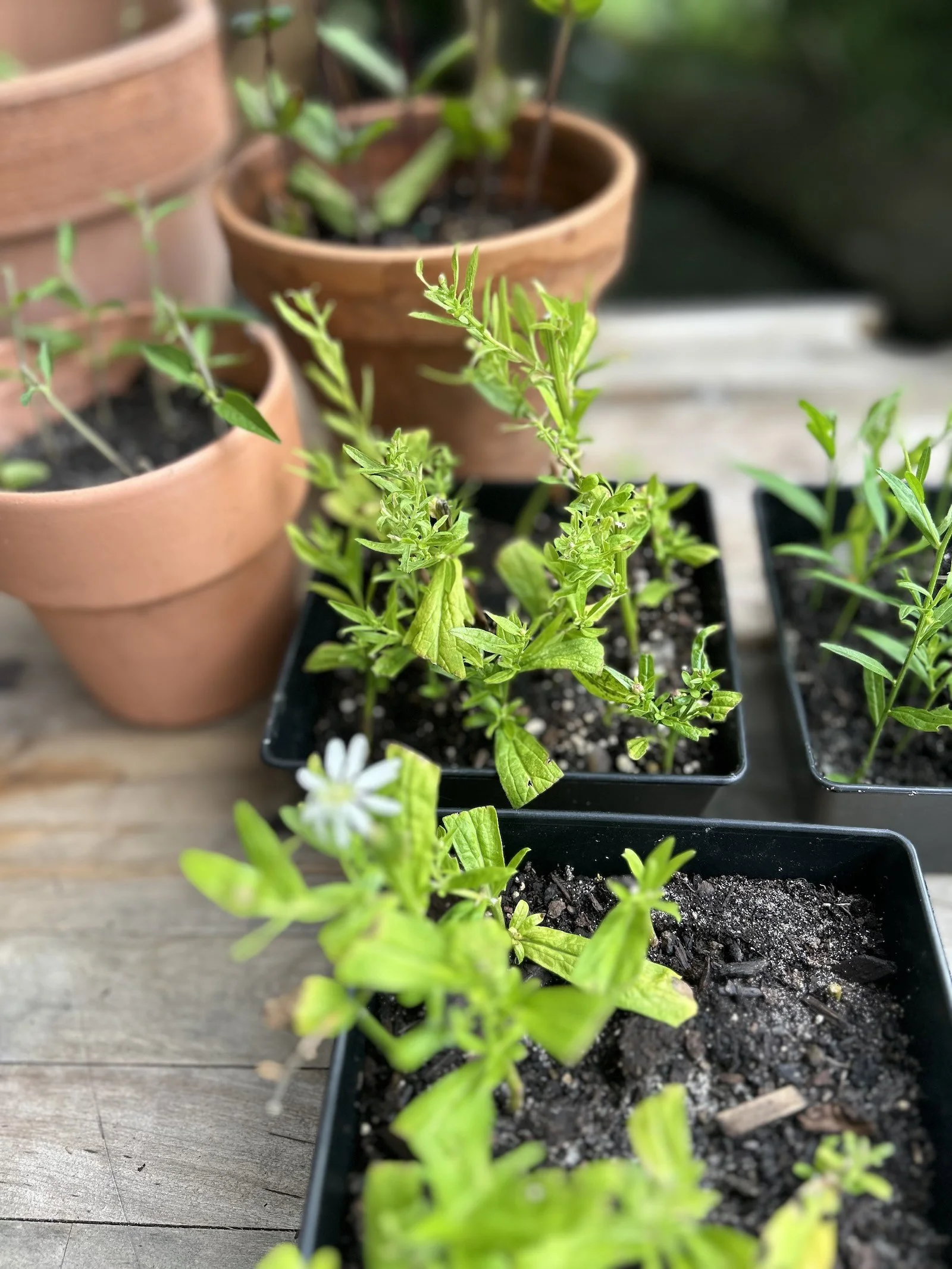
Aster ‘Daisy Mae’ cuttings have rooted after several weeks.
🌿 Agastache (Anise hyssop)
I'd like to repeat some of my agastache throughout the garden. It’s a hummingbird and pollinator magnet, and I love the color.
Status: I've successfully rooted agastache before. Pending.
🌿 Veronica (Speedwell)
I recently added a lovely shade of pink to the garden with Veronica ‘First Love,’ but with only one plant left at the nursery, I am attempting to propagate the few cuttings I had after deadheading the spent blooms.
Status: It’s my first time rooting, and I’m using rooting hormone. Pending.
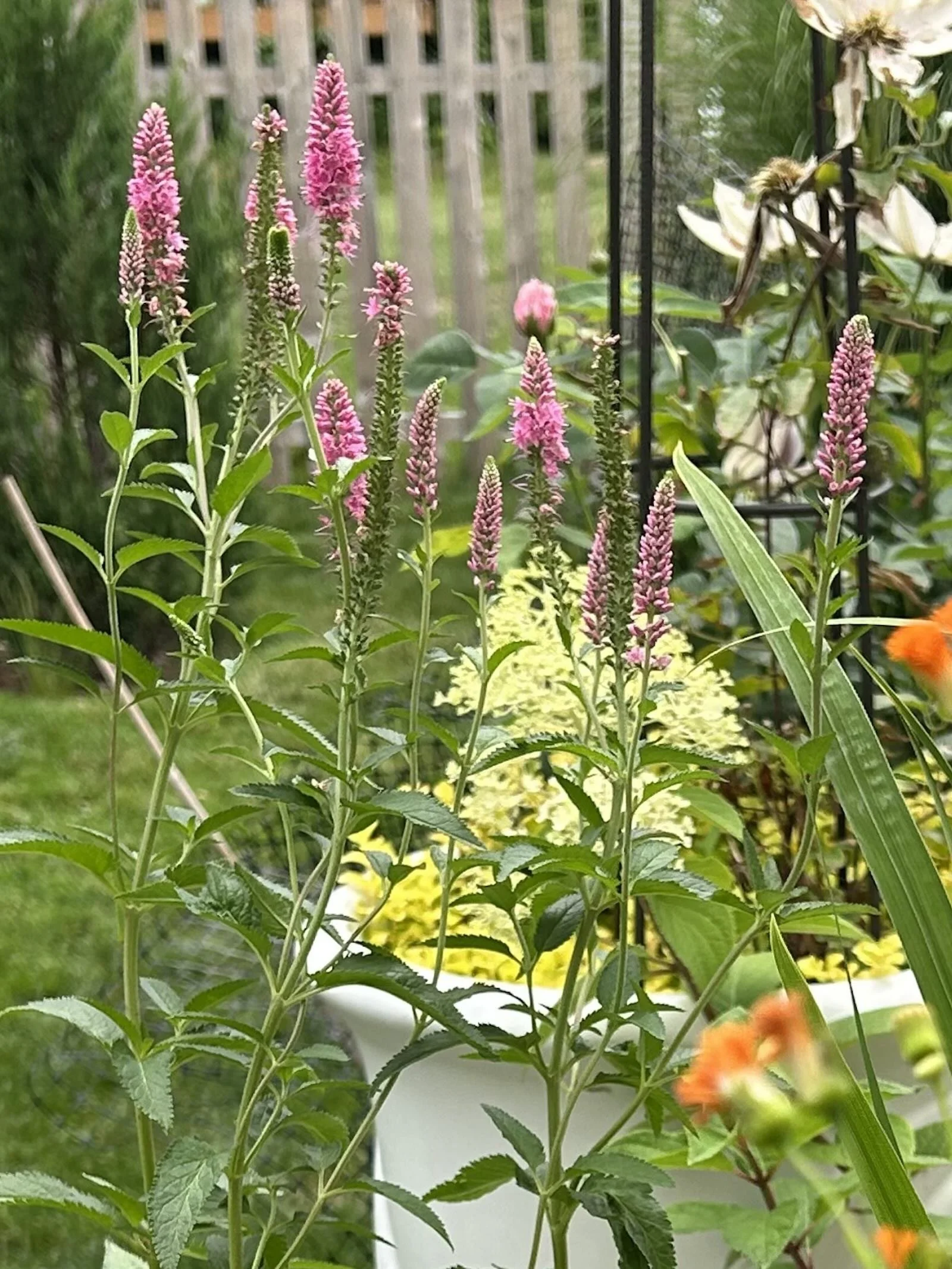
Veronica ‘First Love’
🌿 Sedum (Stonecrop)
There is a new pink-and-white sedum, ‘Frosted Fire,’ with chartreuse yellow-green foliage I’d like to repeat throughout the garden to lighten up some darker areas.
Status: I've successfully rooted sedum many times from both stems and leaves. These should be among the easiest.
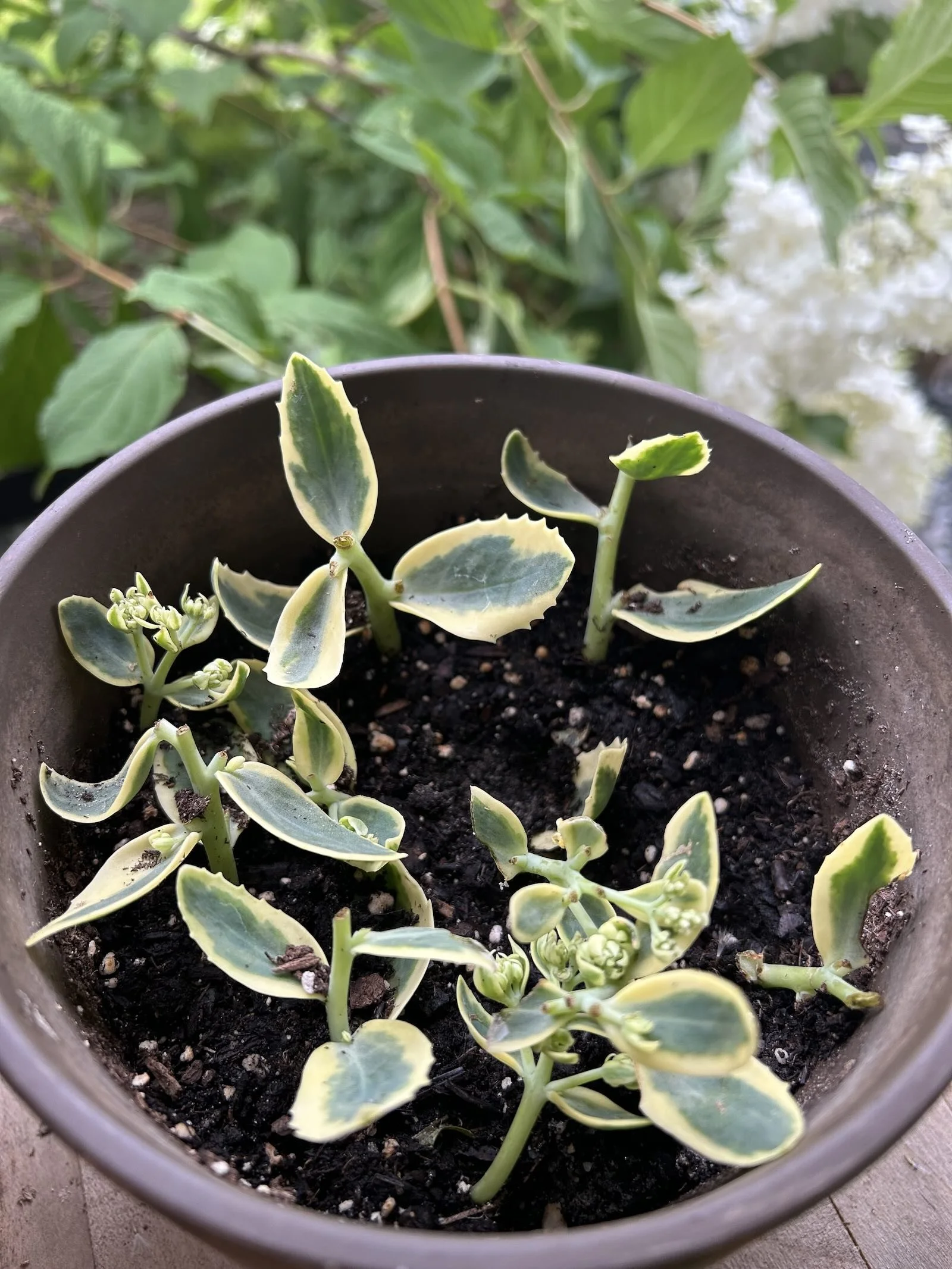
‘Frosted Fire’ sedum cuttings.
🌿 Penstemon (Beardtongue)
I have an ‘Onyx and Pearl’ penstemon that I would like to weave through a new rose bed.
Status: I started a few weeks ago. It’s my first time rooting, and I’m using rooting hormone. A few have already died, but it appears a few have rooted.
🌿 Salvia (Salvia nemorosa)
I have ‘Snow Hill’ white salvia that I would love to add to a new rose bed.
Status: I have rooted this salvia before, but like all salvia, it can be finicky. Pending.
What I'm Watching For
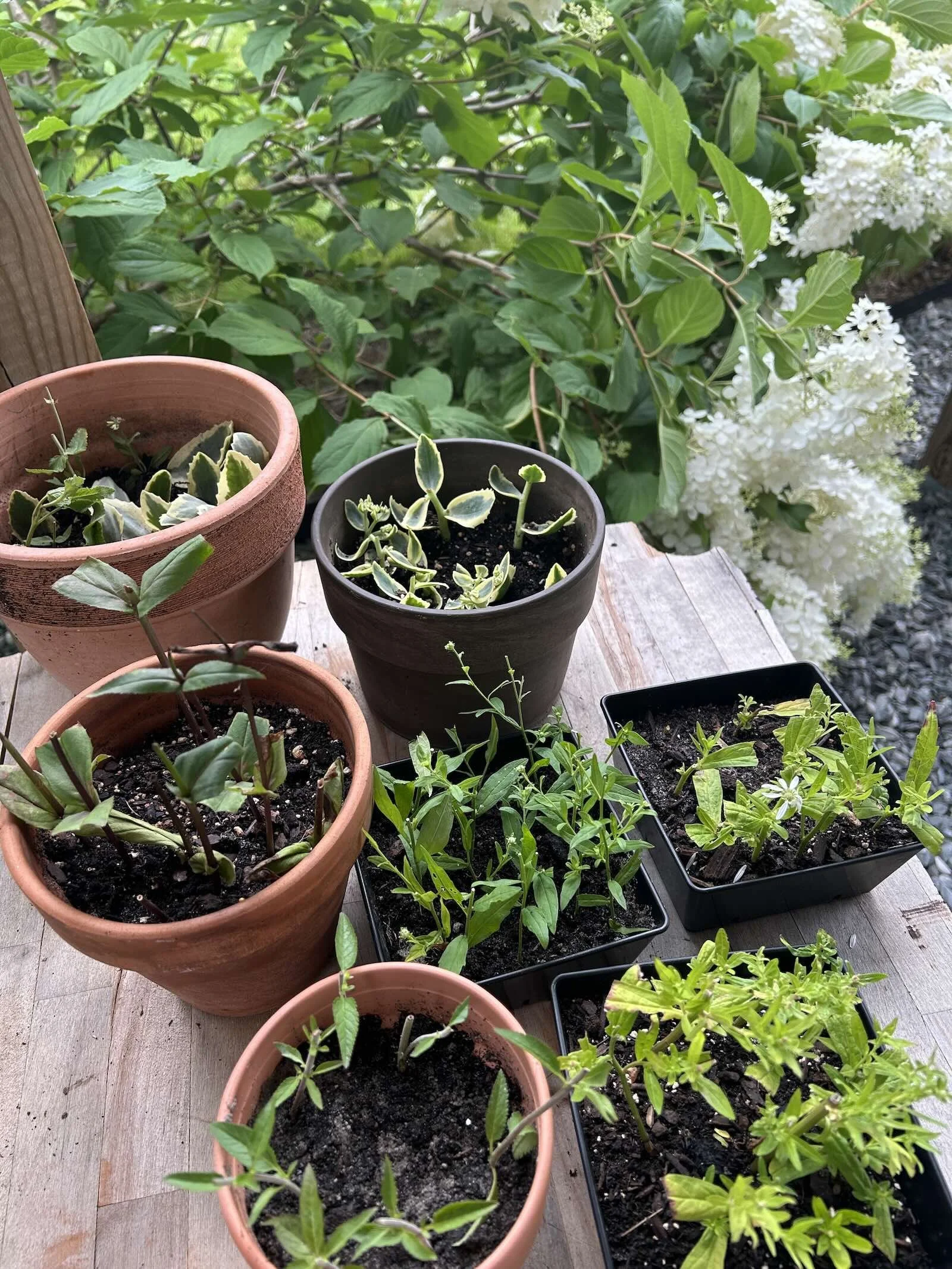
Propagation trays.
I've rooted asters, sedum, salvia, and agastache before, but speedwell and penstemon are new experiments.
My prediction? Sedum and asters will probably be the easiest. The penstemon and speedwell worry me because of their thinner stems, but that's part of the fun of the Test Garden. You don't really know until you try.
Frequently Asked Questions
When I first started propagating plants, I always had the same recurring questions:
When do you know a cutting has really rooted?
I prefer to set it and forget it. If the stem has shriveled, that is usually the sign it has died. Otherwise, if you gently tug and feel resistance, that is usually a sign the plant has rooted.
Do you pot them up first or plant them directly?
I usually plant them directly, but you can pot them up if you prefer.
Can they survive their first winter?
If they've developed a healthy root system before winter, they should overwinter just like the parent plant. In colder climates, some gardeners prefer to overwinter very small cuttings in pots for extra protection.
How big should they be before planting?
I usually wait until they've developed a healthy root system and are putting on new growth before planting them in the garden.
How do you protect new plants from rabbits?
I cover them with a piece of netting or a cloche like this one or this one to be extra careful.
Is one stem enough, or should you plant several together?
I usually plant several together for a fuller look.
I'll revisit these cuttings later this summer to share which plants rooted successfully, which failed, and when they're finally ready to move into the garden.
After all, that's the whole point of the Test Garden. Not every experiment succeeds, but every one teaches me something.
July is full of little experiments.
While these cuttings are rooting, the rest of the garden continues to evolve.
You can catch up on everything happening this month in the latest Seasonal Edit.
Continue ReadingJune: The Garden Has Opinions