
Garden Design Lesson: Borrowed Views
There comes a point when a gardener stops trying to occupy every inch of the landscape.
It isn't because they've run out of room. It's because they begin to notice that some of the most beautiful parts of a garden don’t need another plant.
A neighbor's maple catches the evening light. A flowering cherry across the street announces the arrival of spring before anything in their own beds has awakened.
Beyond the fence, mature trees soften the horizon and give a modest garden a sense of age and space it could never achieve on its own.
Landscape designers have a name for this practice of incorporating the background landscape and broader scenery into a garden's composition: a borrowed view.
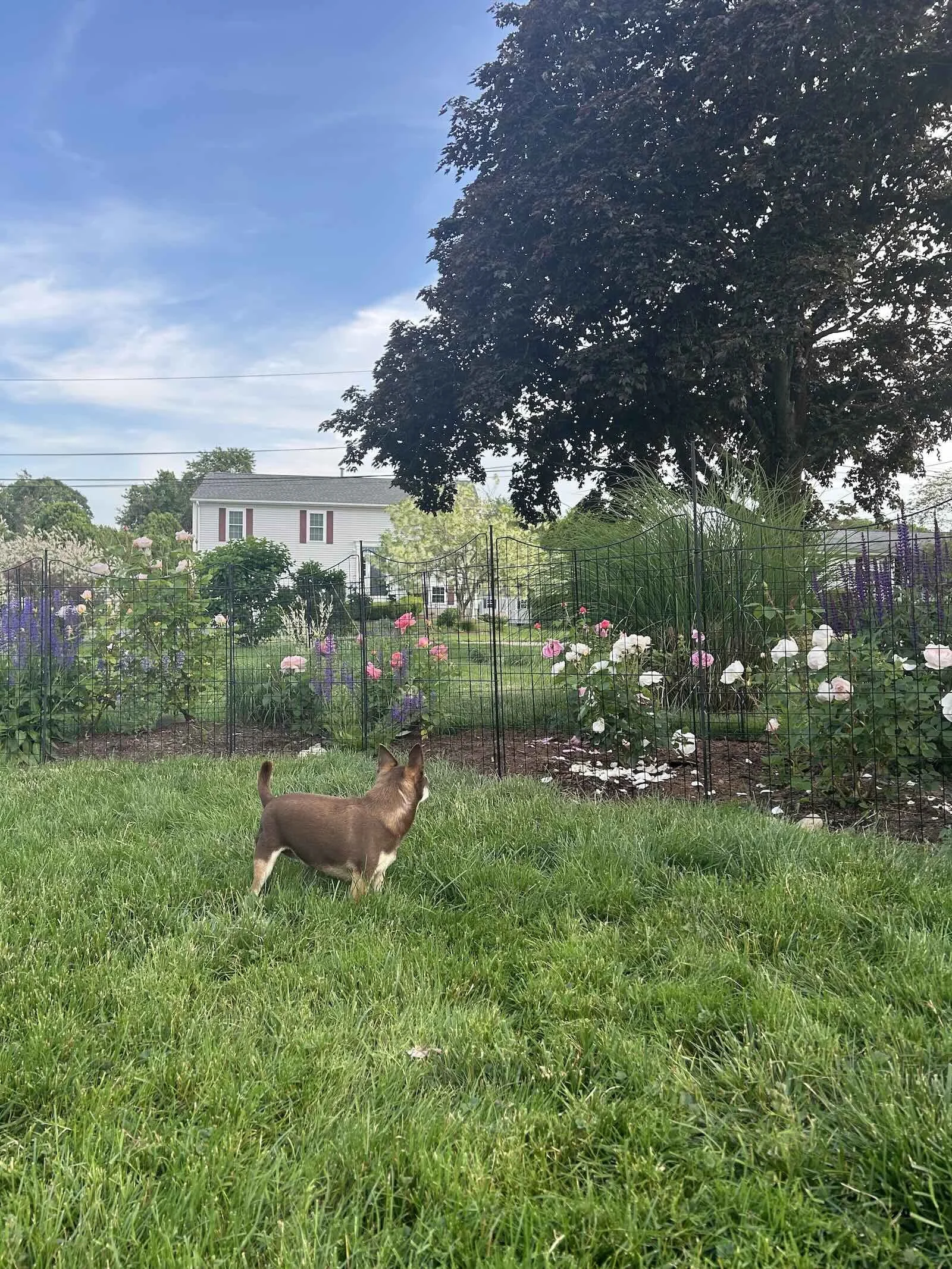
P&P’s Chief Security Officer minding the perimeter and enjoying the view from the Rose Garden Room. All photos by Parsley and Petal.
The idea is simple. Rather than blocking everything beyond your property line, you compose your garden so that distant trees, neighboring gardens, church steeples, fields, or even the sky become part of the experience. Your garden doesn't end at the fence or property line. Visually, it continues beyond it.
Once I learned the term, I realized I had been doing it without knowing its name.
My own garden sits on a fairly ordinary suburban corner lot.
The fences keep rabbits where they belong, at least in theory, but they don't define what I see. From the Rose Garden Room, my eye is drawn first to the dark burgundy, near-black leaves of a neighboring maple and then to the feather-white wispy leaves of the Chinese Fringe tree across the street.
In spring, a flowering cherry tree from another neighbor provides a romantic show for all of us.
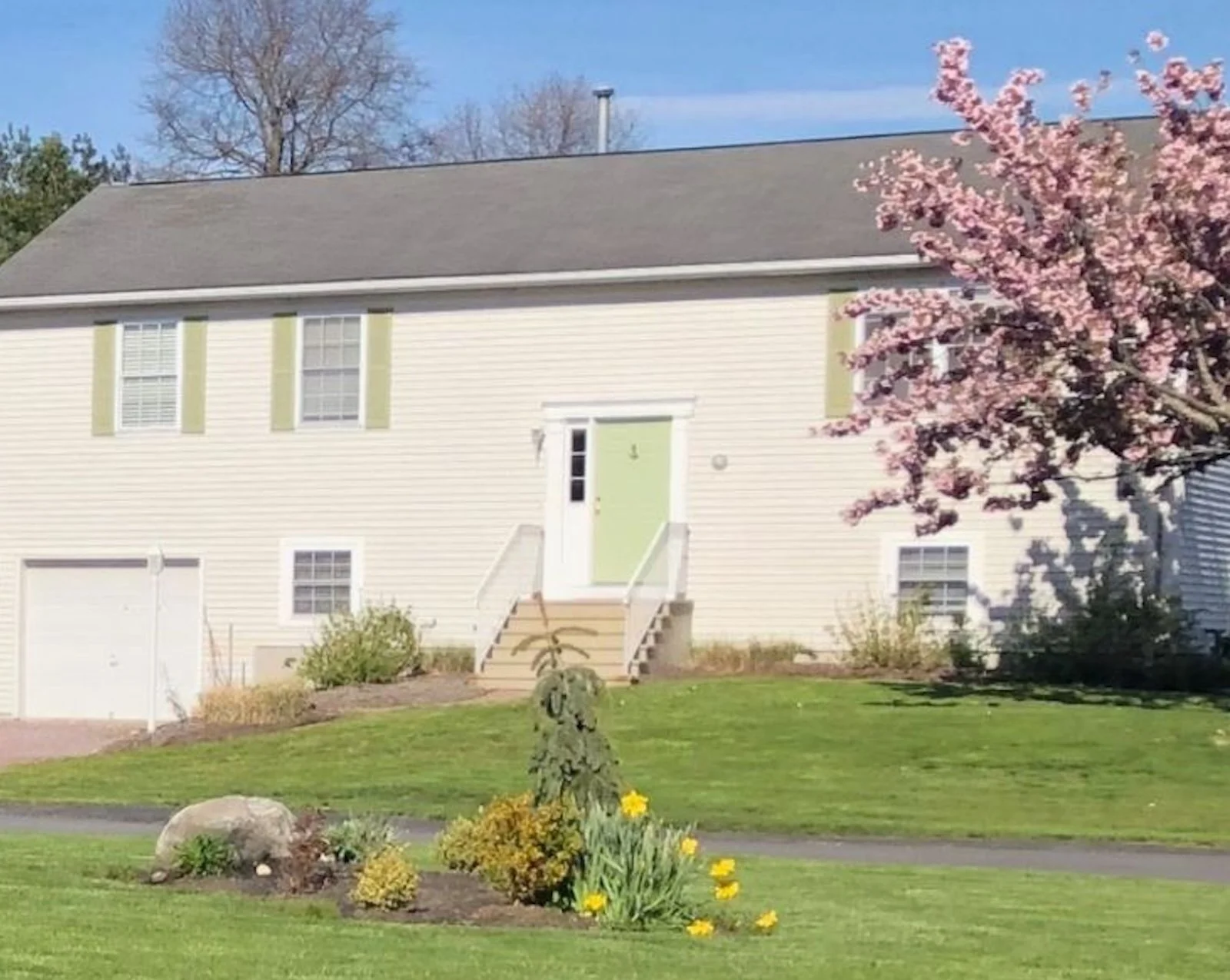
Our neighbor’s cherry tree puts on its spring show by the corner berm.
Even the broad New England sky, with its cotton candy clouds and violet-red sunsets, becomes part of the composition, changing the garden’s mood from one afternoon to the next.
Some of my favorite views don't belong to me.
They belong with my garden.
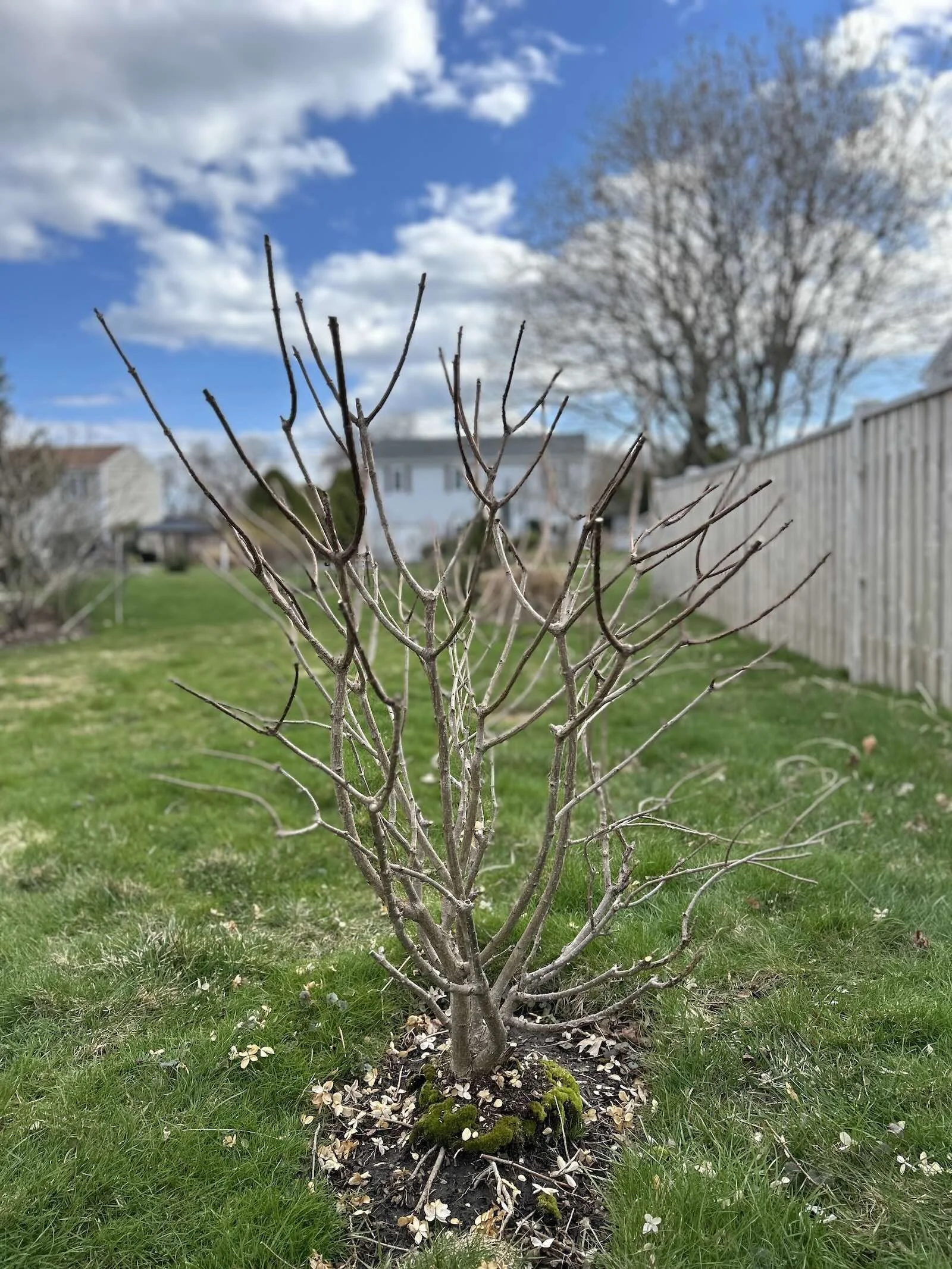
Borrowed views don’t disappear when the leaves drop. A QuickFire hydrangea bush after pruning, on a sunny late winter day.
How to Borrow a View
You don't need acres of land to borrow a view. In fact, smaller gardens often benefit the most.
Instead of asking, "What should I hide?" try asking:
What naturally draws my eye beyond the garden?
Is there a beautiful tree, distant hillside, church steeple, or neighboring garden I can frame rather than block?
Can I layer my own plants so the eye gradually travels outward instead of stopping at the property line?
Sometimes the best design decision is resisting the urge to screen everything.
When I lived in San Francisco, Carmel-by-the-Sea became my favorite getaway. It still is.
On a recent trip, I was awestruck by the ocean vista. Who wouldn't want to borrow a view like this?
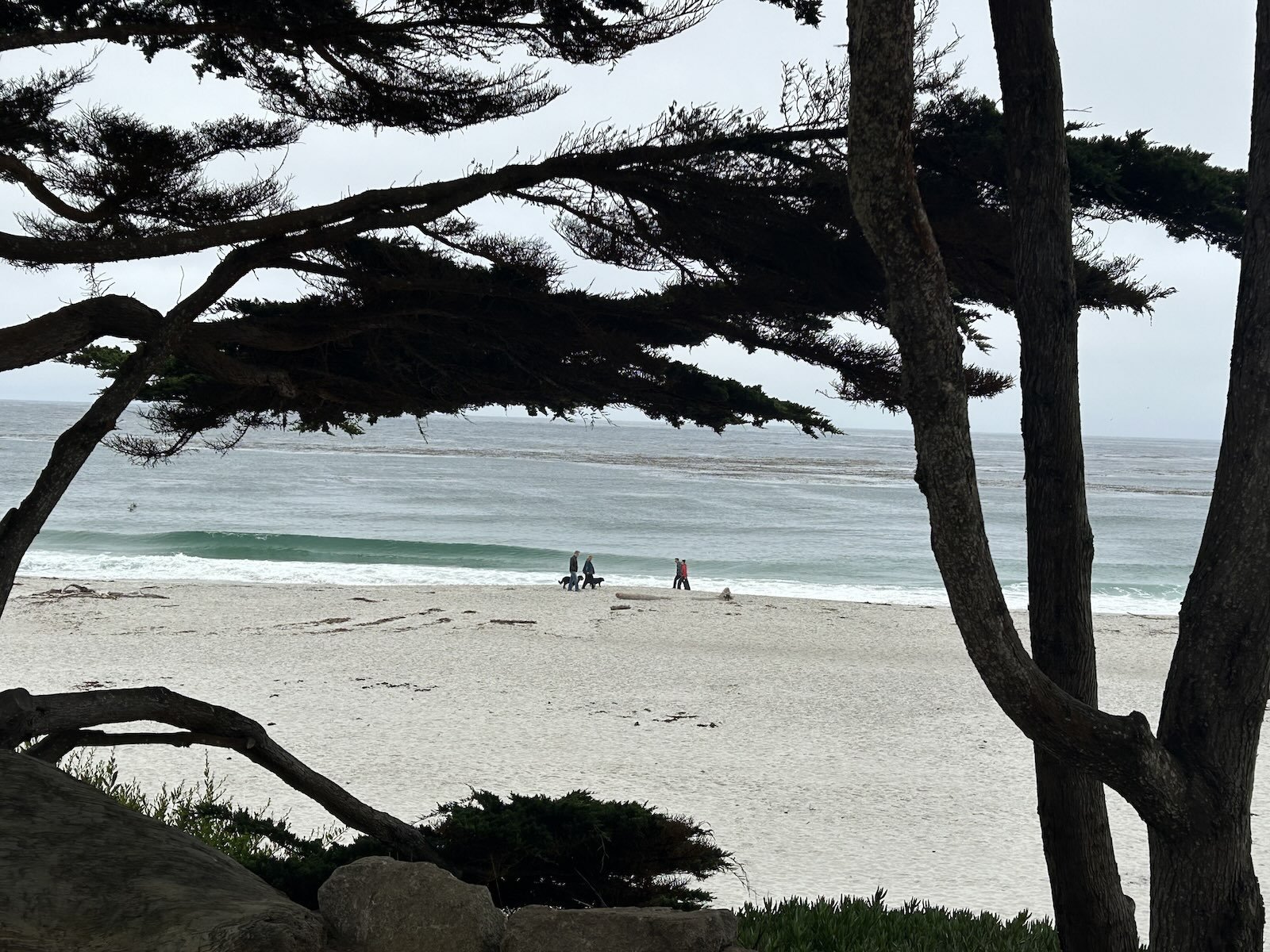
View from a recent walk in Carmel-by-the-Sea, CA.
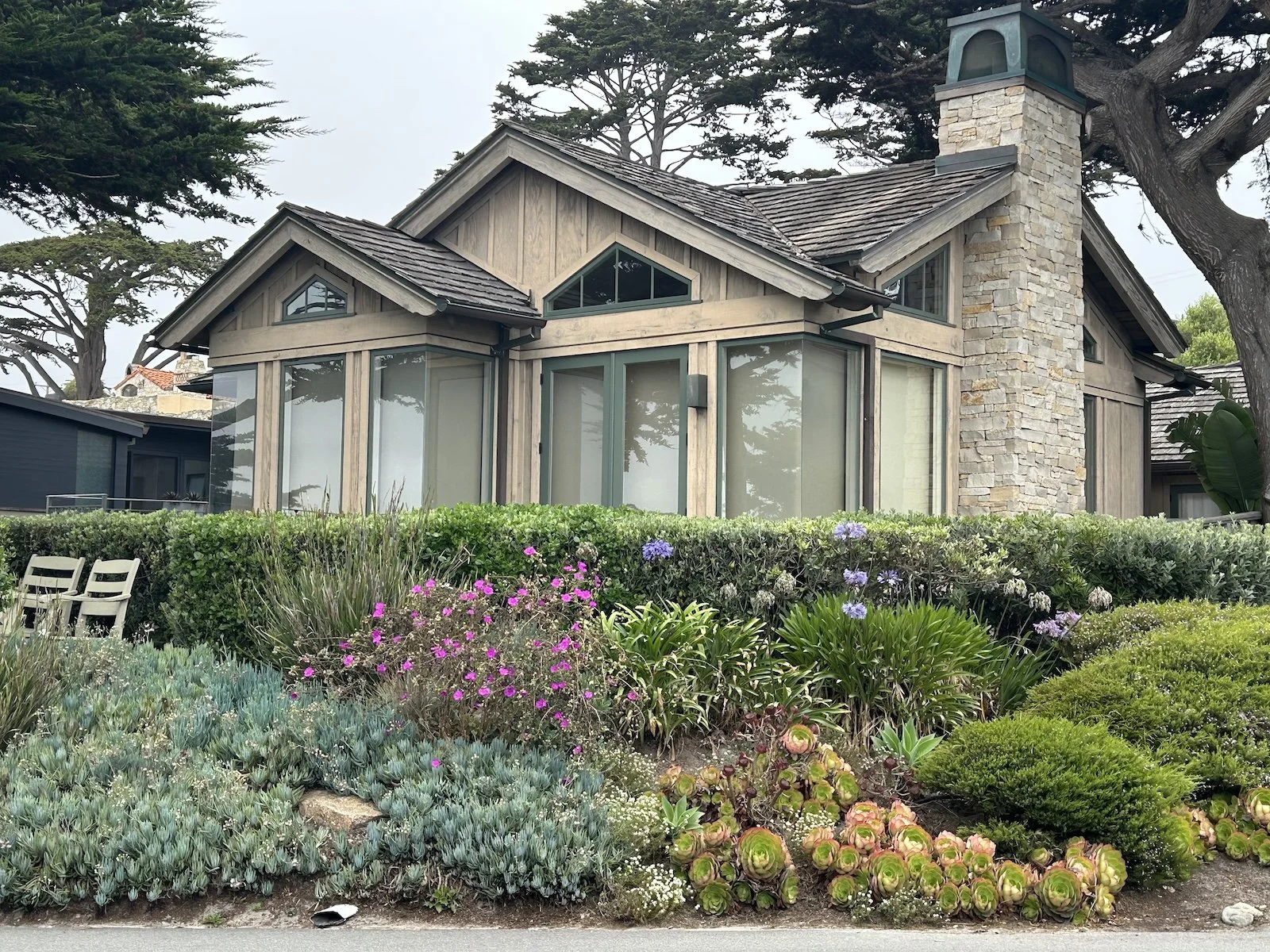
House and garden in Carmel-by-the-Sea, CA with view of distant cypress trees.
Gardening often teaches us to cultivate what is ours.
Borrowed views remind us to appreciate what isn't.
Every spring, I look forward to blossoms I never planted. Every summer, I wait for the neighboring trees to cast long evening shadows across the lawn. They have become part of the language of this place, just as surely as the roses, hydrangeas, and daffodils that grow within the fence.
Perhaps that's one of gardening's lessons.
Not every beautiful thing has to belong to us before it can become part of our lives.
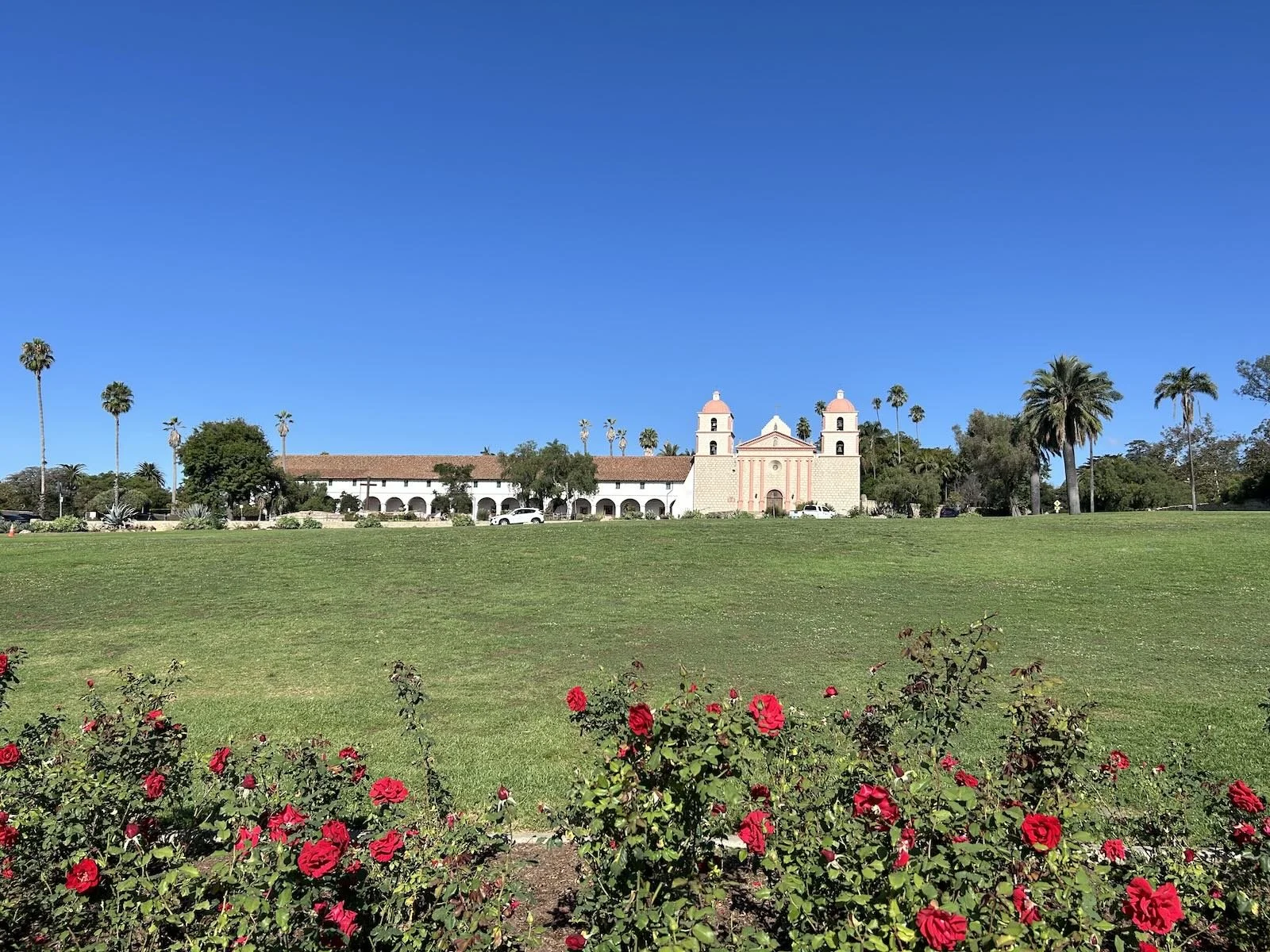
The Mission Rose Garden (A.C. Postel Memorial Rose Garden), across from the Santa Barbara Mission in Mission Historical Park, CA.
You can find more seasonal notes and garden observations in The Seasonal Edit.
Continue ReadingMentioned in This StoryBrowse the GardenJoin Parsley & Petal