
Peonies and Roses: A Love Story
The South garden bed began with only three hydrangeas against the side of the house. Over time, my mother and I slowly filled it with peonies and drifts of daffodils, planting with the optimism that often comes in the early years of a garden.
Peonies have always been one of my mother’s favorite flowers, so naturally, they became part of mine, too.
Some thrived immediately. Others never quite settled in the way I hoped they would. ‘Dr. Alexander Fleming’ produced one spectacular season before slowly declining. Two vivid ‘Kansas’ peonies bloomed beautifully at first, then struggled after a year of fungal issues they never fully recovered from, despite cutting them back and treating them carefully.
Only ‘Lady Orchid’ remained vigorous year after year, eventually convincing me that good nursery stock matters more than gardeners sometimes want to admit.
I have become very attached to my peonies. Over time, though, roses, especially English shrub roses, started to catch my eye.
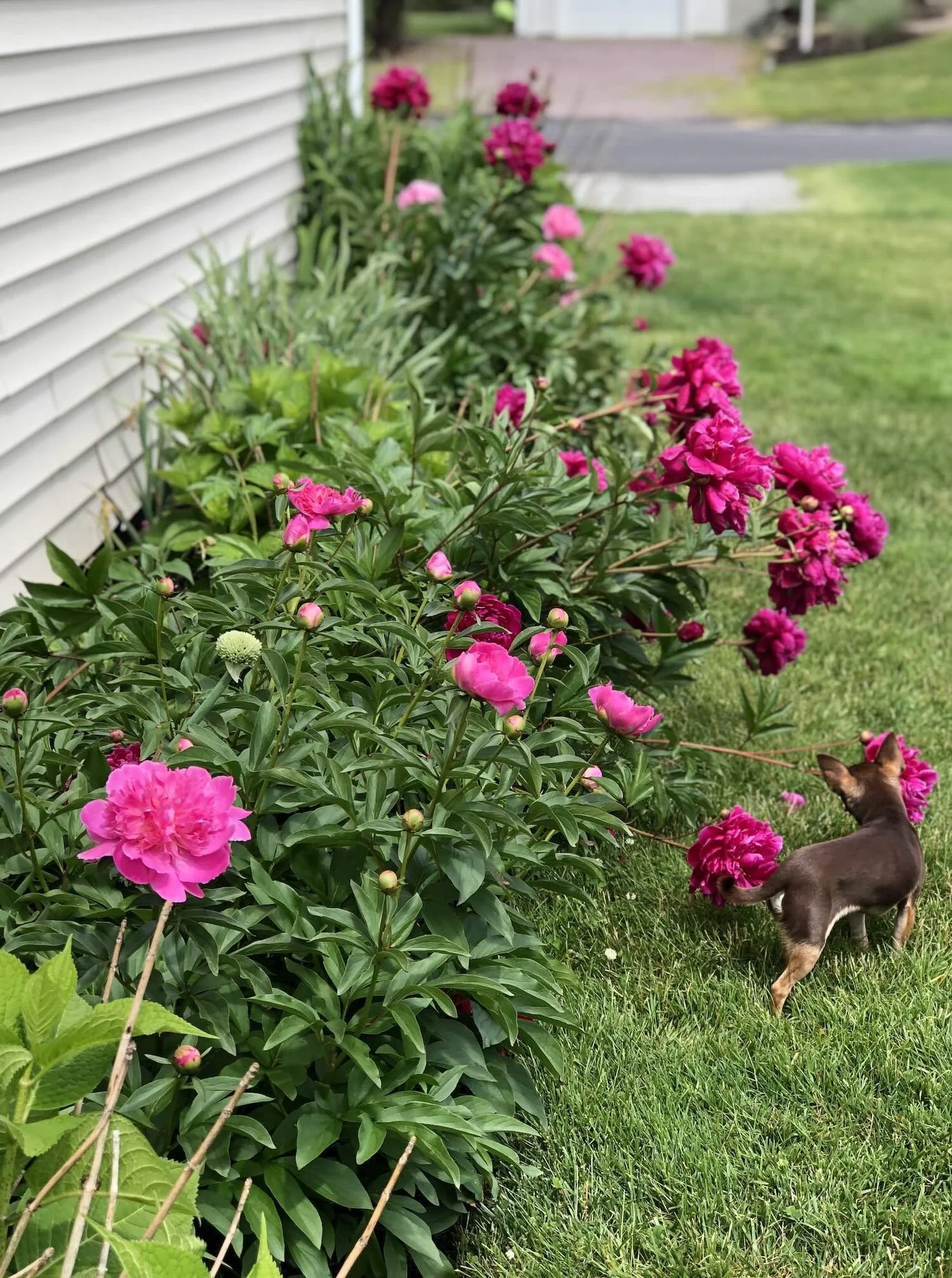
The South garden bed in the early years. All photos by Parsley & Petal.
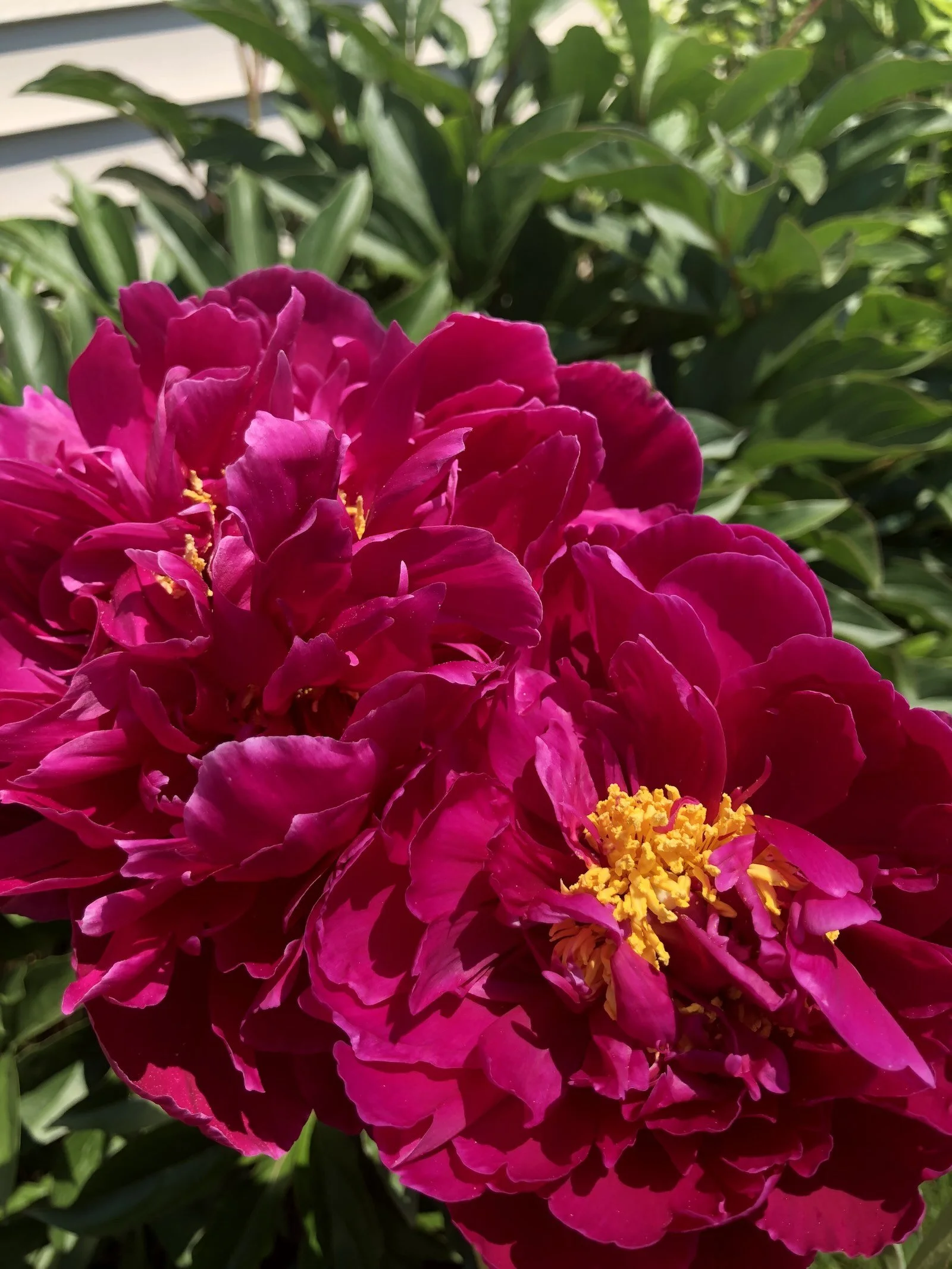
Two ‘Kansas’ peony bushes never thrived after an initial strong bloom season.
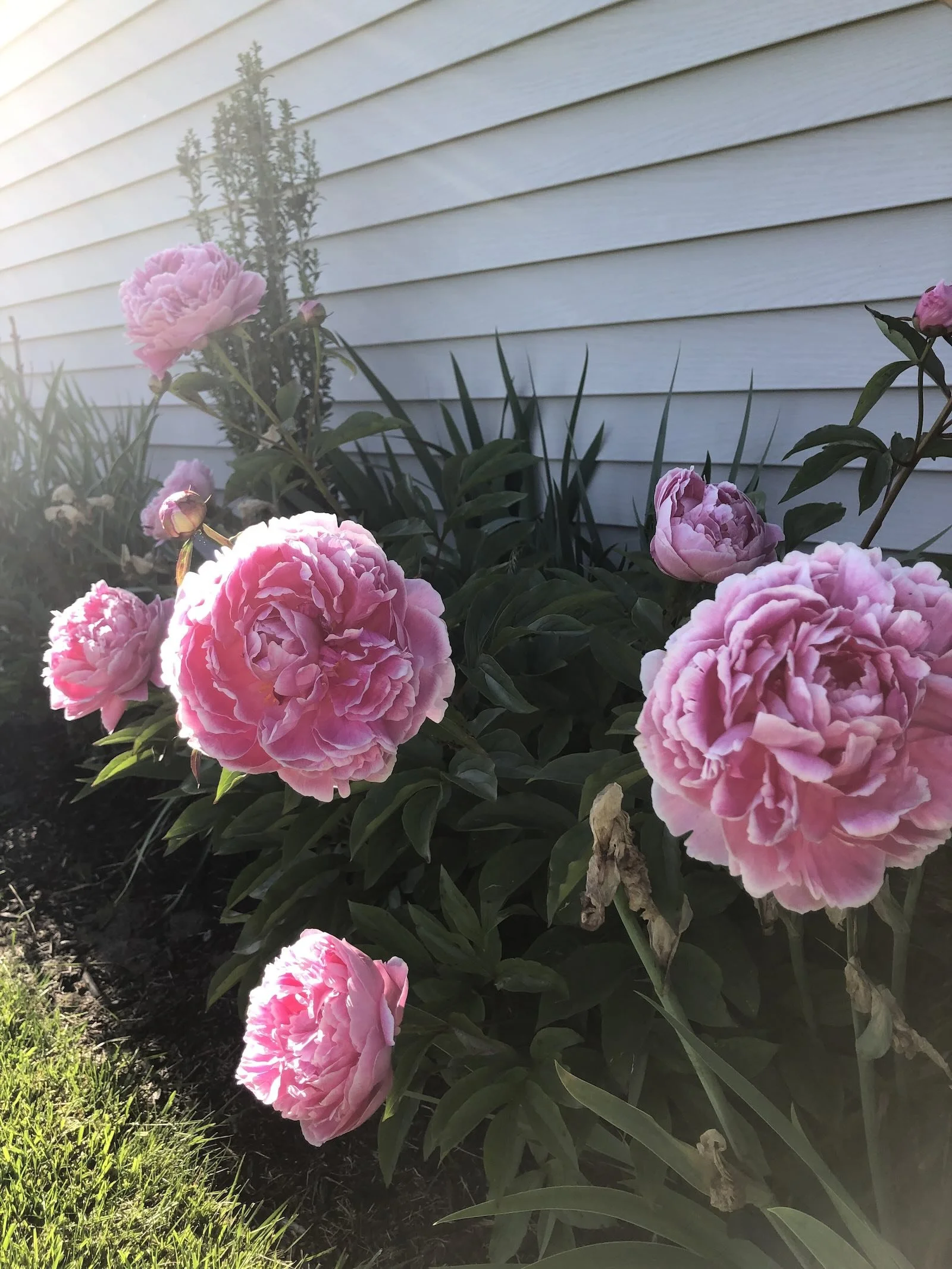
‘Dr. Alexander Fleming’ last great bloom in 2022. So sad to see it go.
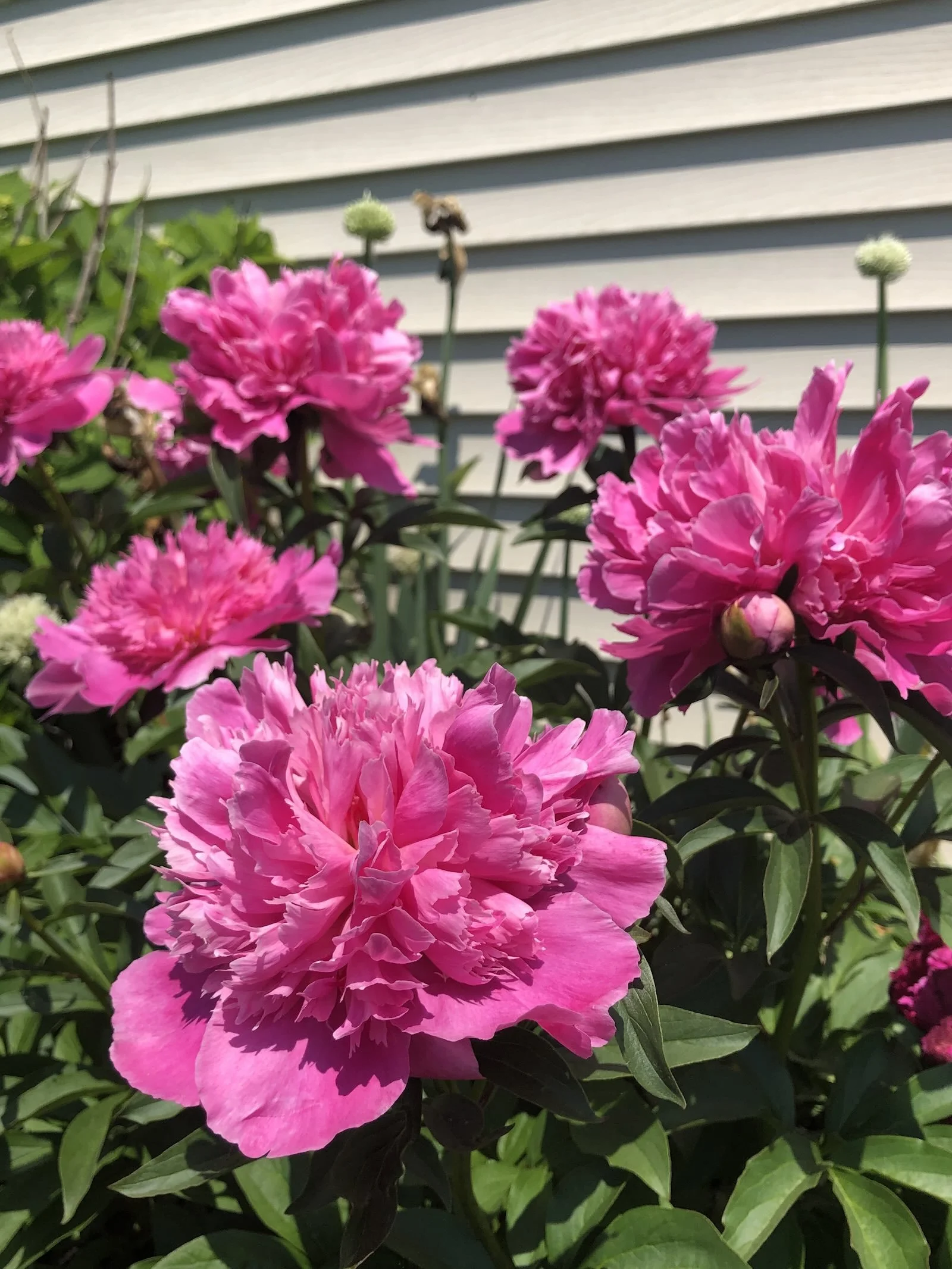
‘Lady Orchid’ peony, 1 of the 4 peony bushes which will remain in the South bed.
A fellow gardening neighbor noticed how much I loved working in the yard. Before she moved away, we lifted her peonies and planted them together in the corner berm I had designed just for them and the weeping Colorado Blue Spruce. One of them, what I believe to be ‘Red Charm’, still blooms in deep crimson every spring, leaning carefully on its support ring, impossible to ignore.
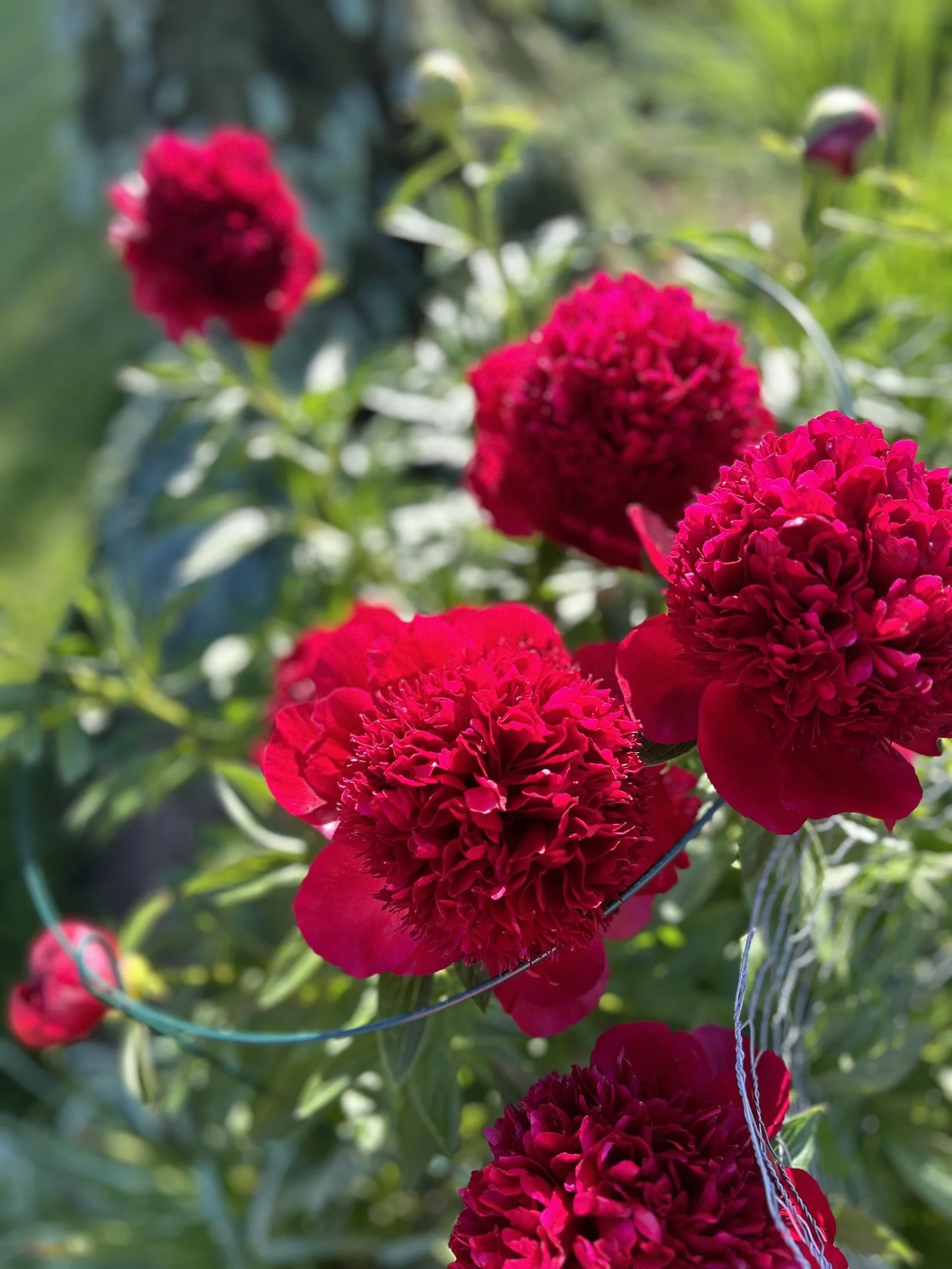
A red bomb peony, a gift from a former neighbor.
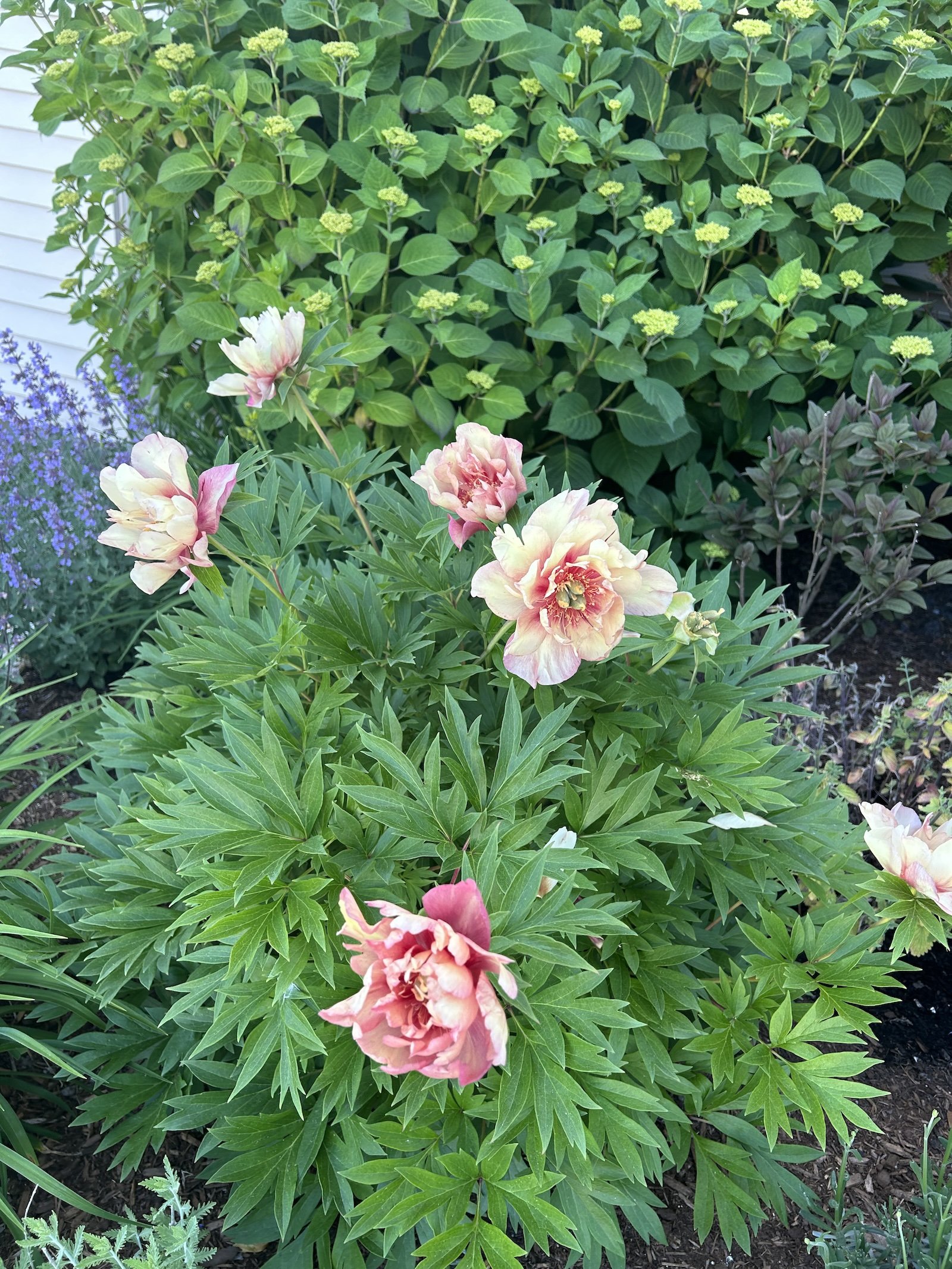
A young ‘Julia Rose’ itoh peony in the front bed.
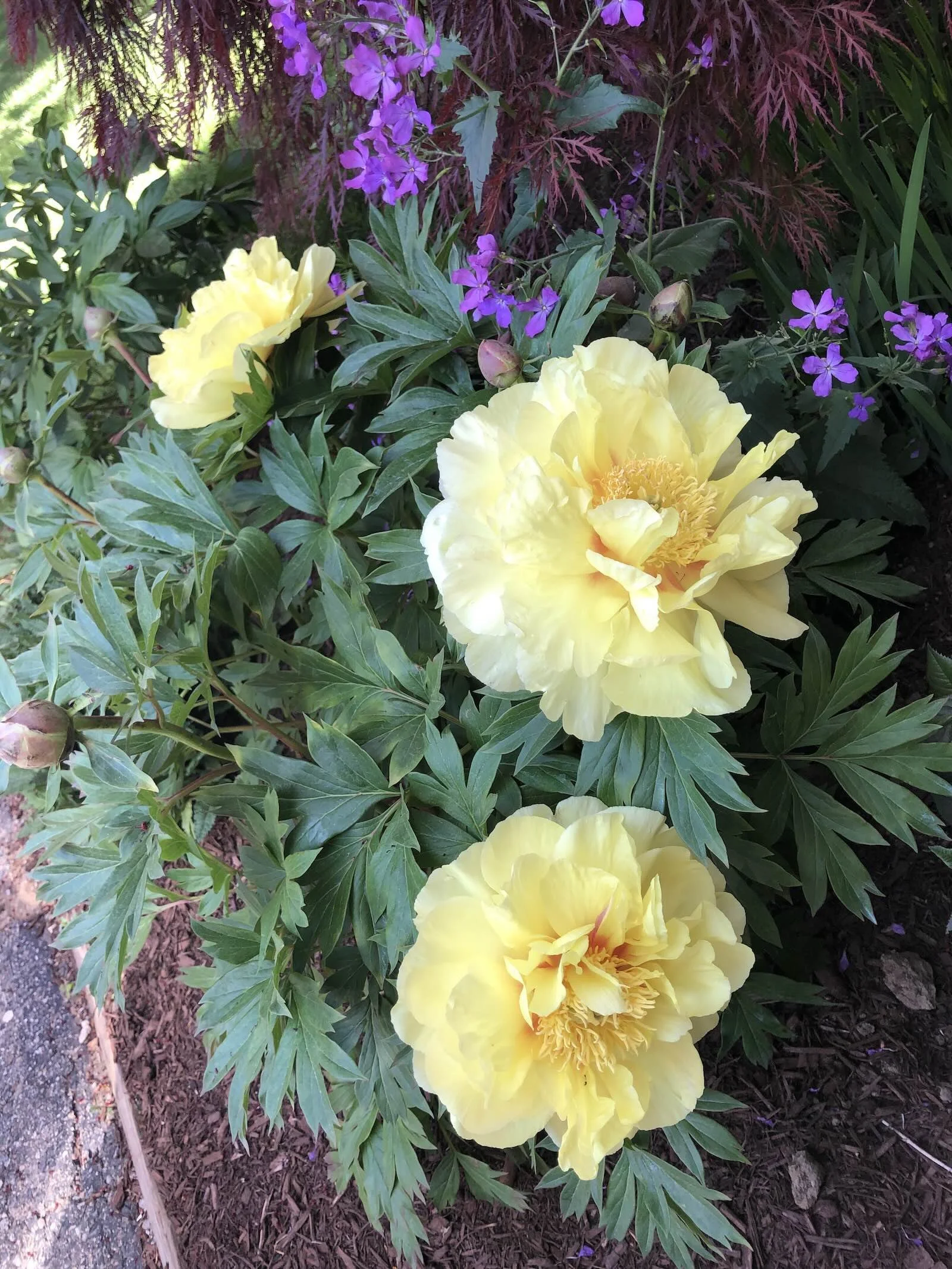
Mom’s “Bartzella’ itoh peony, a Mother’s Day gift from me.
I fell hard for David Austin’s ‘Alnwick’ rose because it looked almost indistinguishable from a peony in bloom — soft pink, deeply cupped, romantic without trying too hard. Unfortunately, the deer agreed. Unlike peonies, which are one of the best deer-resistant plants in my garden, roses seem to function as an open invitation. Still, I keep planting them anyway.
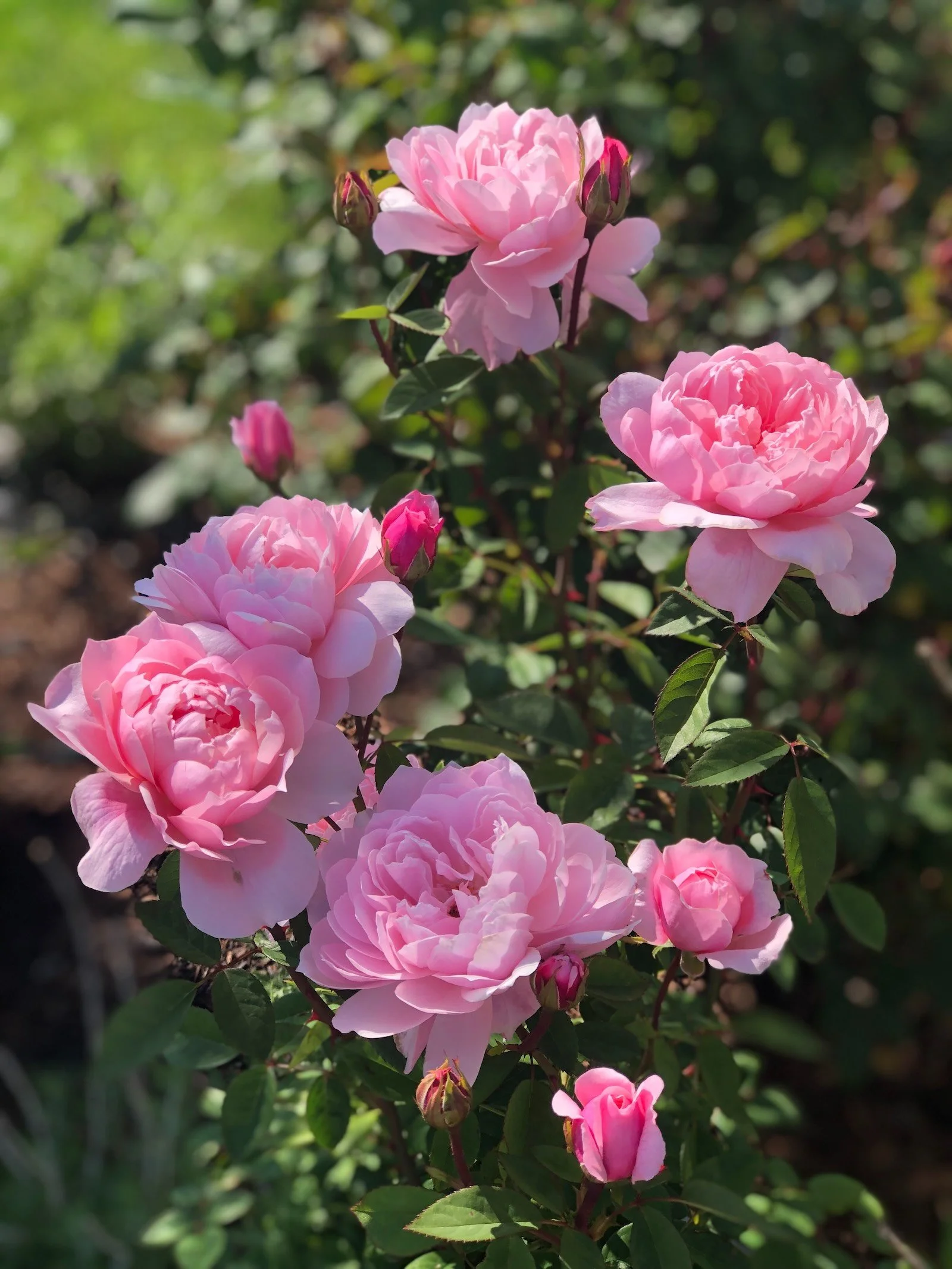
David Austin “Alnwick” protected from deer.
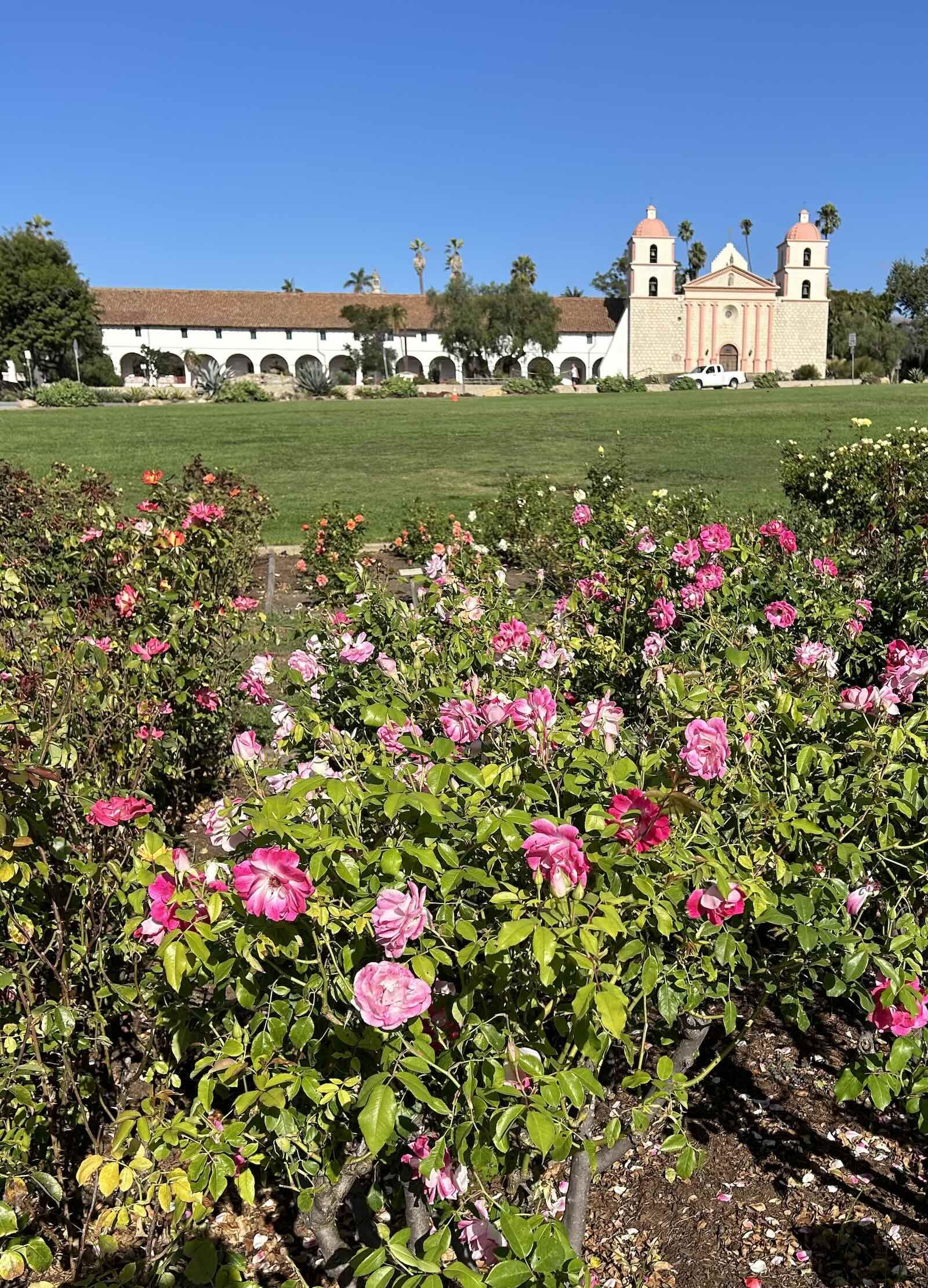
The famous Mission Park and Rose Garden, (officially known as A.C. Postel Memorial Rose Garden) in Santa Barbara, CA.
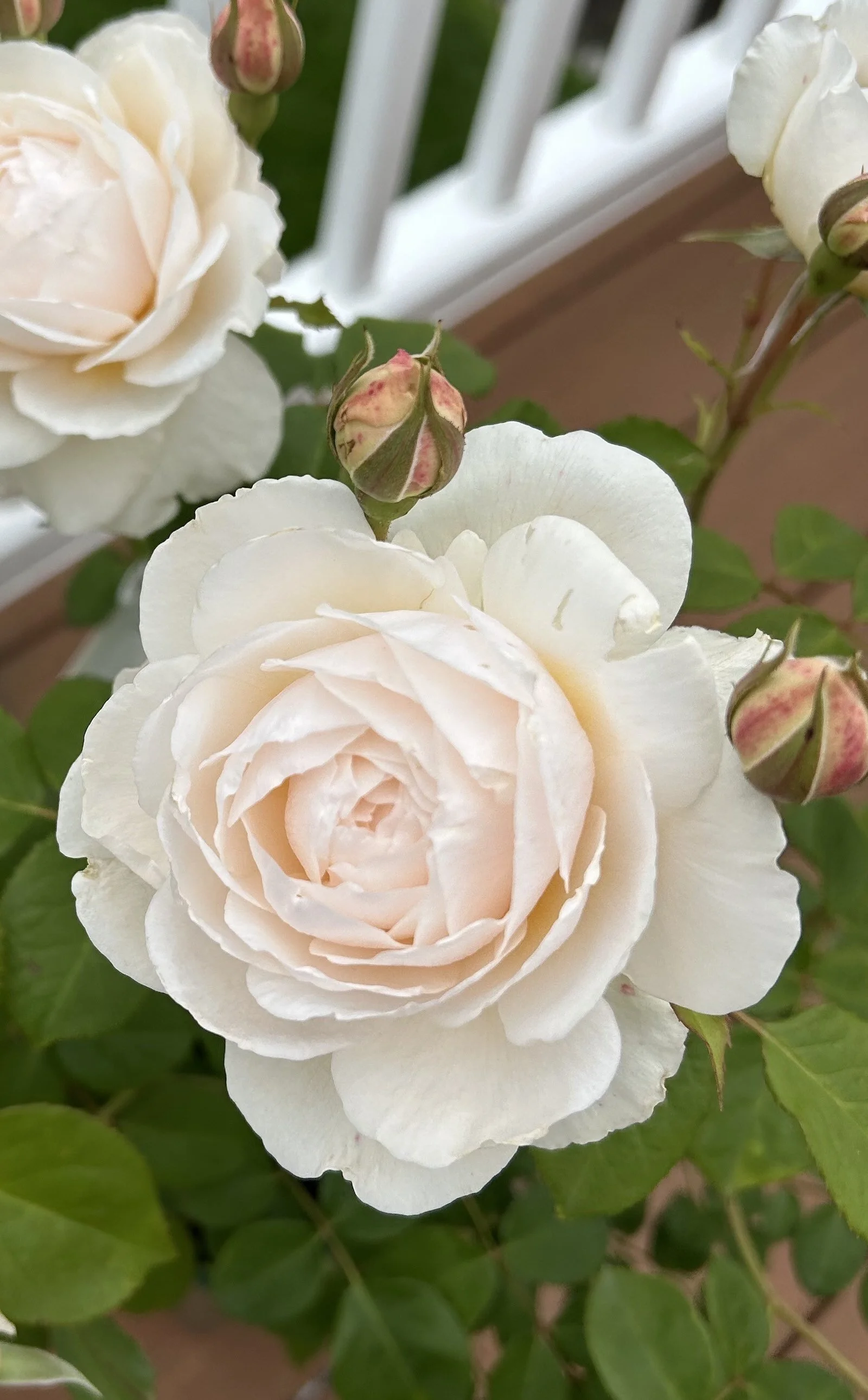
David Austin ‘Windermere’ in a container on the deck.
I spent years admiring ‘Jude the Obscure,’ another David Austin rose that has since disappeared from production. So when I came across ‘Windermere,’ with its pale cabbage-like blooms and unmistakable scent of lemon tea, I couldn’t resist bringing it home.
That seems to happen often lately.
I stop somewhere “just to look,” usually with no real intention of buying anything, and then leave, imagining where another plant might fit. Most recently, it happened at Rose Shack.
I had informed my dear husband I would only be a minute, only to become overwhelmed by decision paralysis. After 30 minutes of waiting patiently, my husband eventually laughed and said, “Just take all four. I’ll pull the truck around.”

Tags from my new roses, before they go into the ground. Updates to follow.
I’m thinking it’s finally time to replace those underperforming peonies. They were beautiful while they lasted. Isn’t that what they say about every sad love story?
But life moves on.
My love affair with peonies isn’t over. I’m just thinking maybe this time in the South garden I’ll give a rose (or two) a chance.
Some plants become part of the history of a home long before they fully establish themselves in the ground. Others disappear after only a few seasons. But certain flowers — especially the ones tied to mothers, neighbors, memories, and impossible-to-resist nursery visits — have a way of staying with us long after the blooms fade.
Continue ReadingWant to see the garden behind these decisions?Browse the garden