
Pinks (Dianthus)
Plant Spotlight
A Low, Flowering Edge for Early Spring Color
Garden pinks, botanically known as Dianthus, are named for the serrated edges of their petals, which look as if they’ve been cut with pinking shears.
The name itself comes from the Greek, dios meaning divine, and anthos meaning flower, often translated as “flower of the gods.”
They sit low at the front of my beds, softening the edges before the rest of the garden begins to fill in.
They have been around for millennia and bring the kind of vintage charm I’m always drawn to.
I like to cut a few stems and place them in bud vases around the house for pops of color in the early spring, especially if I know I have guests coming. They have a great vase life.
I’ve planted two types—one smaller and tightly clump-forming, and another with slightly larger blooms that reads a bit looser. Both have found their place, repeating their color and texture naturally throughout the yard.
Their evergreen to semi-evergreen blue-green foliage adds structure through winter and offers a subtle shift from the surrounding greens once the season begins.
While known for their clove scent, I have never noticed it with mine. (Though my sense of smell is not the sharpest due to allergies.)
Dianthus are easy to grow and versatile, and while rabbits will occasionally nibble, they’ve been highly deer-resistant in my garden.
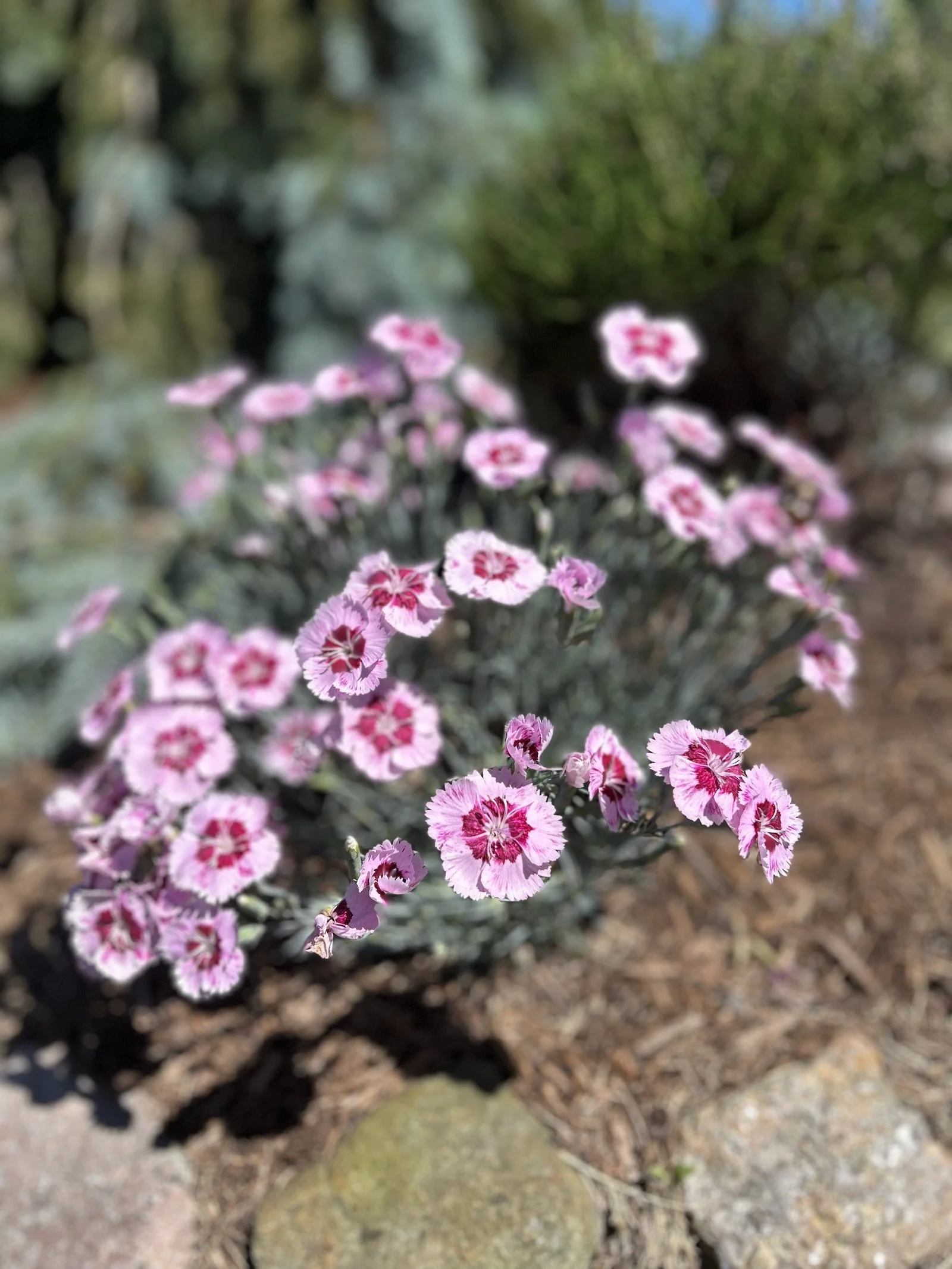
Photo by Parsley and Petal
At-a-Glance
(In My Garden)
Botanical name
Dianthus
Common name
Garden pinks (sometimes called carnations)
Type
Short-lived perennial
USDA Zones
3–9
Bloom time
Early to mid-spring, with repeat bloom when deadheaded
Light
Full sun
Deer resistance
High, ignored
Rabbit resistance
Moderate, occasionally nibbled
Size
Ranges from small (4–8”) to medium (8–12”) to larger forms (12–36”)
In my garden: small to medium
Shape
Low, mounding to lightly spreading clumps; some varieties grow taller and more upright
Garden role
Ideal for rock or alpine gardens, edging beds, containers, and early spring color
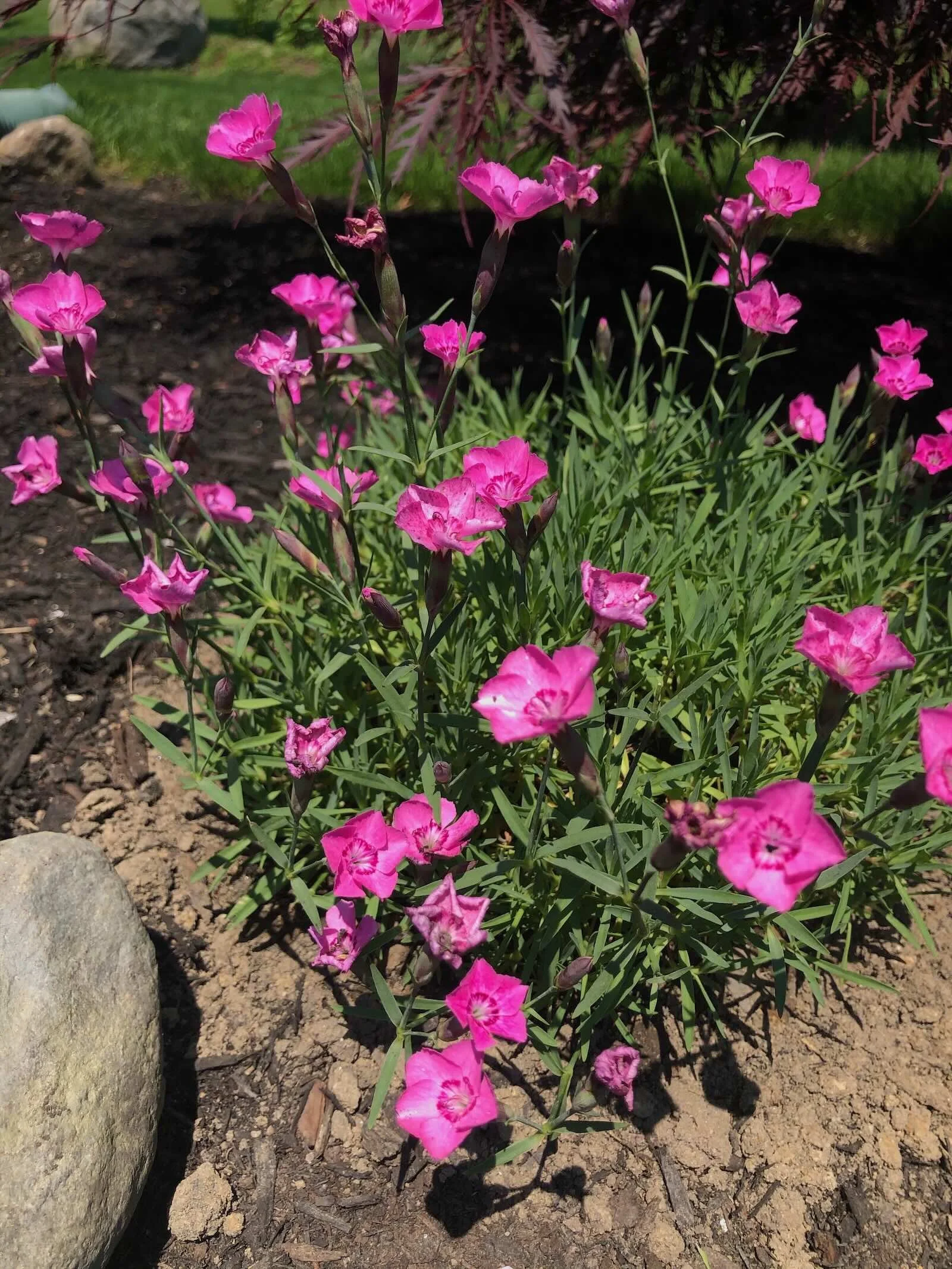
What I believe to be Dianthus ‘Firewitch’. Photo by Parsley and Petal.
In My Garden
The smaller variety, which I believe to be Dianthus ‘Firewitch’, has been the more reliable of the two. It stays tidy, has grown into a substantial clump, and responds well to division. I’ve split it and watched it expand naturally over time.
The larger-flowered type is a touch taller and a little less predictable. It’s beautiful, especially with what appears to be a darker center, but it’s also the one that seems shorter-lived in my garden.
After a couple of seasons, it’s already beginning to fade, which is part of why I’m experimenting with growing it from seed this year.
I’m curious to see whether it comes true, or if there’s some variation, especially in that center coloration.
Both types rebloom well when deadheaded, extending their presence beyond the first flush and carrying them further into the season rather than feeling like a one-moment plant.
Dianthus prefer neutral to slightly alkaline soil with sharp drainage and dislike wet feet, which makes them especially well-suited to rock or alpine-style plantings.
Where Dianthus Work
Along the front edge of a bed
In small drifts where repetition feels natural
Tucked into gaps where early color is needed
In containers, especially for early spring plantings
I plant the smaller variety in my front beds, in well-drained, loamy, or sandy soil with full morning sun and some protection from the late afternoon. It’s been very happy there.
The larger type sits on a berm in full sun. It’s done well for about five years, though I suspect the winter moisture, despite the elevation, has shortened its lifespan.
I keep coming back to pinks for that early, low layer, before everything else fills in. They may not carry the whole garden, but they’re a cottage favorite for a reason. They’re often the first to gently set it in motion.
Continue Reading