
What Rabbits Eat First in Spring (and Why)
I could have sworn the flowers I planted in that bed last year were labeled “rabbit-resistant.”
But there’s a brief stretch in early spring when everything is budding up again. Fresh growth. Low growth. Tasty growth.
Early spring is when you find out that resistant does not mean immune.
It’s less random than people think.
What Rabbits Eat First in Spring
“Resistant” doesn’t exist in a rabbit’s vocabulary. In spring, they’re not reading plant tags. Hunger changes the rules, especially after a long winter, when food has been scarce.
As long as they can reach it, it’s fair game.
Tender new growth? Watch out.
Recently fertilized soft growth? More, please.
Low to the ground or newly planted? You may want to protect it.
Rabbits often choose what’s easiest first, not necessarily what’s “favorite.”
Why “Rabbit Resistant” Doesn’t Mean Untouched
After a long winter with little to eat, rabbits are ravenous. After years of playing Elmer Fudd with them in my Rhode Island garden, I thought I had finally figured out which plants were truly “resistant.” But in the spring, that just means, “not preferred first.”
Allium and chives are hailed as some of the all-time rabbit-resistant plants for gardens because of their pungent smell. So I planted a drift of “Gladiator” and “Purple Sensation” alliums in my side bed, and thought, Wonderful, I can finally look forward to a whimsical spring show.
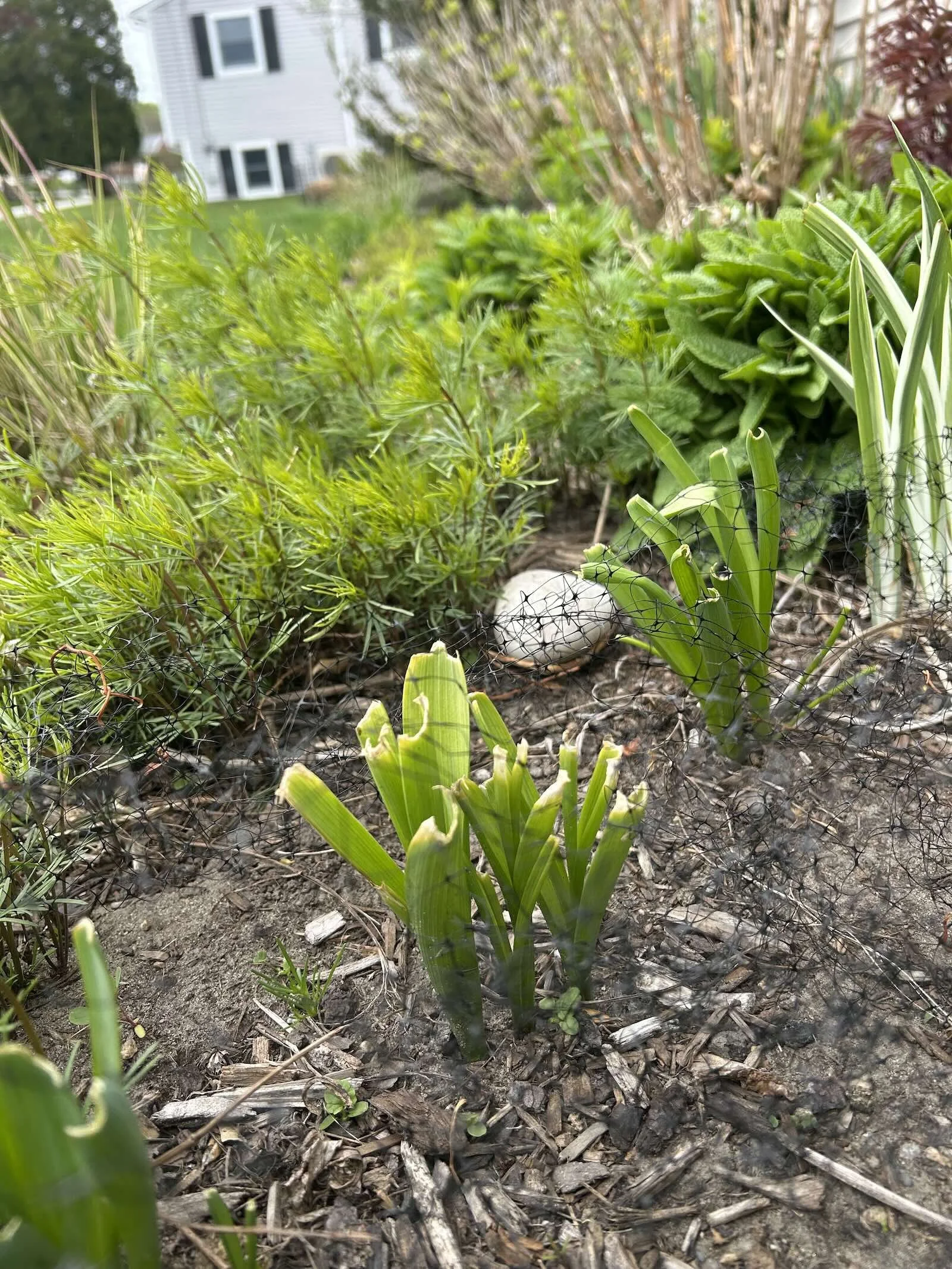
Rabbit damage to my alliums this spring. All photos by Parsley & Petal.
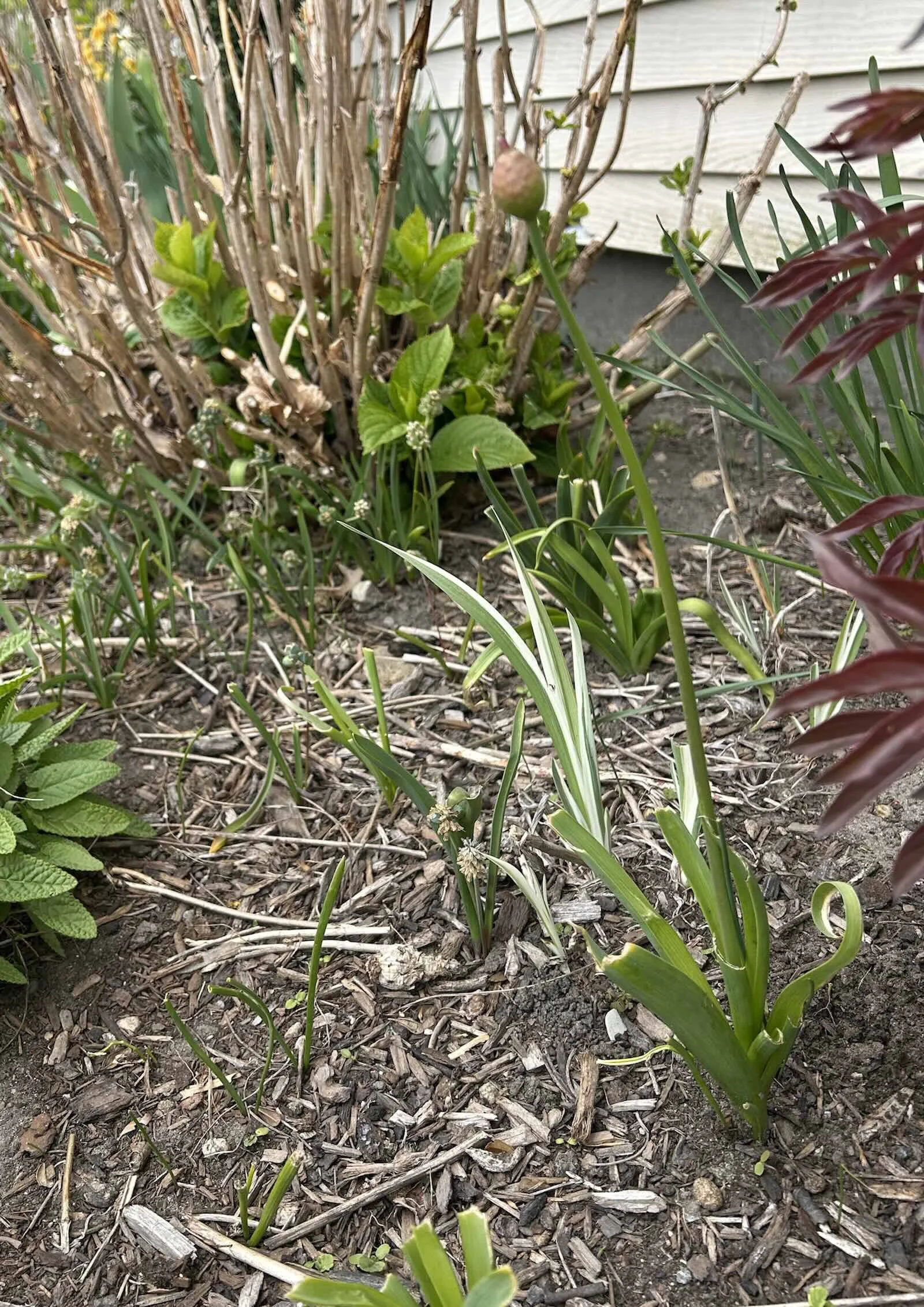
More rabbit damage to my alliums this spring.
To my disappointment, I woke up in the spring to find they had chewed half of them down! I also noticed they even liked the taste of my ornamental chives and would occasionally nibble on my mid-sized varieties. In the end, I put loose netting or cloches around them.
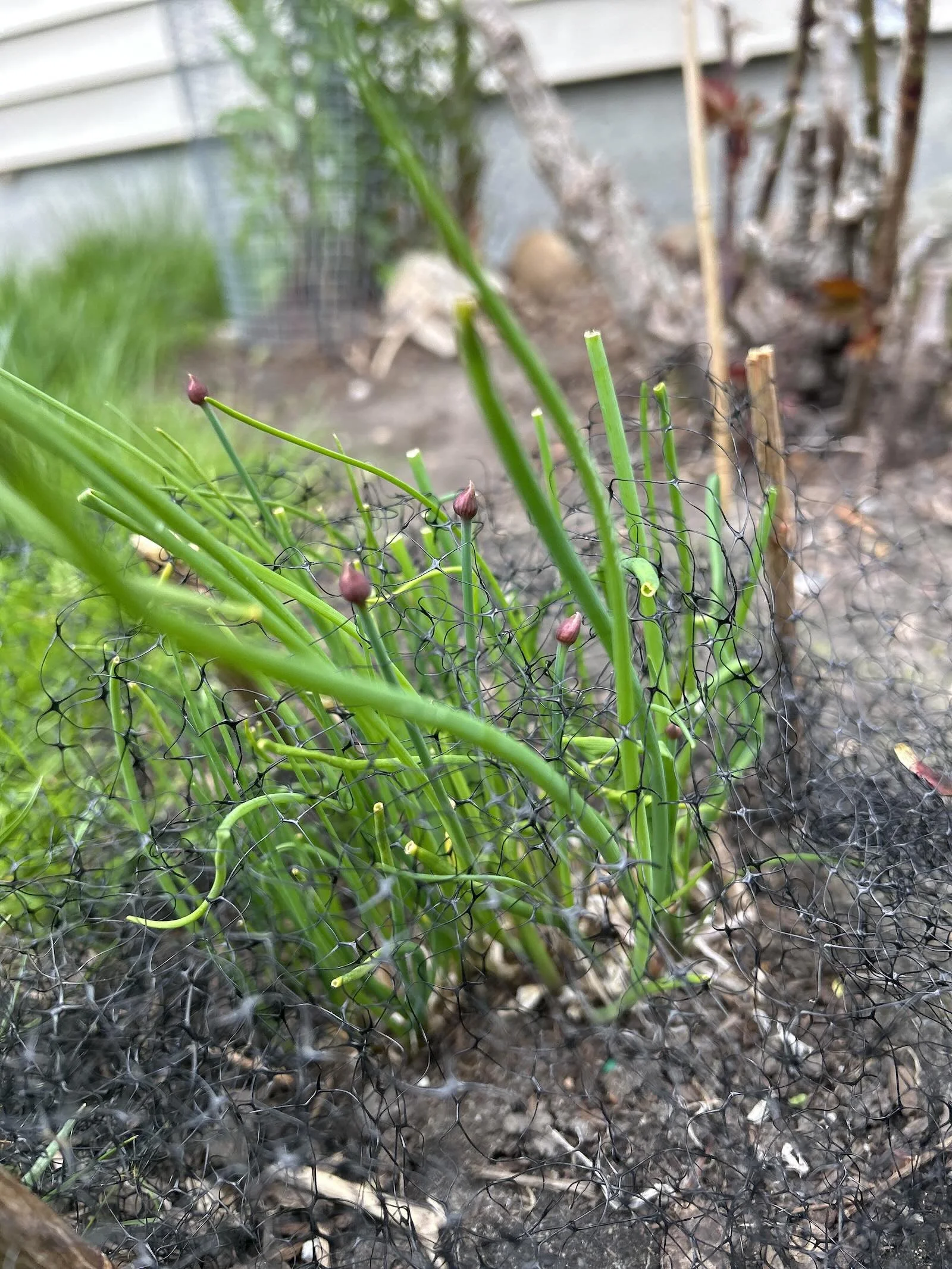
Netting placed over ornamental chives, recovering after rabbit damage.
I guess the rabbits in my neighborhood are not finding enough of their “favorite” foods.
My Asiatic lilies, which were protected behind some mesh fencing, survived. But some newly emerged shoots that were unprotected didn’t.
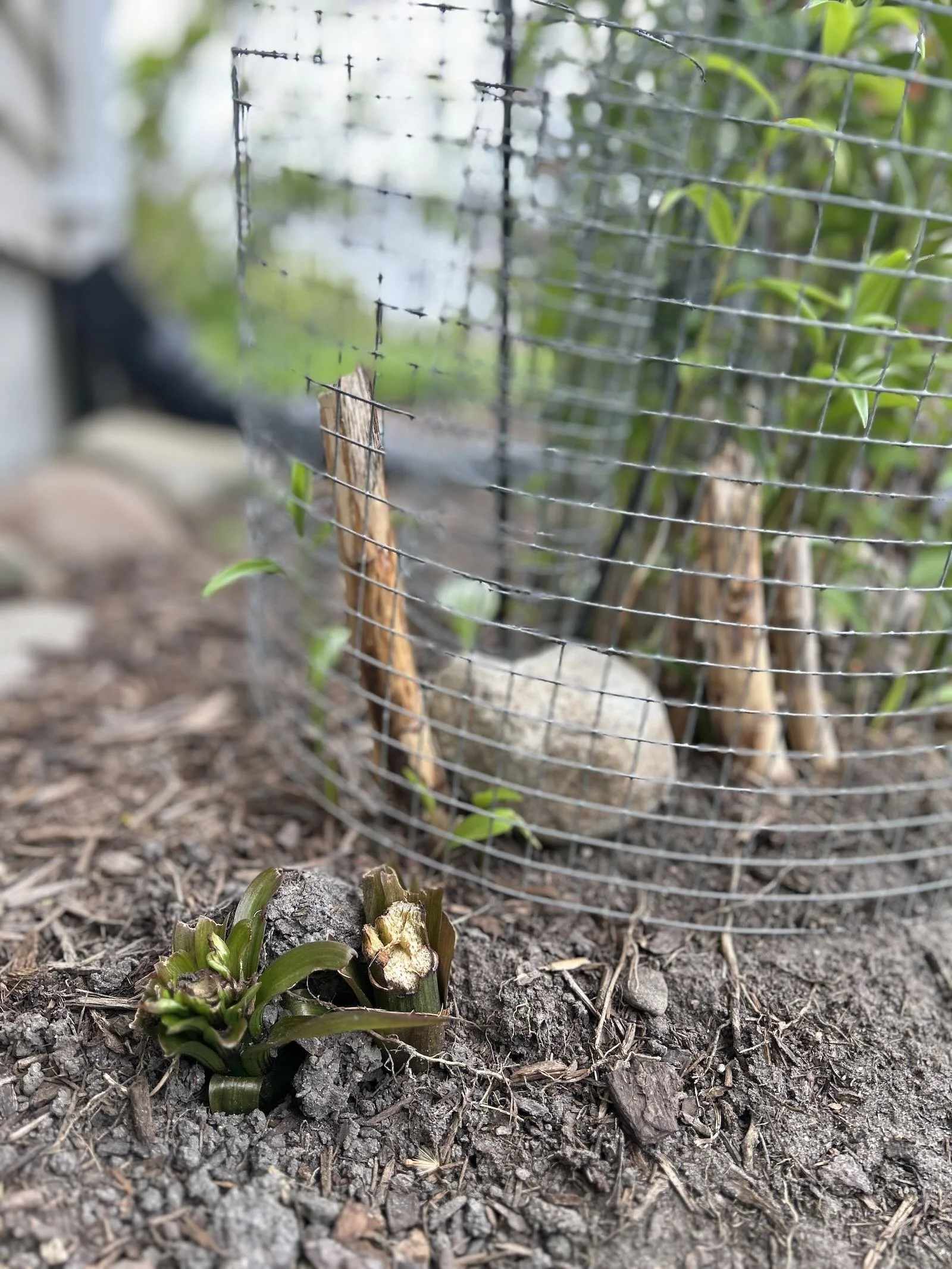
Unprotected tender new growth of Asiatic lilies eaten by rabbits.
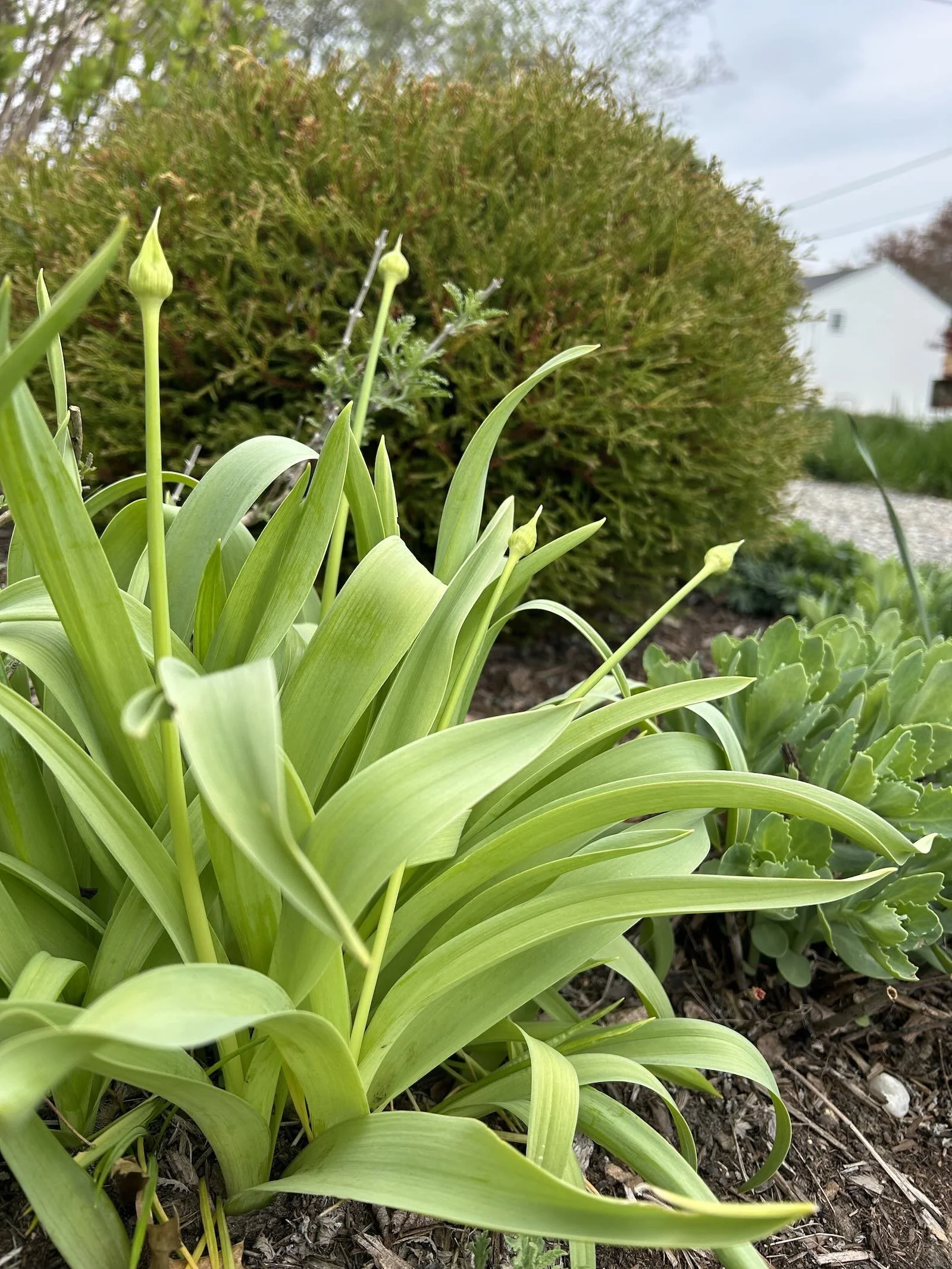
An allium plant that managed to survive the rabbits’ recent feasting behavior.
Where Dianthus Falls
Yes, rabbits do eat dianthus, but in my garden, it is only occasionally nibbled on. Sometimes, it’s ignored. Other times, if the rabbits are hungry enough, they will take a bite.
Dianthus are often more resistant than my other bedding plants, like my daylilies and Black-Eyed Susans, whose tender young growth is plentiful and easily replenished.
But the fresh spring growth of dianthus can still be sampled, especially in gardens where rabbit pressure is a problem.
What Holds Up Better in My Garden
Plants that have been consistently ignored in my garden over the years include:
Hellebore (Helleborus) Toxic, with leathery leaves.
Catmint (Nepeta) Fuzzy and aromatic.
Salvia (Salvia nemorosa) Highly fragrant, rough texture.
Daffodils (Narcissus) Toxic, so the rabbits stay away.
Lavender (Lavandula) The scent truly repels rabbits.
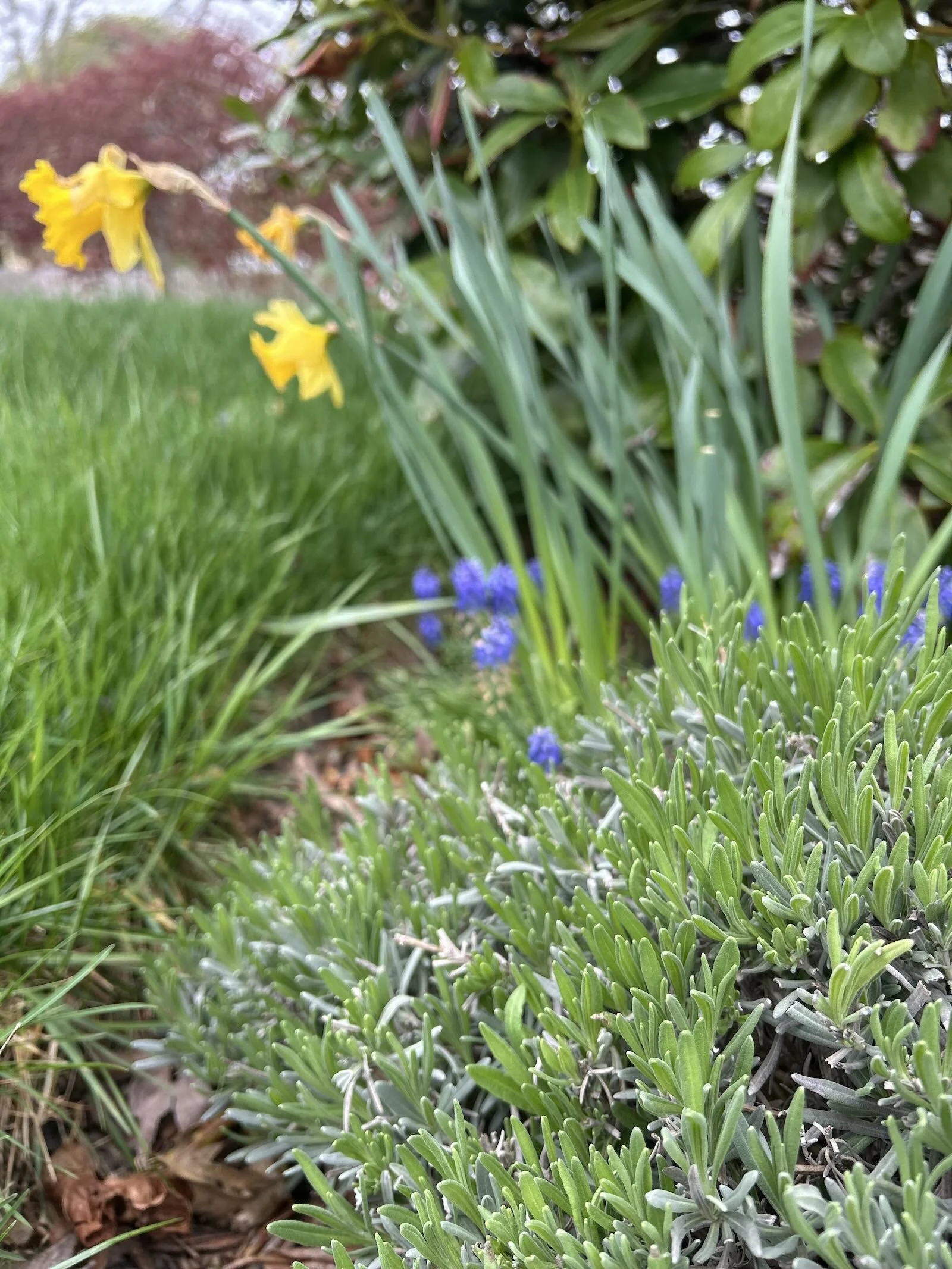
Lavender and daffodils have been reliably left alone in my Rhode Island garden.
The Pattern to Watch
By late spring, many plants have toughened up. But early spring is different. Everything is newly exposed again.
A plant getting nibbled in spring doesn’t always mean it has failed.
Sometimes it just emerged at the wrong moment.
I've been making these planting decisions in real time in my own garden—what actually holds up under rabbit pressure, and what doesn't.
Want to see the actual garden these decisions are shaping? Read My Botanical Corner Lot, a look at how this Rhode Island garden evolved over the past decade.
When you want to know what matters right now, you can follow along with me in The Seasonal Edit, a recurring garden checklist where I write about what I’m paying attention to and what I’m not this season.
Continue ReadingWant to see the garden behind these decisions?Join Parsley & Petal
The Seasonal Edit is a recurring garden checklist of what’s emerging, what can wait, and what deserves attention now. Practical tasks. Clear structure. Timed to the season as it unfolds.