
Ask Minnie Paeonia Lou
Today I figured I’d start a new column to help solve some of the burning questions, mysteries, and mind twisters that puzzle us gardeners. It reminds me of my favorite column of all time, Ask Marilyn.
I received a call the other day. It was my mother, and oh my, was she in a state of distress. I grabbed my keys and was ready to jump in the car.
”My morning glory looks so sad! There are absolutely no buds on it. How is yours doing?”
I reassured her, as I was pretty sure I had just the other week, that although mine wasn’t blooming yet, it wasn’t unusual because it almost always puts on a glorious show in the fall, sometimes as late as October (mine was blooming once on Halloween).
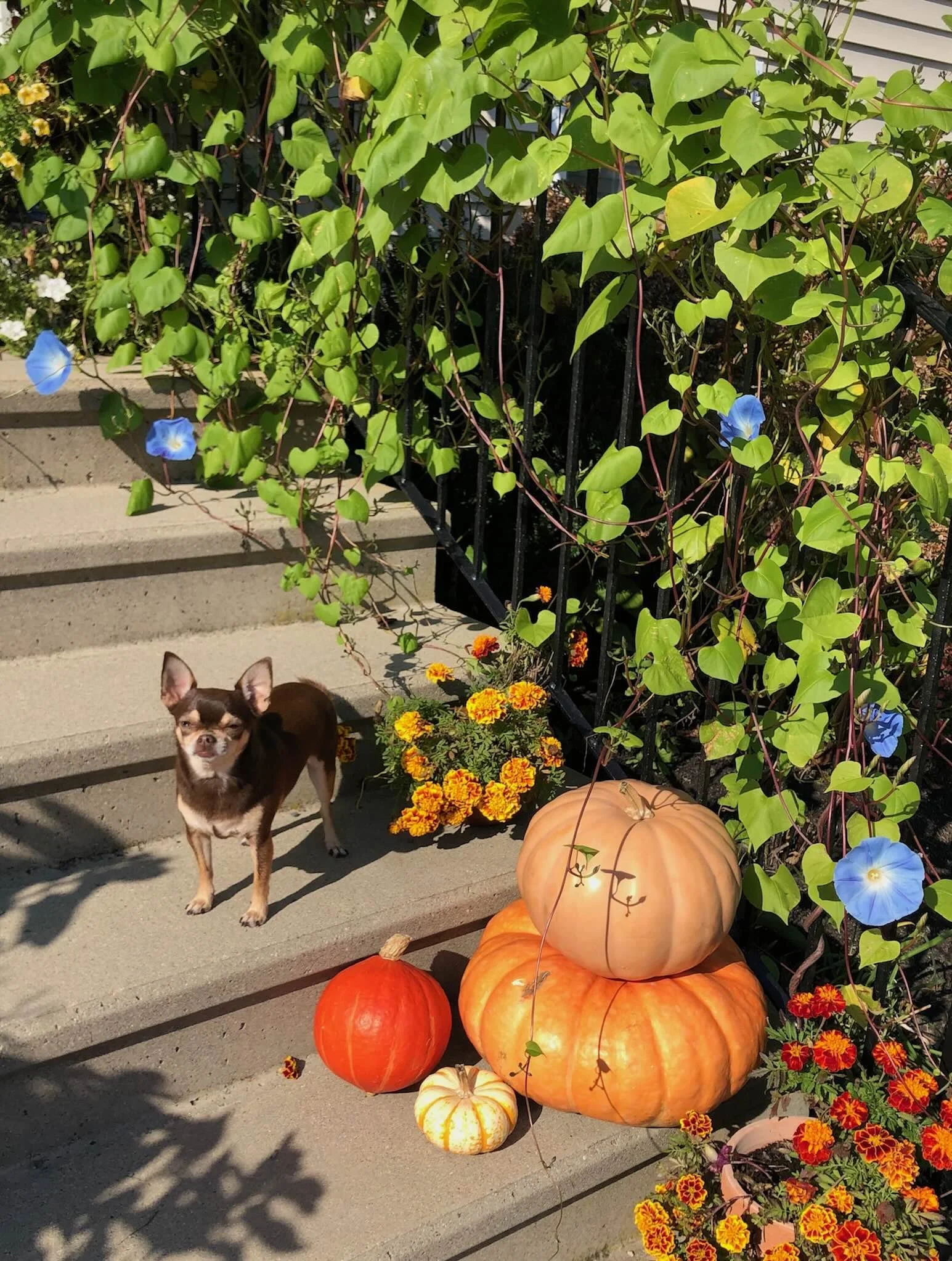
Photo by Parsley & Petal
I told her, “Please, whatever you do, DO NOT fertilize it.” Read on to find out why.
It’s late August. Why is my morning glory (Ipomoea) not blooming?
There can be many reasons why your morning glory (Ipomoea) is not blooming or producing buds:
1. It may be a late-blooming variety. Some varieties simply bloom later than others, particularly in cooler climates.
2. Not enough sun. They need at least 6 hours of sun. More is even better. Cut back any overhead branches blocking light, or move it to a sunnier location.
3. Stop. Put that fertilizer down! Morning glories do not like rich, fertile soil. They prefer lean, well-draining soil. Feeding them too much nitrogen or compost will make them produce tons of nice, green foliage at the expense of flowers.
4. Be patient. You may just need to wait until fall (September-October), when days are shorter.
I also recently had a cousin ask me another frequently asked question about hydrangeas:
Why didn’t my mophead hydrangea bloom well this year? It has done so well in the past.
There are many reasons why mophead hydrangeas may fail to bloom:
1. Not enough sun. They need at least 3-4 hours of sun.
2. Excess fertilizer. Too much nitrogen, from the lawn or direct feeding, encourages foliage growth at the expense of blooms.
3. Winter cold and dieback. Dormant buds can be damaged by drying winds and freezing temperatures during cold New England winters, particularly in exposed locations.
4. Late spring frosts. A sudden freeze or cold snap after a warm spell in the spring can kill emerging leaves and flower buds that have broken dormancy.
5. Improper pruning. Pruning at the improper time can remove the season’s flower buds. Deadhead spent flowers; prune immediately after flowering, or remove only dead, damaged, and diseased stems. To learn more about proper pruning techniques, read the hydrangea pruning guide here.
So there you have it; I hope that helps. If you find yourself in a pickle or have any puzzles you need solving, please contact me here, via Instagram or Facebook, and I’ll try my best to answer. I love a good puzzle. I was an Engineering major in college, you know.
Continue ReadingThe Seasonal Edit
The Seasonal Edit is a free, printable checklist of what’s emerging, what can wait, and what deserves attention now to keep by your potting bench.
Practical tasks. Clear structure.
Timed to the season as it unfolds.