
What the August Garden Needs Now
By August, the Parsley & Petal garden is starting to resemble Pride & Prejudice meets Mad Max: Beyond Thunderdome.
The fresh emerald greens of May are fading, replaced by crunchy foliage and brown stems.
While some of the cosmos are reaching over three feet high, some of the Irish poet tassel flowers are flopping, and the roses, in their second flush, are suffering from black spot, with leaves and dried petals piling up in messy heaps.
Weeds have infiltrated every bare patch of dirt they can find, and anything that didn't particularly enjoy the heat is making its grievances apparent.
I did not have time to plant my Pinky Winky Prime, and after sitting in the sun in its nursery pot for a few days, it dropped all its leaves!
But panicle hydrangeas can take a beating. I know, perhaps all too well, that it will be fine once I soak it and let it recover in the shade.
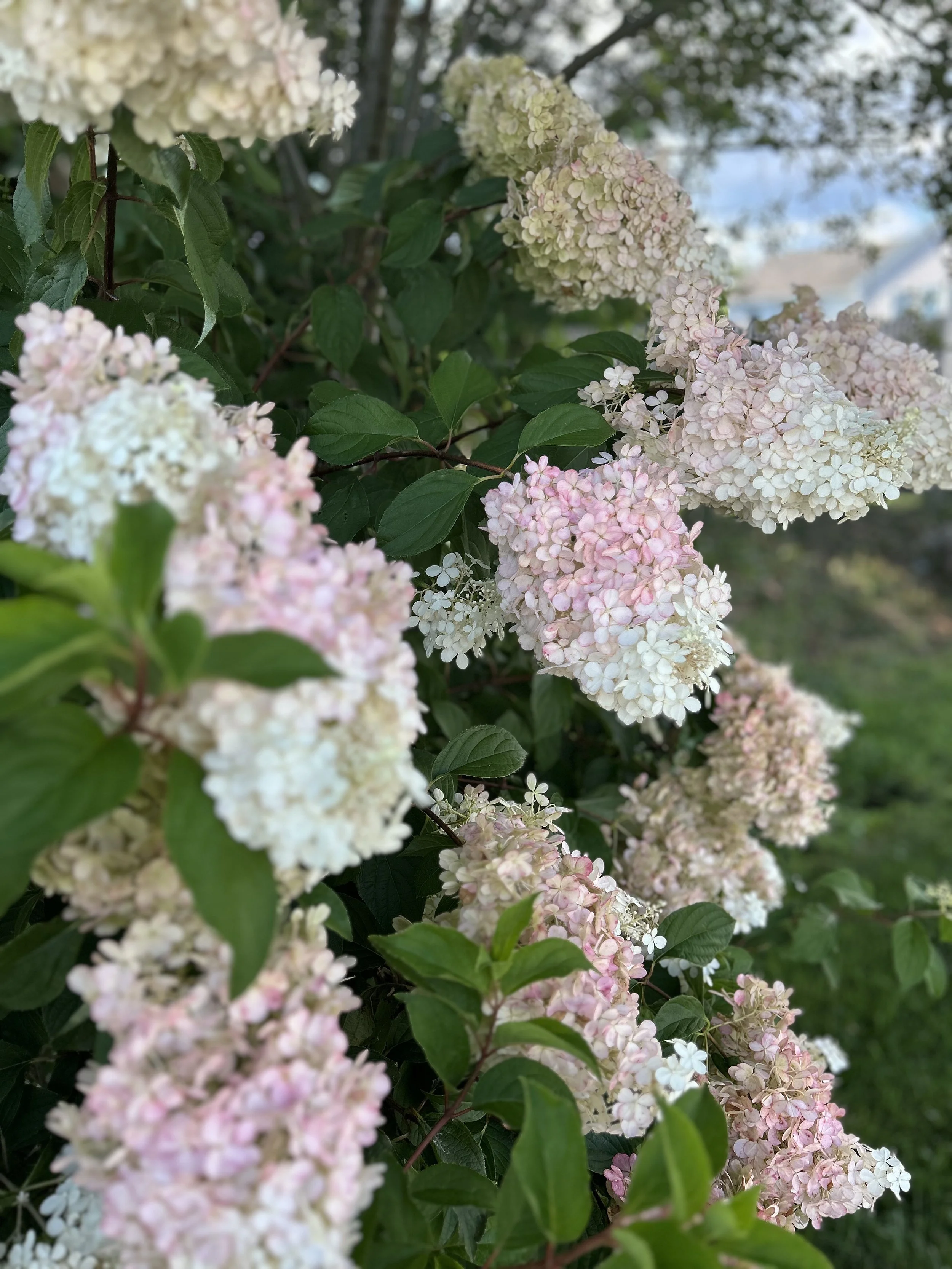
The Vanilla Strawberry hydrangea by The Creek in full bloom, bought on summer clearance years ago, seemingly half dead. The cooler nights of August signal the flowers to change from white to pink, reminding us that fall is approaching.
This post contains affiliate links. If you purchase through these links, I may earn a small commission at no additional cost to you. As an Amazon Associate, I earn from qualifying purchases. I only recommend products and tools I genuinely use and love.
But August is also useful.
This is when I can finally see what worked this year, what didn't, and what I want to change once cooler weather arrives.
Keep Watering, But Pay Attention
August can still bring some of the hottest, driest weather of the summer.
Rather than watering everything automatically, I try to pay attention to what actually needs it. Newly planted trees, shrubs, roses, and perennials need more attention than established plants, and containers, as we’ve seen, can dry out remarkably fast.
After too many seasons using lightweight flexi-hoses that were disposable after a season or two, I decided to upgrade to this 100’ hose in purple by WaterRight a few years ago. It checked all the boxes: durable, lightweight, and pretty.
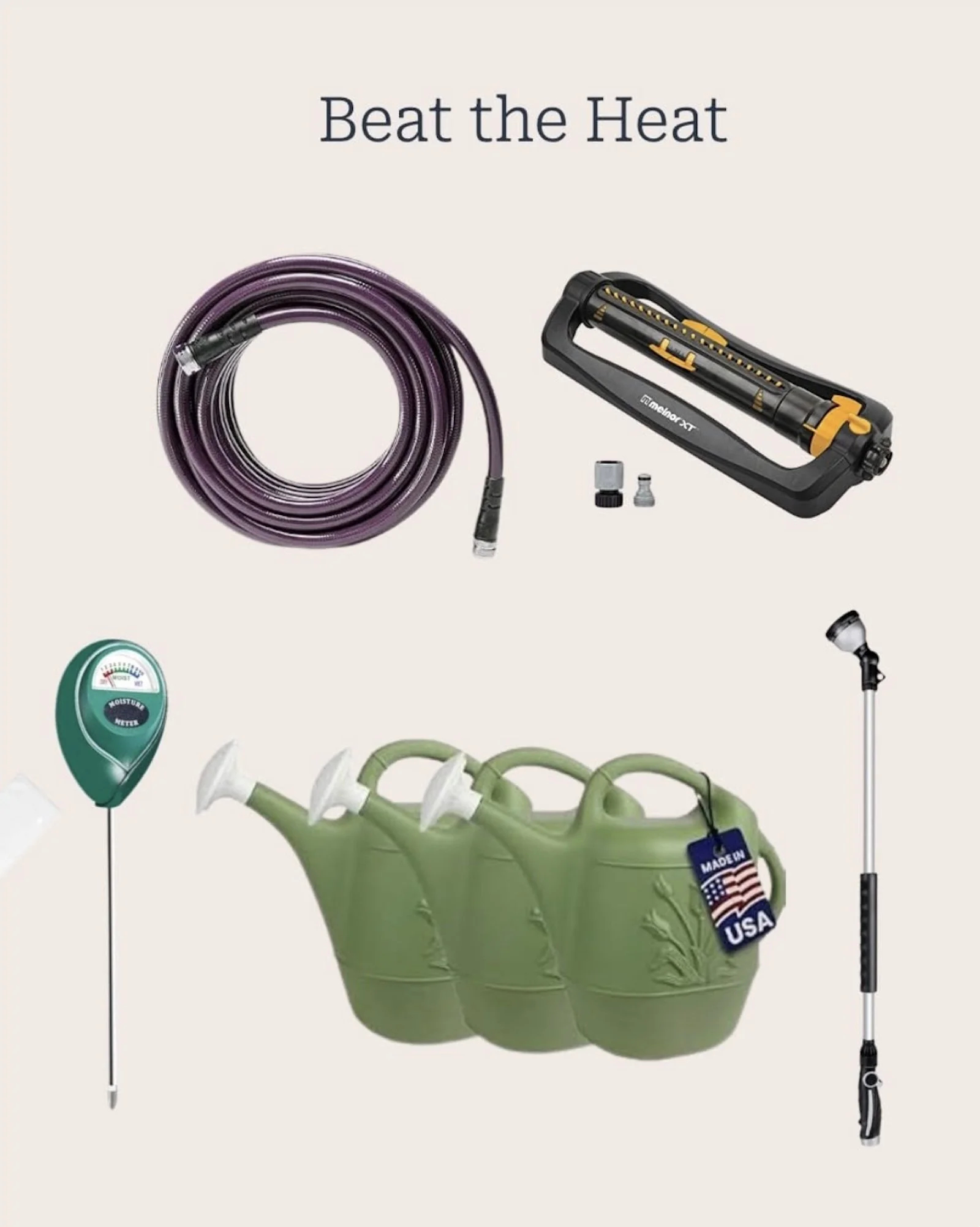
Favorite watering tools. Shop here.
I have a couple of newly planted roses and perennials that I’ve been watching this year, along with some Bobo hydrangeas, a dappled willow, ornamental grasses, a Stewartia, and a dogwood tree finishing their first season.
This is also when differences in plant needs become obvious. A hydrangea wilting beside a drought-tolerant perennial is a pretty good reminder that plants don’t grow in isolation and that putting plants with similar needs together makes life easier.
Deadhead, or Don't
Not everything needs to be cleaned up the minute the flowers fade.
I deadhead some plants to encourage another flush of flowers or simply because they look better. Others I leave alone for seedheads, wildlife, or because their fading forms still contribute something to the garden.
Every couple of days, I deadhead my roses and annuals like cosmos, Verbena bonariensis, and Irish poet tassel flower. I also deadhead my coreopsis, salvia, Stachys ‘Hummelo’, and daylilies.
I didn’t harvest my lavender this year. It was too hot, and I was too busy.
I leave my echinacea, allium, and mopheads for winter and wildlife.
I also leave my peonies up until fall, when they die back, and then I clean them up properly.
By August, I'm less interested in making everything look pristine than I was earlier in the season.
Take Stock of What Worked
This may be the most valuable August garden task of all: look.
Where are the gaps?
What got too big?
Which combinations worked better than expected?
Which plants disappeared behind their neighbors?
Where does the garden need height, repetition, contrast, or simply some breathing room?
I take pictures, make notes, and try to resist fixing everything immediately.
August gives me information I won't have once the garden dies back.
Mark What Needs to Move
By now, I usually have a mental list of plants that are in the wrong place.
Some need more sun. Some need more room. Some simply don't work in the composition.
That doesn't mean I necessarily move them during the heat of August.
Instead, I make a note and wait for cooler weather, when transplanting will be less stressful.
The Phantom hydrangeas, as well as the French Cabaret Blush Rose of Sharon by the shed, presented a real problem this year. All of them looked like they had been zapped by lightning after a downpour a few weeks ago.
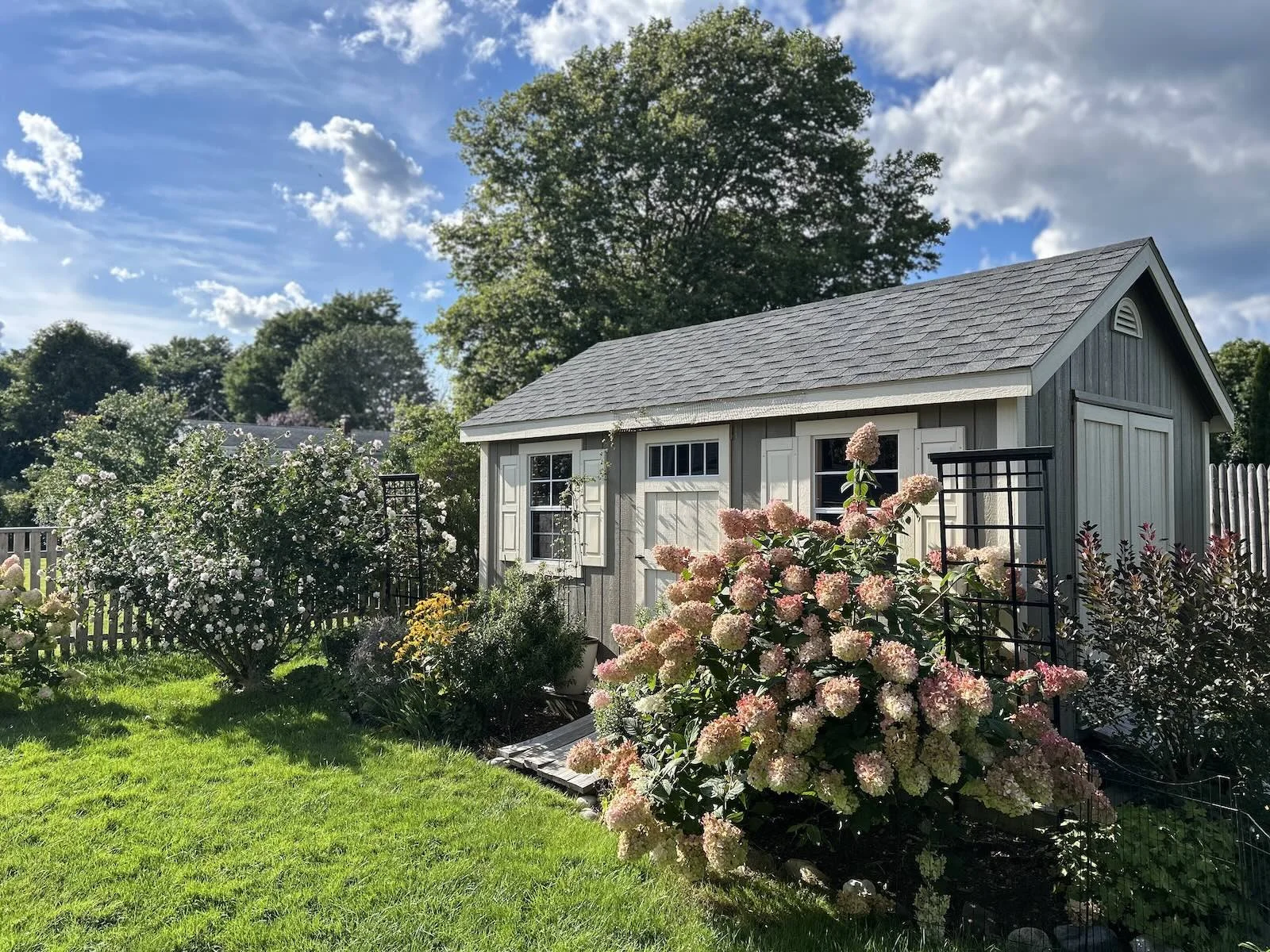
This overcrowded bed needs some major editing. The Rose of Sharon which is drooping (L), needs to be pruned in late winter/early spring.
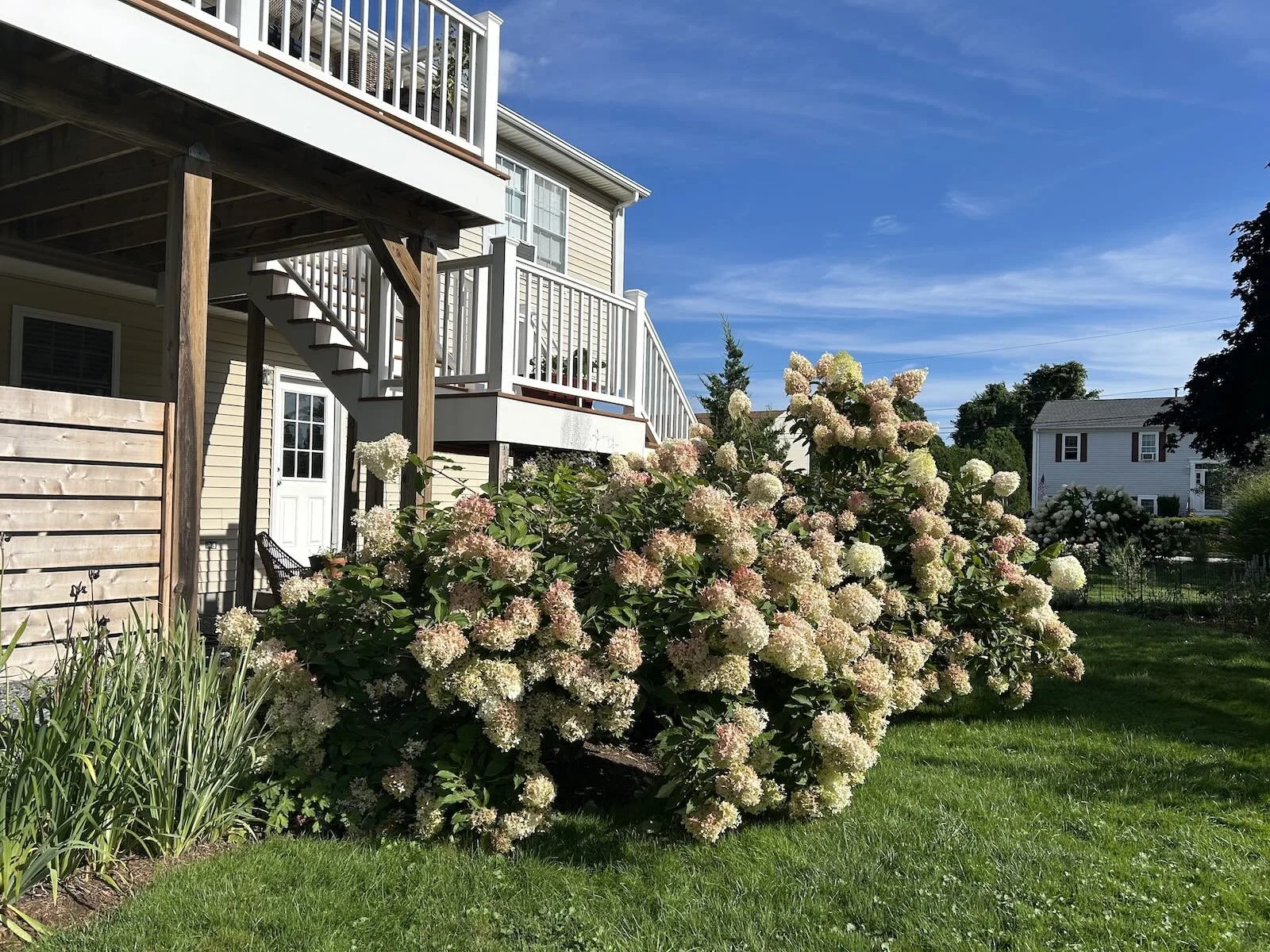
Both these hydrangeas flopped to the ground in a recent downpour. Come late winter/early next spring, they will be pruned hard for a sturdier framework.
Because I have never pruned the Rose of Sharon in the almost seven years it has been growing, it collapsed from the weight of all the flowers after the storm. Even with help from a ladder and some bungee cords, the next storm took the branches right down again.
Both the Rose of Sharon and the Phantoms are going to need a pretty hard pruning in the late winter or early spring.
The area by the shed needs a lot of work. The whole bed is getting crowded. Like many first-time gardeners, I got carried away and overplanted, and now too many plants are competing for attention in too little space: two clematis, a climbing rose, deutzia, statice, geraniums, black-eyed Susans, a red geum, a hydrangea, and some evergreen shrubs.
I have some serious editing to do.
I have not divided anything this year, but this is the time to divide the irises if you want to add more to your design.
Divide and Propagate What You Want More Of
Rather than constantly buying something new, this year I've been concentrating on multiplying plants I already know work here.
My summer propagation experiments have included salvia, sedum, agastache, speedwell, and aster.
August is a good time to see which experiments succeeded and start thinking about where those new plants might eventually go.
The goal isn't simply more plants. Repeating successful plants throughout the garden creates rhythm and cohesion, and it's one way I've begun making the garden feel like a whole.
Keep an Eye on Pests and Disease
By late summer, plants have been through a lot.
Roses may show black spot. Powdery mildew can appear. Aphids and other insects have had months to establish themselves. Deer and rabbits certainly haven't gone on vacation.
I’ve been feeding the rabbits thyme and tarragon from The Test Garden all summer.
This August, my roses have been fighting black spot. I defoliated the affected leaves, cleared the surrounding area, and then applied these granules.
Not every damaged leaf requires intervention. Sometimes the best response is simply to observe, remove badly affected material, and decide whether the plant has otherwise performed well enough to earn its place next year.
Don't Give Up on the Vegetable Garden
The August vegetable garden can look a little unruly, but there's still plenty happening.
My Burpee pickler cucumbers are growing, albeit slowly. Green beans are finally producing a small quantity, and the watermelon plant finally sprouted some leaves. Time will tell if it produces anything.
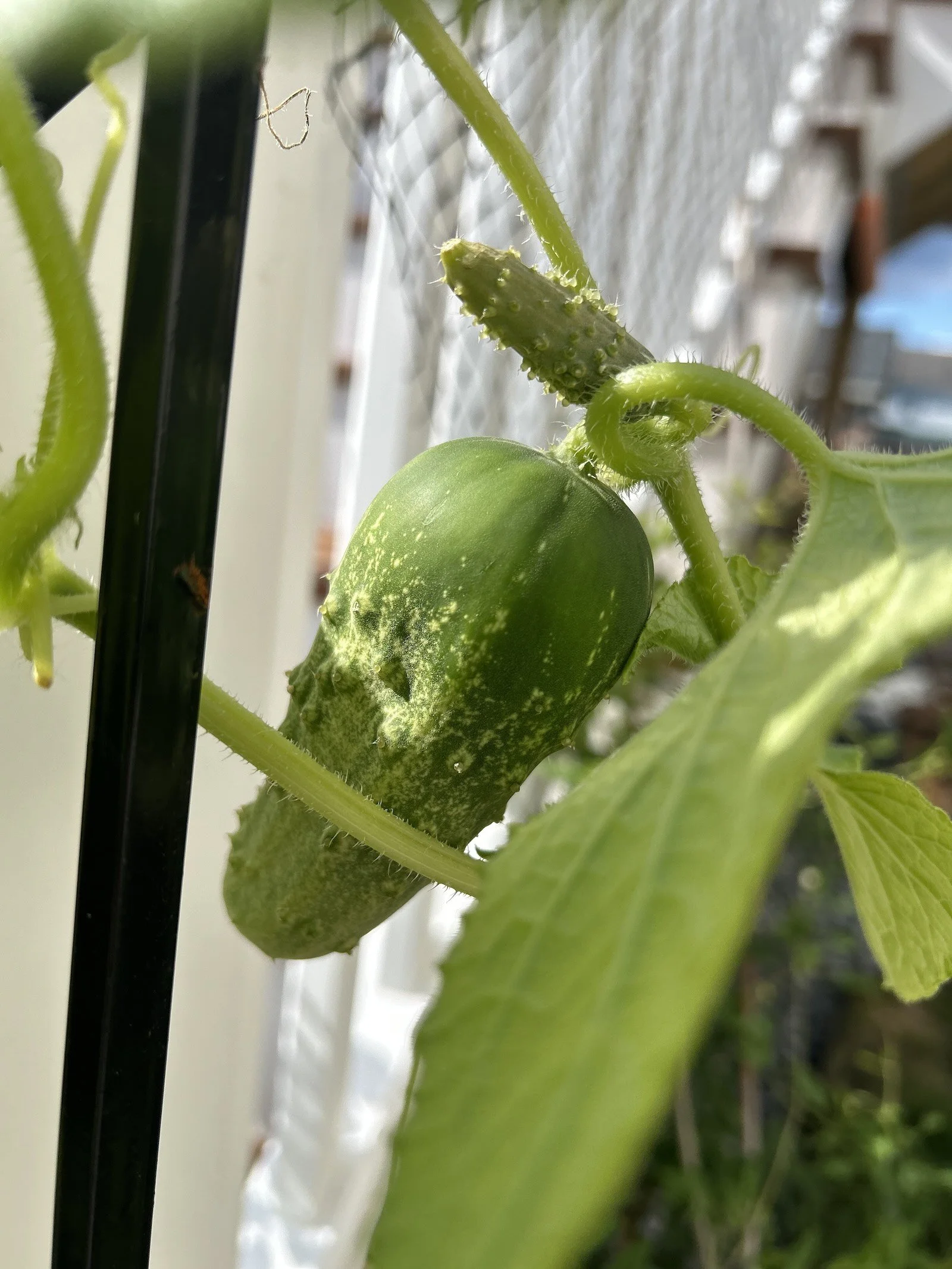
Test Garden Burpee pickler cucumber.
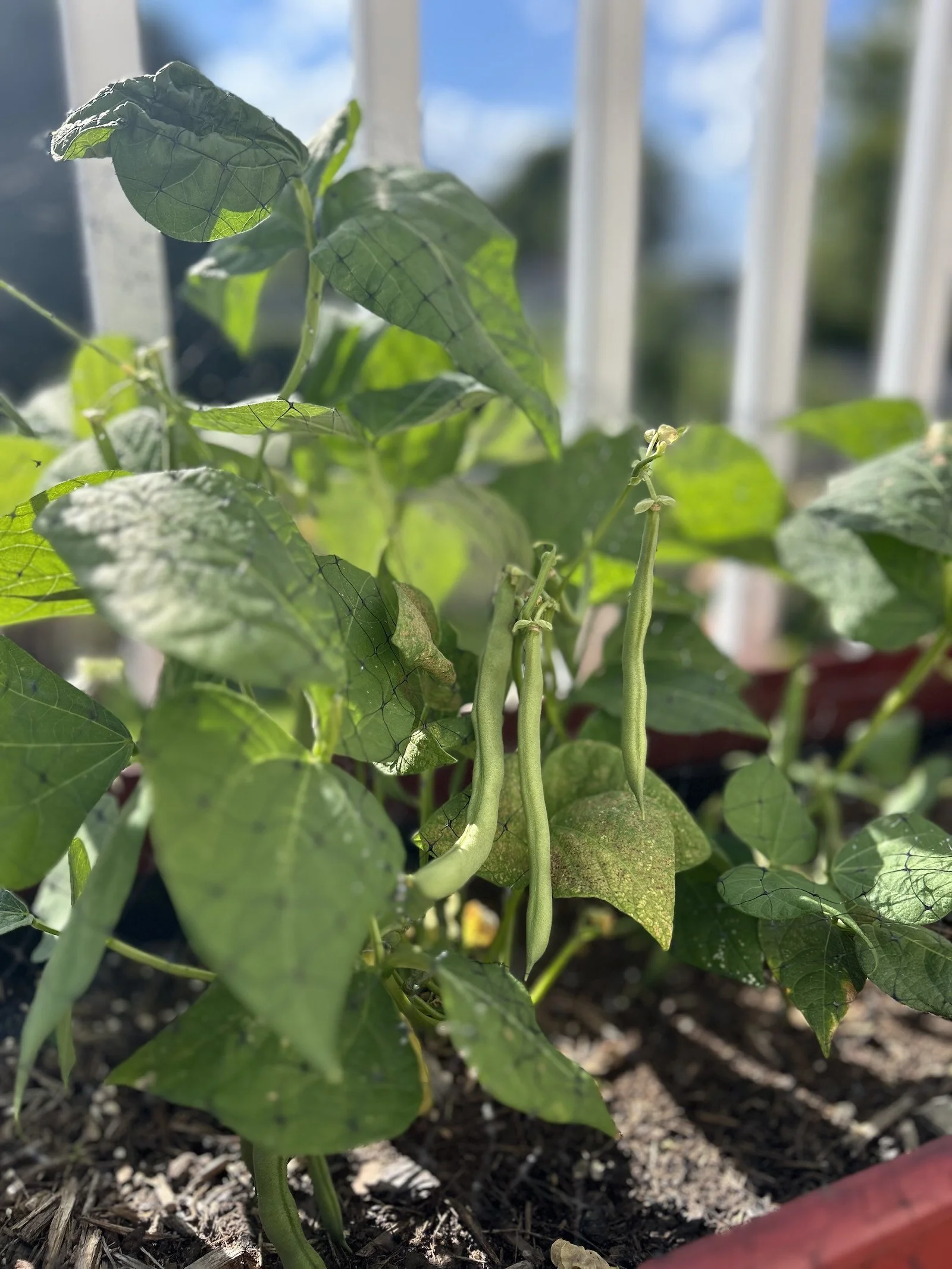
Test Garden Bush Lake green beans first harvest after seedlings were ravaged by birds.
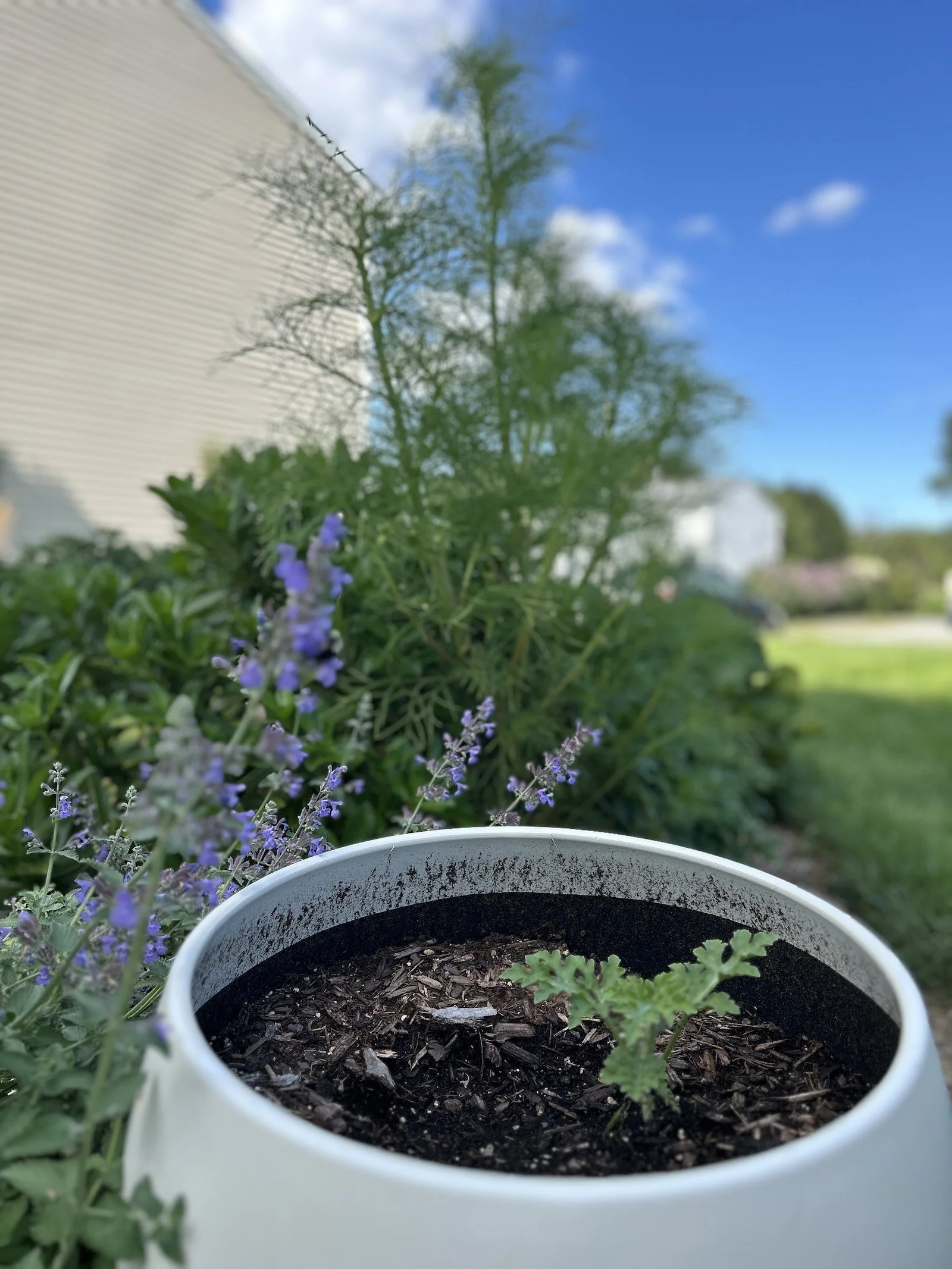
The watermelon vine appears to be a dud. The cosmos nearby tower above it.
The herbs? Growth has been minimal.
As I have mentioned, the rabbits have opened up an R&D department in my backyard.
Harvest regularly, keep vegetables watered during dry spells, and remove anything that is clearly finished or diseased.
And take notes. Failures are often more useful than successes when it's time to plan next year's garden.
Start Thinking About Fall
I don't want to rush summer out the door, but August is when I begin looking ahead.
Soon there will be perennials to divide or move, plants to add, lawn areas to repair and overseed, and bulbs to think about for spring.
This is also when I start noticing where the garden could use another season of interest.
What happens when the summer flowers fade?
What will carry the garden into fall?
And what will still be standing when winter arrives?
Mostly, Observe
August doesn't require reinventing the garden.
Water what needs water. Deadhead what needs deadheading. Harvest what's ready. Pull the weeds before they take over the world.
But mostly, look.
After a full season of growth, the garden is giving you an enormous amount of information.
You don't have to act on all of it today.
Sometimes the most useful thing you can do in the August garden is, as my mother, the Family Oracle, and Coleus expert, likes to say, “Just Observe.”
Continue Reading