
Lavender (Lavandula)
Plant Spotlight
Many gardeners I know in coastal New England have a love-hate relationship with lavender. We love the fragrance, the sachets, the teas, and the way a single plant styled in the right container makes a patio feel vaguely Provençal.
We don't always love growing it.
Between cold winters, humid summers, and soils that don't always drain as quickly as we'd like, lavender can be surprisingly particular.
Like hydrangeas, lavender seems to inspire endless debates over when to prune it and why one gardener's advice completely contradicts another’s.
I prefer to prune mine twice a year if time allows, once in the fall (late August-September) to reshape the plant, and again in the spring, once it starts pushing new buds. That way, I make sure I don’t cut into old wood, which will not grow back.
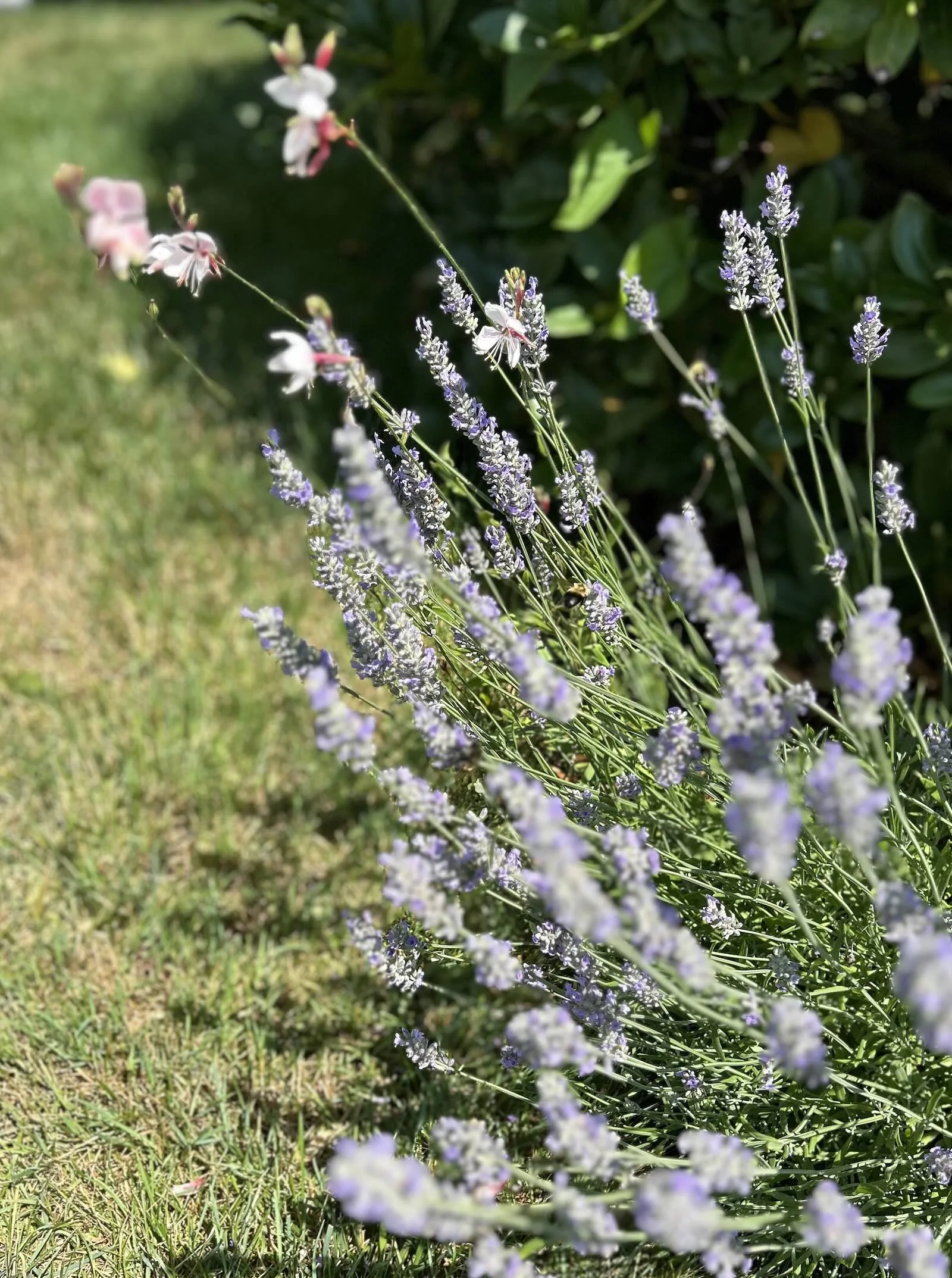
‘Sensational’ lavender and gaura. All photos by Parsley & Petal.
The more I grow it, the more I realize the confusion often comes from treating all lavender as though it's the same plant.
With that reputation, I was genuinely surprised to learn I could grow it at all.
Even more surprising? We have a lavender farm, Lavender Waves Farm, practically in our own backyard, a visit I've been meaning to make for far too long.
Lavender at a Glance
(In My Garden)
Botanical name
Lavandula
Common name
Lavender, French Lavender, Spanish Lavender, English Lavender
USDA Zones
English Lavender (Lavandula angustifolia) (Zones 5-8)
Lavandin (Lavandula x intermedia) (Zones 5-11)
French Lavender (Lanvadula dentata) (Zones 8-11)
Spanish Lavender (Lavandula stoechas) (Zones 8-11)
Bloom time
Late spring through mid-late summer (depends on variety)
Light
Full sun
Deer resistance
High
Rabbit resistance
High
Size
Approximately 18–36 inches high tall and wide. Hybrids may reach as big as 54 inches wide, compact varieties may stay 10-24 inches tall and wide.
Shape
Woody, evergreen upright perennial sub-shrub with mounding/upright habit
Garden role
Ideal for sunny, drought-tolerant gardens where deer and rabbits are a concern. Can be used in mixed borders, as hedges, in containers, for culinary use, and dried for sachets/decor.
My First Lavender
My first attempt at growing lavender began when I stumbled across a potted topiary 'Anouk' Spanish lavender (Lavandula stoechas) while shopping for groceries. Sometimes called butterfly lavender for its pineapple-shaped flower heads topped with butterfly-like bracts, it's also confusingly referred to as French lavender, an entirely different species with distinct foliage.
It had such a charming vintage look. I imagined it spending the summer on my deck, perfuming the air while I sipped lavender tea. Quel dommage! It didn't last very long. It proved to be more decorative than practical in my garden.
Four Common Types of Lavender
As I learned more, I realized the lavenders we lump interchangeably are actually quite different. The four most common groups gardeners encounter are:
Spanish lavender (Lavandula stoechas): native to the dry, rocky slopes of the Mediterranean. Spanish lavender is an evergreen sub-shrub that blooms early and re-blooms if deadheaded.
French lavender (Lavandula dentata): a perennial shrub with soft, green-grey, serrated or toothed leaves. While highly scented, French lavender is less sweet and more herbal than English lavender.
Like Spanish lavender, it is hardy in the warm, dry climates of the Mediterranean, so it is unsuitable for New England. Popular varieties include ‘Goodwin Creek Grey’ and ‘Royal Crown’.
English (Lavandula angustifolia): the most cold-hardy lavender, with the most popular including ‘Hidcote’ and ‘Munstead’ varieties.
Hybrid lavender (Lavandula x intermedia): more heat-tolerant and grows more vigorously than English lavender, with thicker stems and foliage. Includes varieties like English hybrid ‘Phenomenal’ and French hybrid ‘Grosso’.
In My Garden
It was during my research that I discovered that English lavender (Lavandula angustifolia), was more suitable to my Zone 7A New England coastal climate and soil, which is well-draining and fertile on the whole, but tends to hold on to moisture in some spots, which can be problematic during the winter.
So I planted some English lavender among the daylilies, ‘Autumn Fire’ sedum, ‘Daisy Mae’ asters, and coreopsis, where they get full sun for at least 6-8 hours/day, if not more.
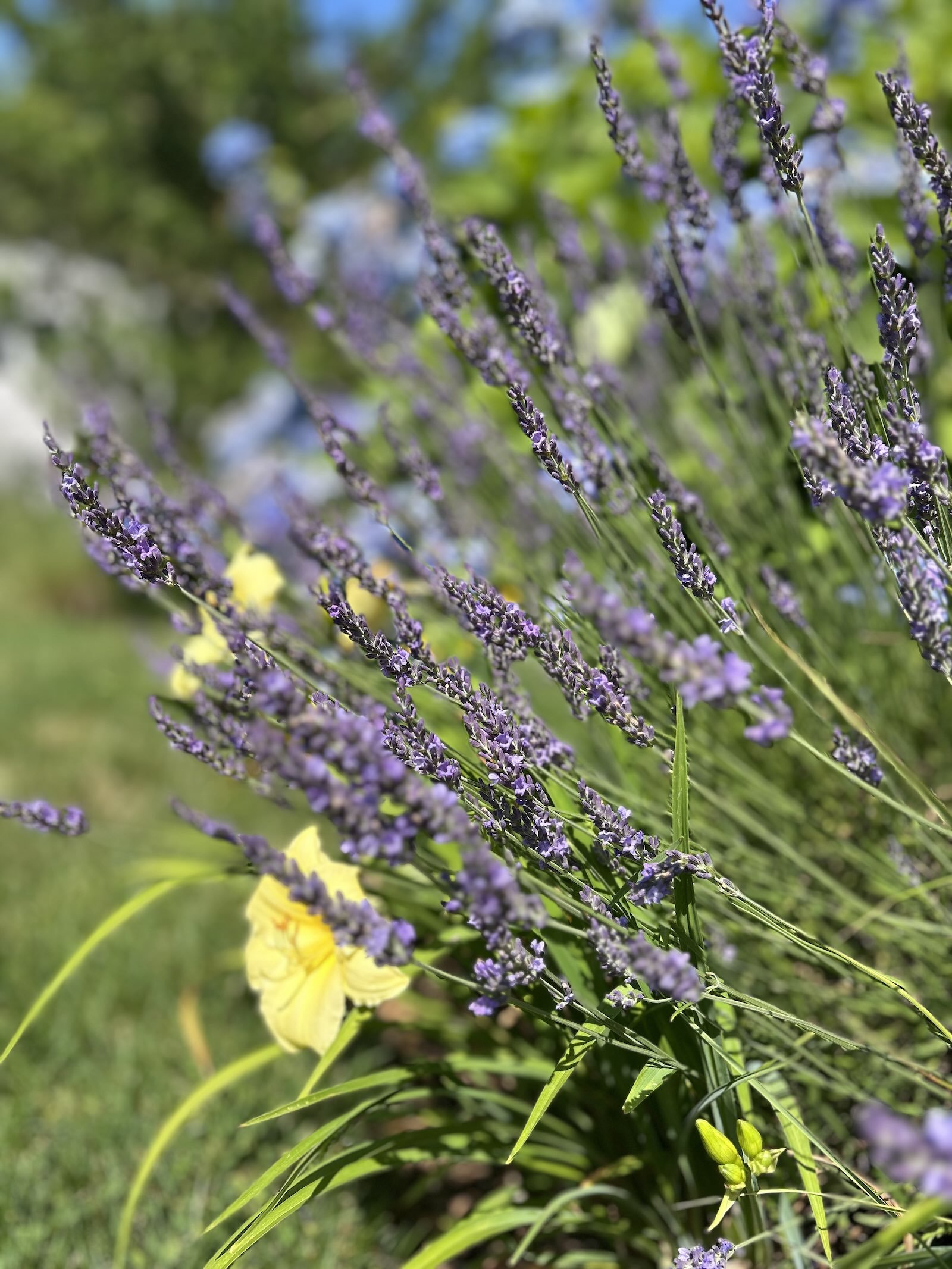
English lavender in the South bed among hydrangeas and daylilies.
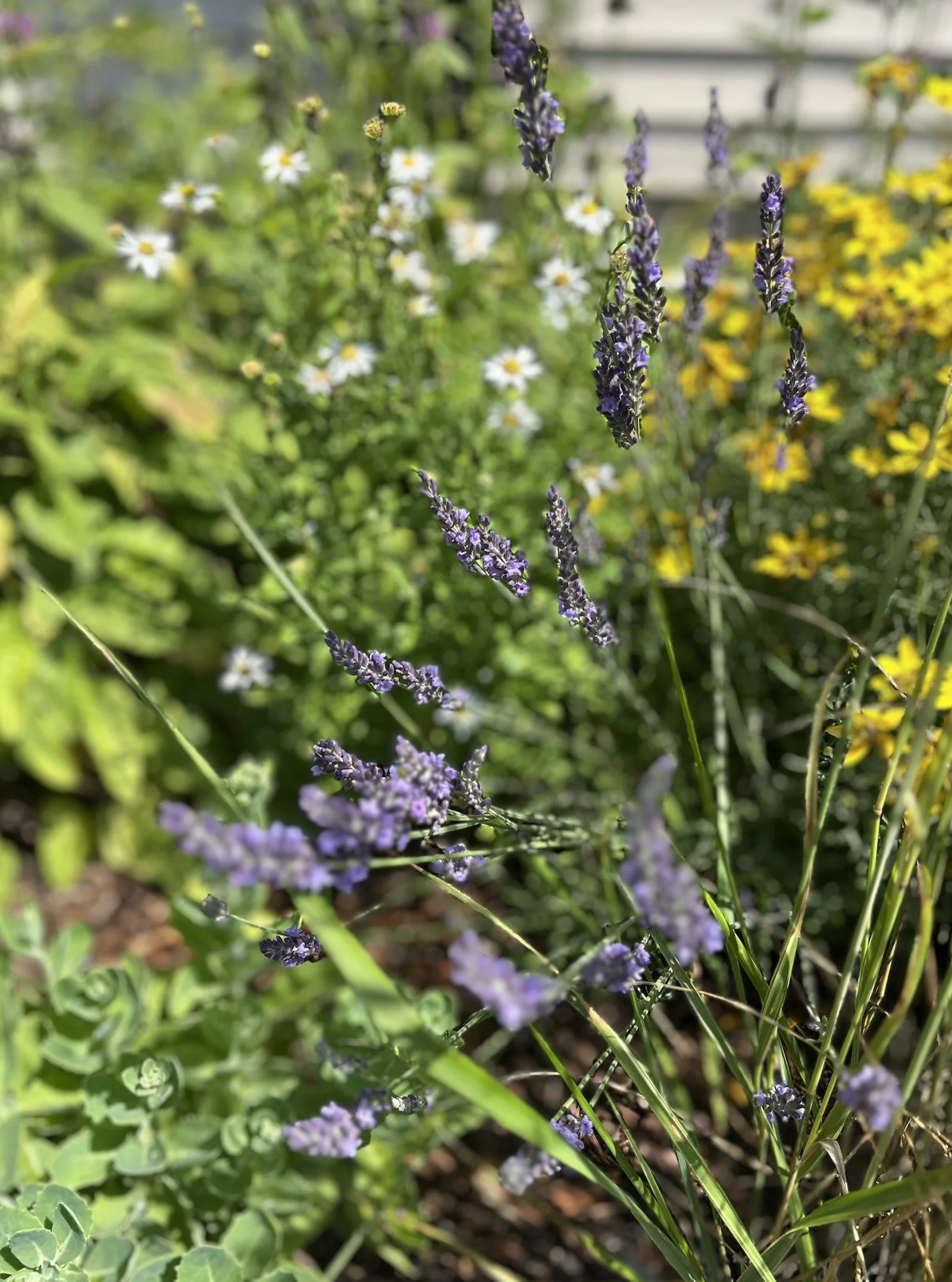
English lavender I propagated among ‘Daisy Mae’ asters, coreopsis and sedum.
I’ve lost some lavender due to dieback because of this. To avoid root rot or fungal issues, I now mix in some sand and gravel into the planting hole and plant high, mulching the surrounding soil with gravel, not bark.
Then I learned about the English hybrids (Lavandula x intermedia) known as the lavandins, and I was attracted by their unusually large foliage and colors, especially ‘Sensational’ lavender’s grey-lilac flowers.
Lavandins are among the most fragrant of all lavenders. I like to harvest my lavender in the morning, when at least 50% of the buds have flowered, with my Felco pruners.
They are also the last to bloom in the cycle. I planted some ‘Phenomenal’ and ‘Sensational’ lavandins in the front beds.
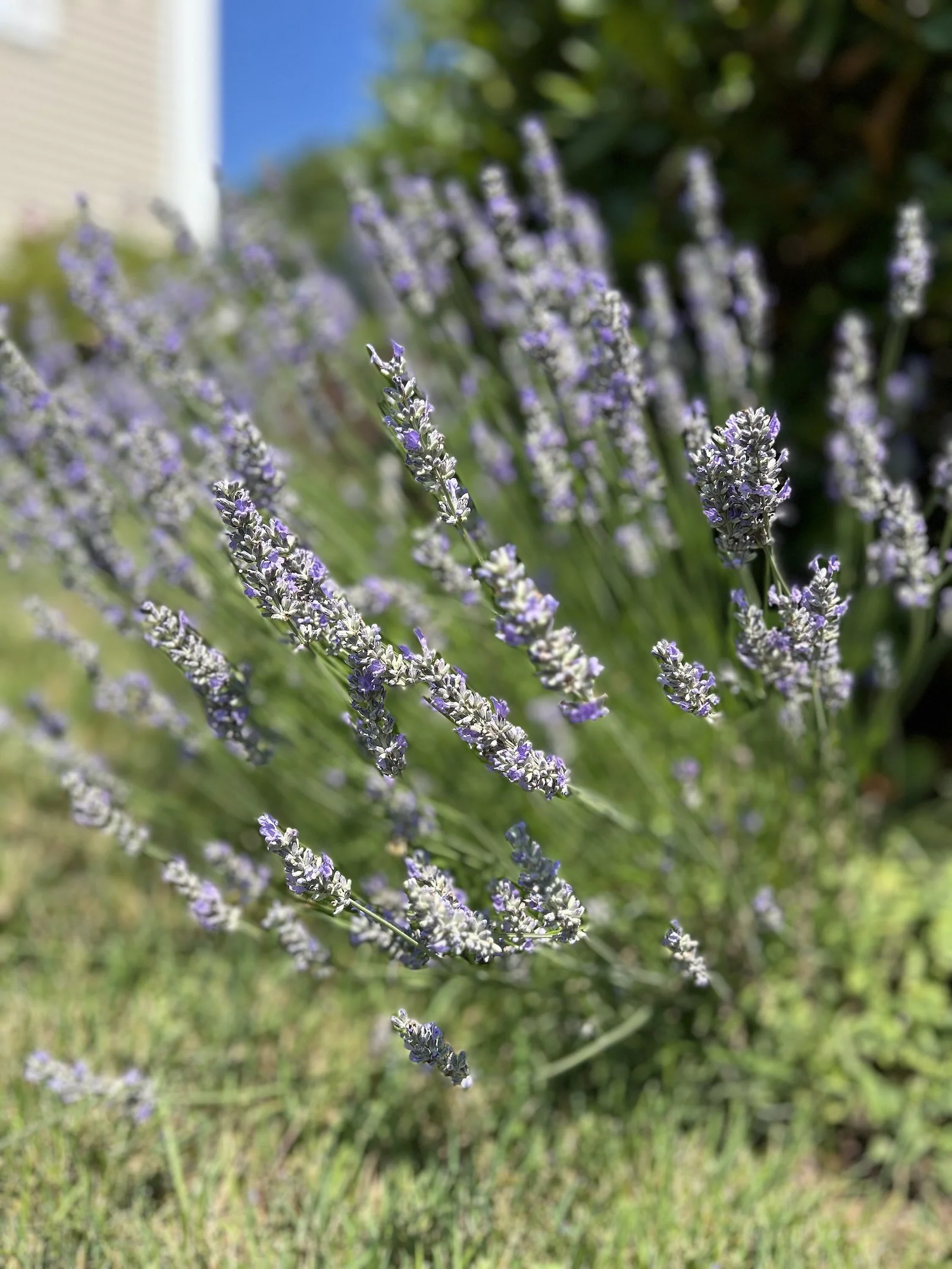
Lavandin ‘Sensational’ in The Egg Bed.
Lavandins have substantial, long, gray-green leaves, twice or more the size of English lavender, and grow much larger and faster. They look like their English lavender counterparts, but on steroids.
Some are more adept at dealing with heat than their English parents. Their size and silver-green foliage make an impression long before their flowers and scent do.
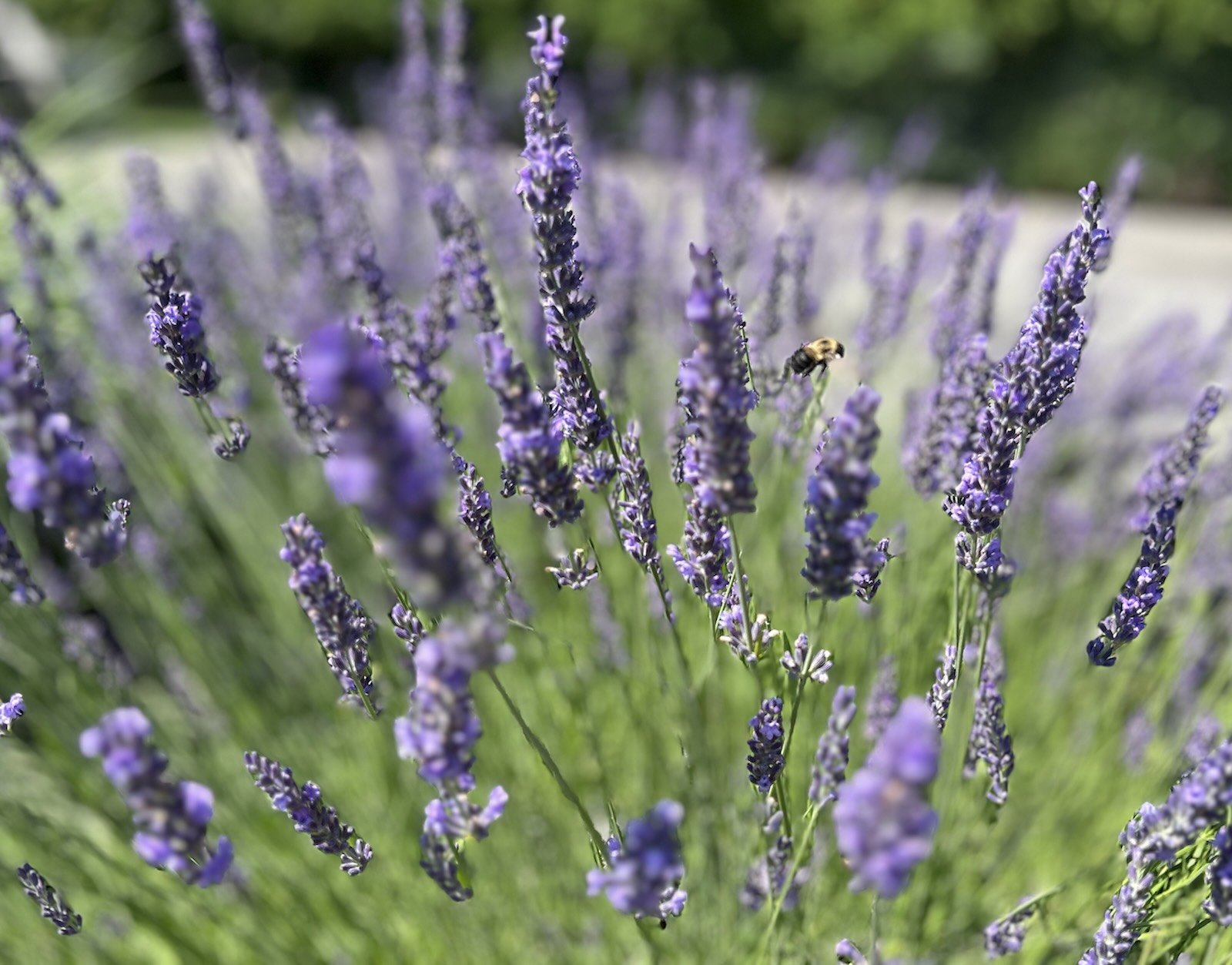
A bee enjoying ‘Phenomenal’ lavender.
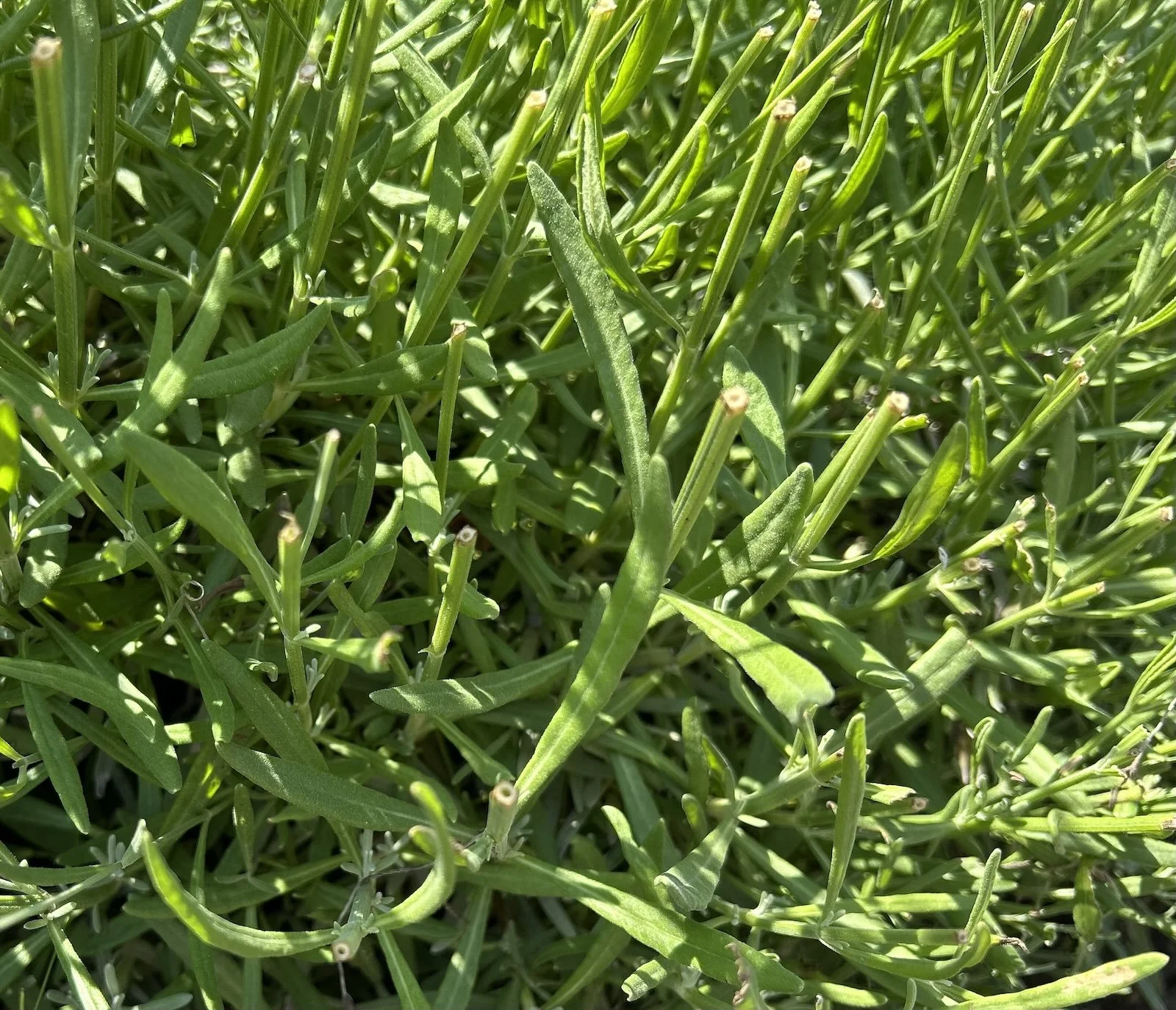
Leaves of ‘Phenomenal’ lavender.
In a garden where deer and rabbits decimate almost everything in sight, it’s nice to know that there are some plants they will leave alone.
And lavender is great for pollinators, too, with bees and butterflies regularly swarming them. They are as popular as my lace cap hydrangeas and salvias. Even the hummingbirds stop to visit.
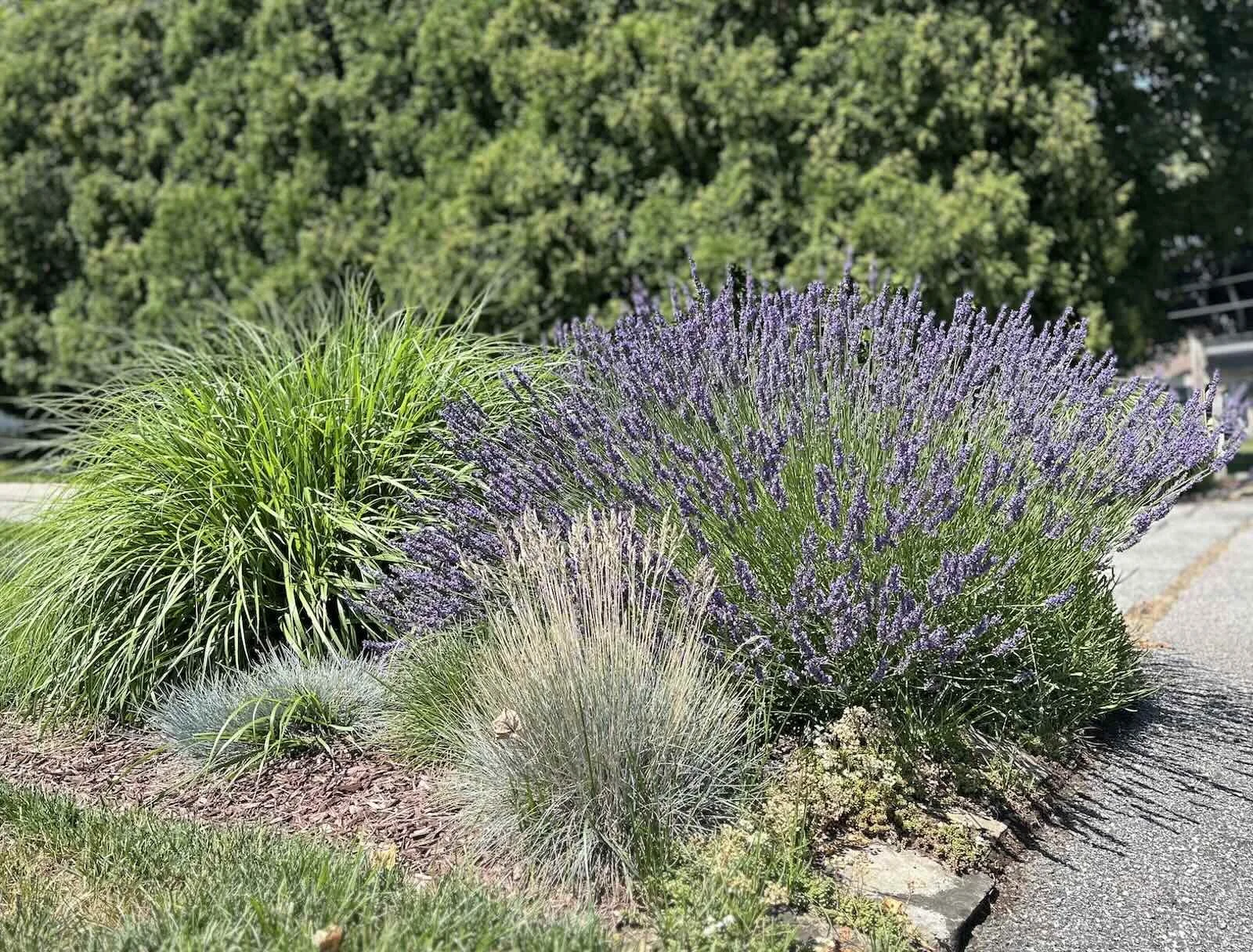
A neighbor’s lavandin among various grasses. A few years old, they are at least 4 feet wide!
I didn’t realize how big these semi-evergreen woody perennial shrubs grew. I planted them in my garden and assumed they’d stay politely compact.
They didn’t.
Three years later, I finally understood why commercial growers give them so much room.
Now it's just a matter of negotiating with the Director of Turf Operations and Obstacle Course Navigation for a little more real estate.
My picks for Best Lavenders:
For Beginners: 'Phenomenal'
For Fragrance: Lavandins, English Lavender
For Containers: Spanish lavender (treat as annual in New England) Try ‘Anouk’
For Pollinators: Lavandins
For culinary use: English lavender
Try ‘Munstead’ or ‘Hidcote’
Looking back, it's easy to see why my first Spanish lavender struggled. Beautiful as it was, it simply wasn't built for a Rhode Island winter. Some plants teach you by thriving. Others teach you by disappearing.
Advertisement
Continue Reading Mentioned in This Article Browse the Garden