
My Garden is a Work in Progress, Not a Failure
How I Applied What I Learned as an Artist to My Years of Gardening a Corner Lot
I thought I understood design. Ever since I could hold a crayon, I have been drawing. There’s a photo of me when I was about three, standing beside a bucket of Crayola crayons, happily eating one.
I studied art and design throughout high school and college. Even while working as a fashion stylist, I took continuing education classes in graphic design, typography, and art history.
Shape, color, space, form, line, value, and texture —the elements of design—were already familiar territory, as were the principles of balance, contrast, emphasis, movement, repetition, and unity. They have always been part of my vocabulary, no matter the setting.
But I would soon learn that knowing the elements and principles of design and actually designing a garden were two completely different things.
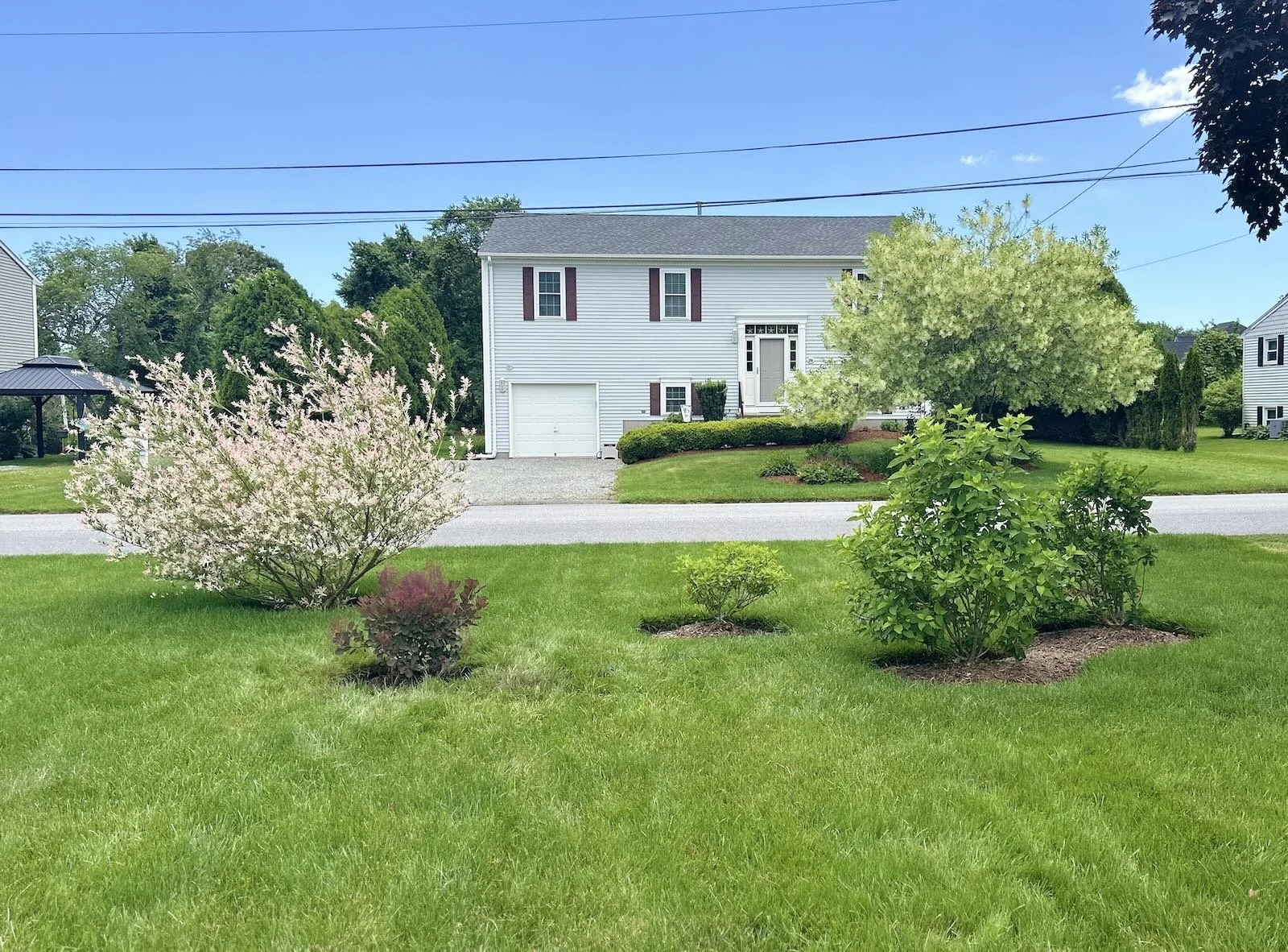
Early view from what would become the Rose Garden room. I did not want to plant a static row of trees here, as some people do to screen a street view. Rather, I wanted a mixed planting of shrubs that would provide movement and seasonal interest. I also borrowed views from both my neighbors. All photos by Parsley & Petal.
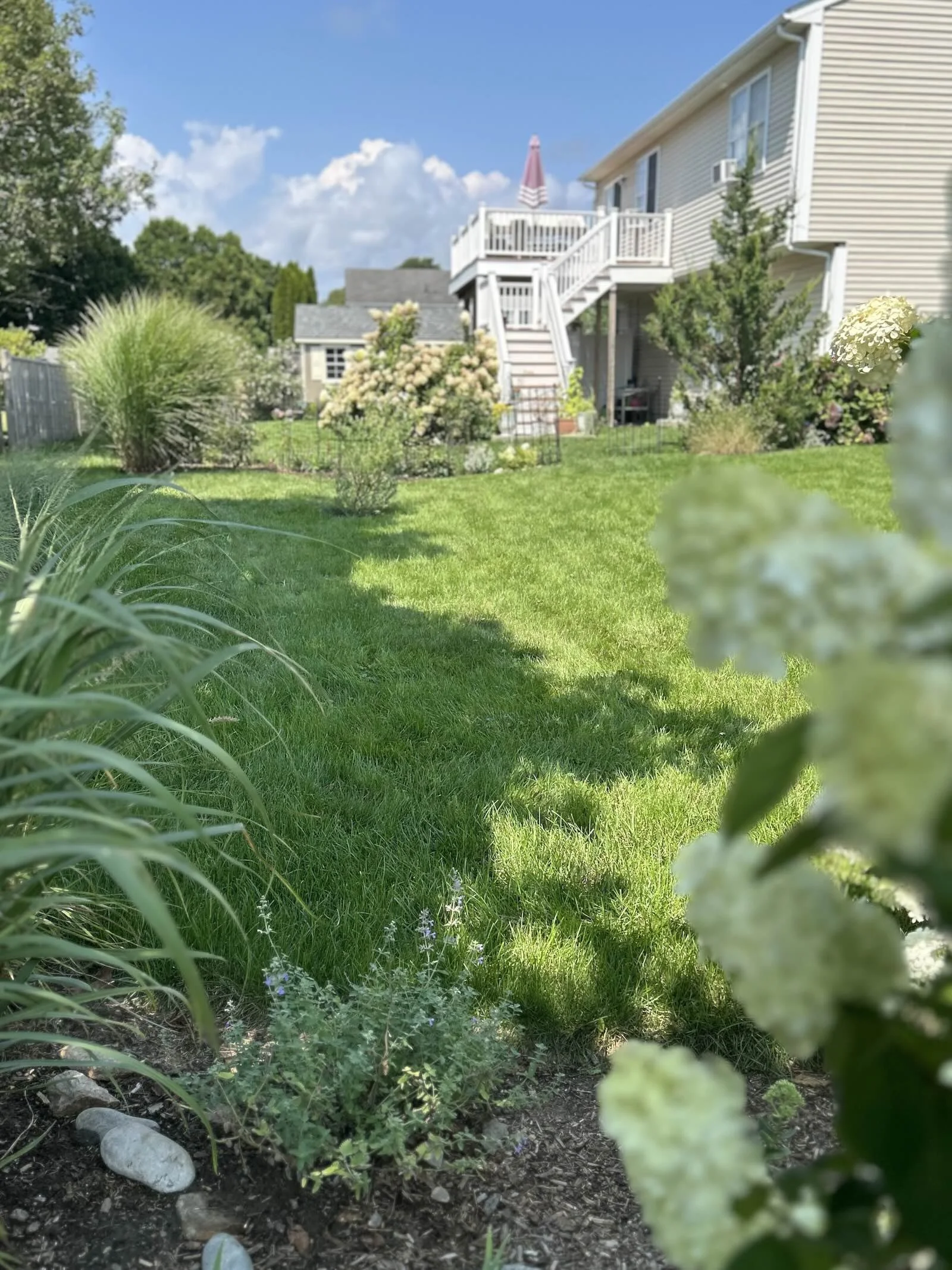
View from the back of the house, where I would later build a Rose Garden room. The hybrid tea roses by the panicle hydrangeas were too leggy and were eventually replaced by grasses.
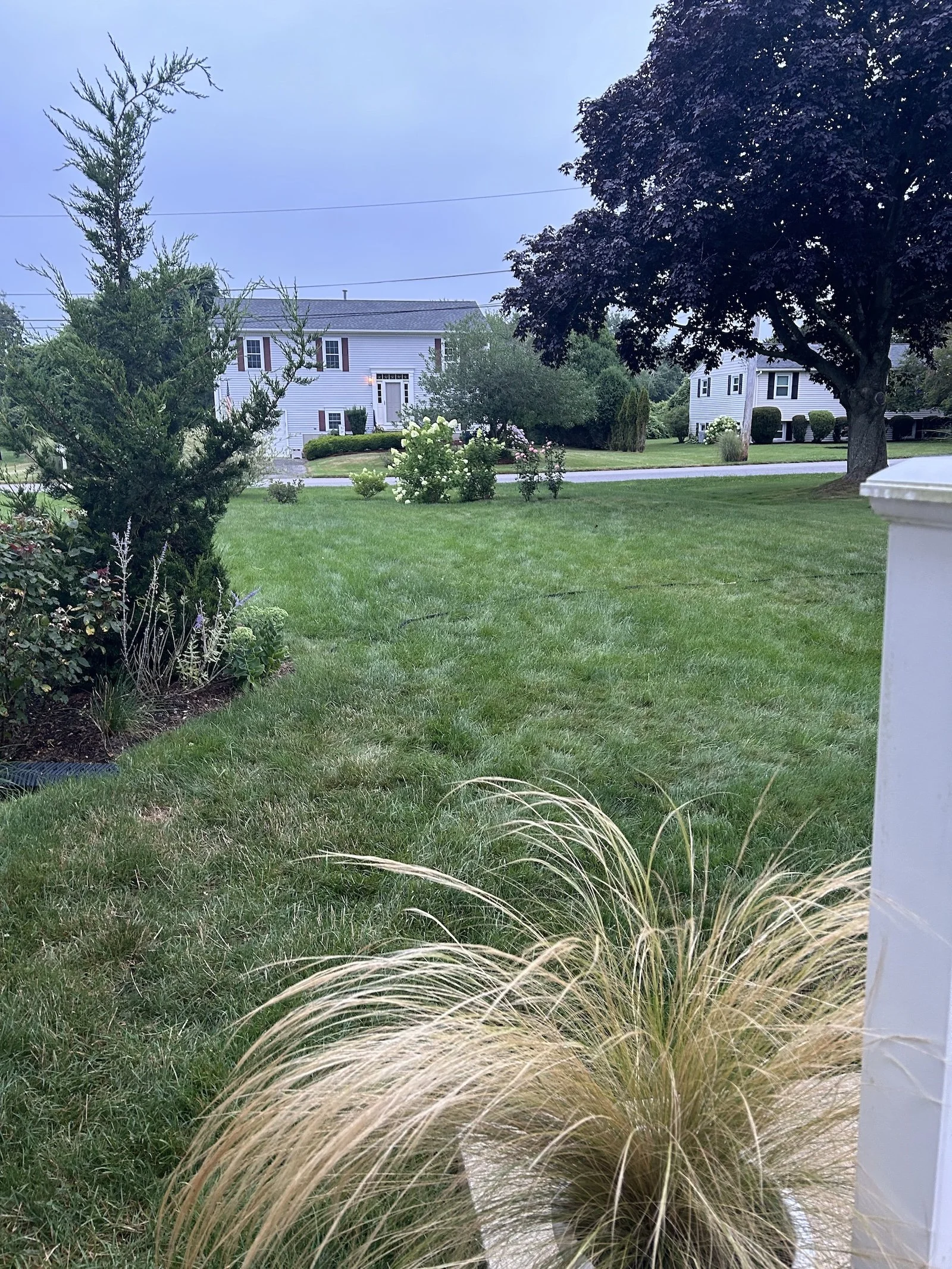
View from street, through panicle hydrangeas and grasses.
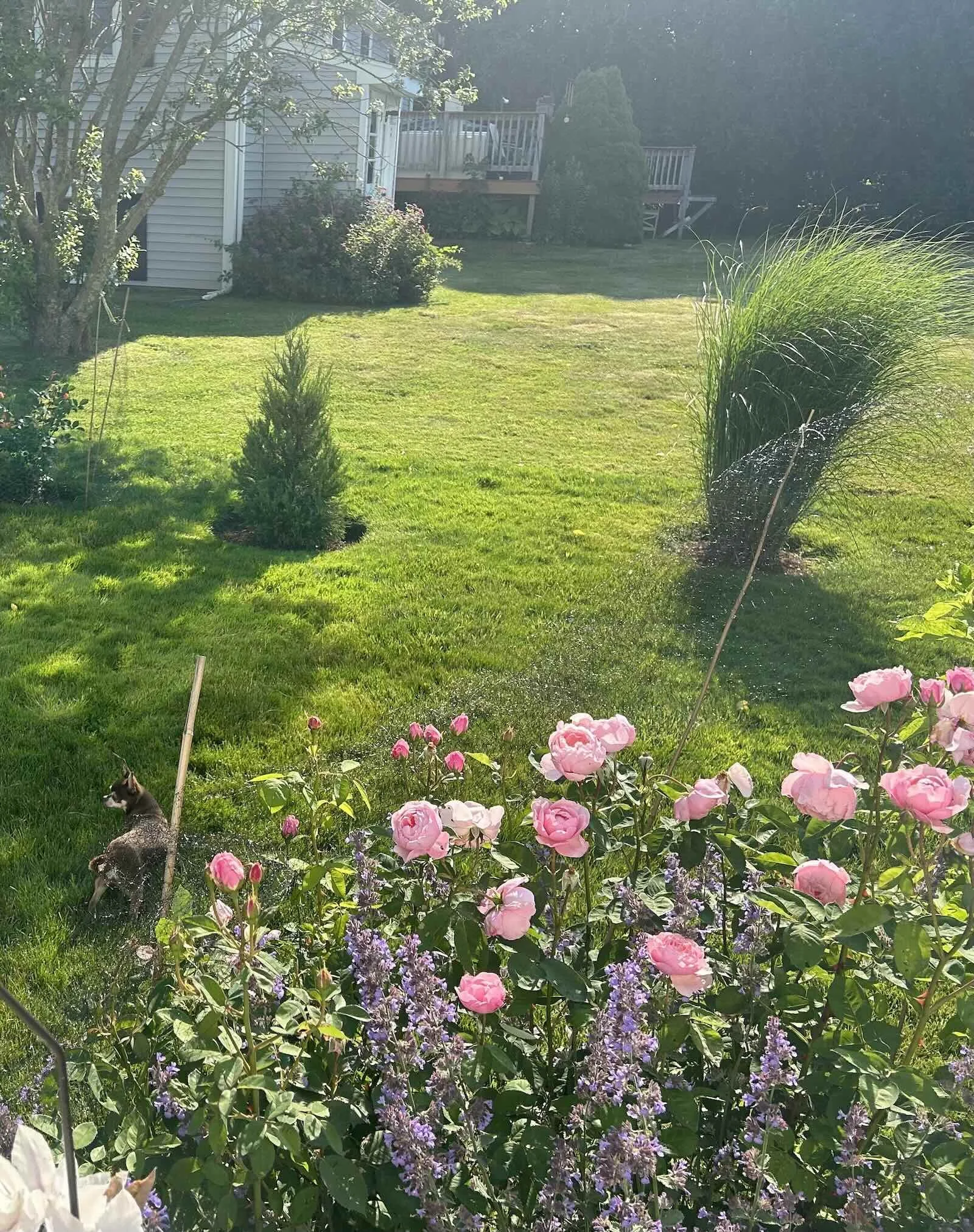
View before fence went up and Rose Garden room was created. Two bunches of grasses and a juniper were planted as part of the screening. I always knew that I wanted conifers and grasses to provide the structure and movement in the garden.
Gardens Are Always Changing
Paint, pastel, charcoal. Those stay where you put them. Plants don’t. A garden is a composition that never stops changing.
A painter has to understand paint; I had to understand plants.
And plants grow. Die. Flop. Spread. Get eaten by deer and rabbits. Bloom at the wrong time. Outgrow their neighbors. Look fabulous one year and miserable the next. Get attacked by aphids, powdery mildew, or black spot. Sun patterns change. Trees mature. Branches get snapped by a blizzard.
After I moved into my Empty Corner Lot (now the Botanical Corner Lot), I had a LOT of catching up to do. During the past ten years, I learned:
which plants thrived, because site conditions and weather taught me what would survive, not what I wished would grow.
that some plants grew differently than expected, because the garden ultimately decides what stays and what goes.
which combinations didn't work, and why plants with similar light and water needs belong together.
which plants needed to be moved because they were improperly sited, a sun-lover planted in shade, for example.
which plants needed to be removed because they were diseased or simply underperformed.
which plants were extraordinarily reliable: catmint, salvia, and sedum.
where the light really falls and which colors belong: pinks, lavenders, whites, and yellows.
which forms work together: mounding, upright, and airy; low, creeping, and trailing.
where the garden needs more, or less, to create both symmetrical and asymmetrical balance.
Eventually, I knew both my materials and my garden.
The Year the Garden Came Together
This year, I finally feel like the garden is coming together. I’m applying the principles of balance, contrast, emphasis, movement, repetition, and unity with greater confidence.
Repetition, Movement and Unity
Now when I go shopping, I’m not constantly searching for another new plant or chasing the latest trend. I know my palette and my theme, and I’m applying them with greater ease. After living here for years, I know where, and for how long, the sun falls across the garden, where the deer and rabbits tend to graze, and what plants thrive here.
I am focused on plants that will endure and on giving the garden a structure that will last.
Instead of purchasing many different plants, I choose to buy or propagate more of what I already have. In my propagation experiments this summer, I’m multiplying salvia, sedum, agastache, speedwell, and aster, sometimes using rooting hormone.
Planting them in groups and drifts creates cohesion and rhythm, helping the garden feel like a whole rather than a collection of individual plants.
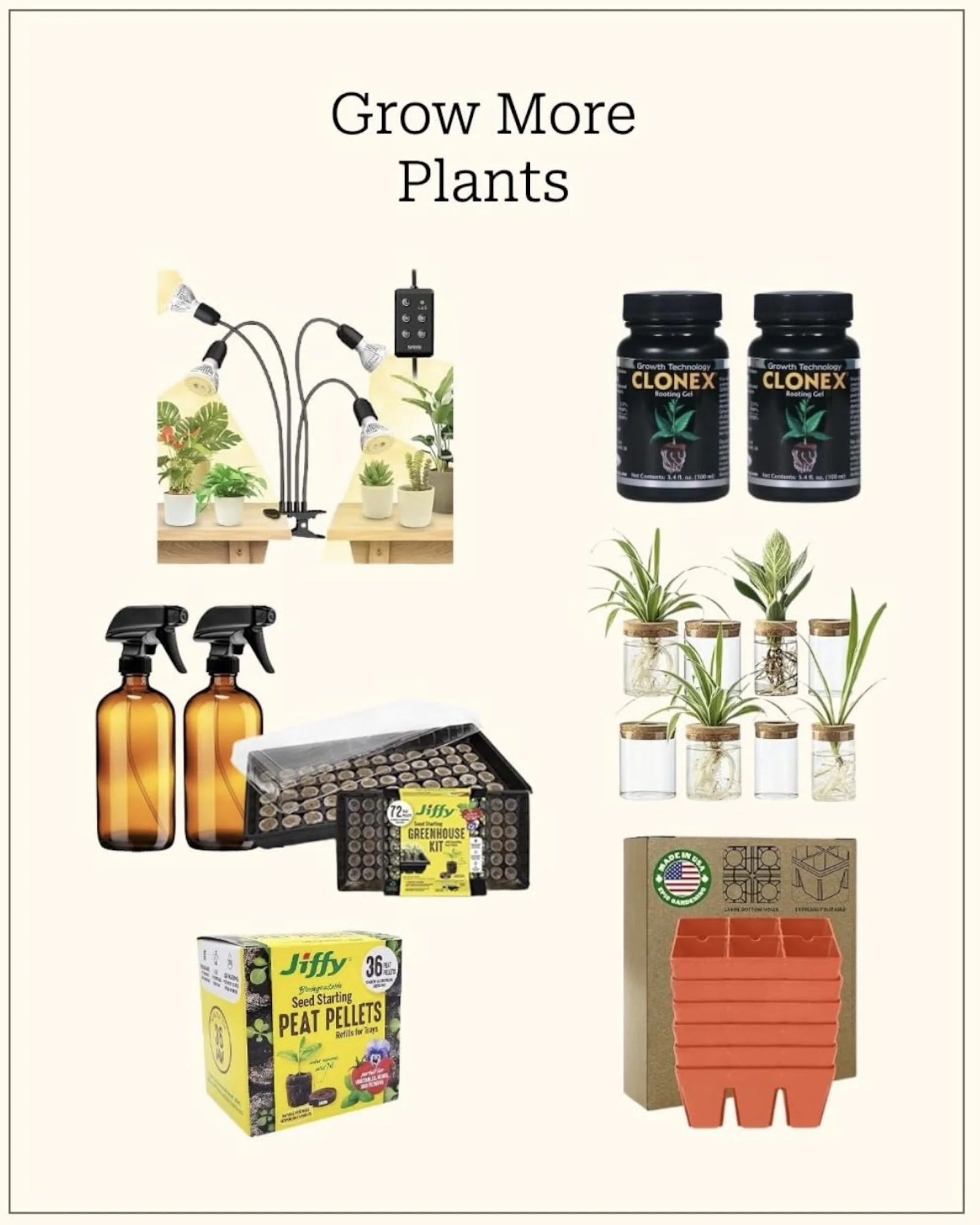
For starting seeds, rooting cuttings, and keeping the propagation experiments going. Shop here.
A huge drift of coreopsis along the South Garden bed provides a long season of interest while repeating the pops of yellow that appear throughout an otherwise subdued palette of creams, pinks, and lavender.
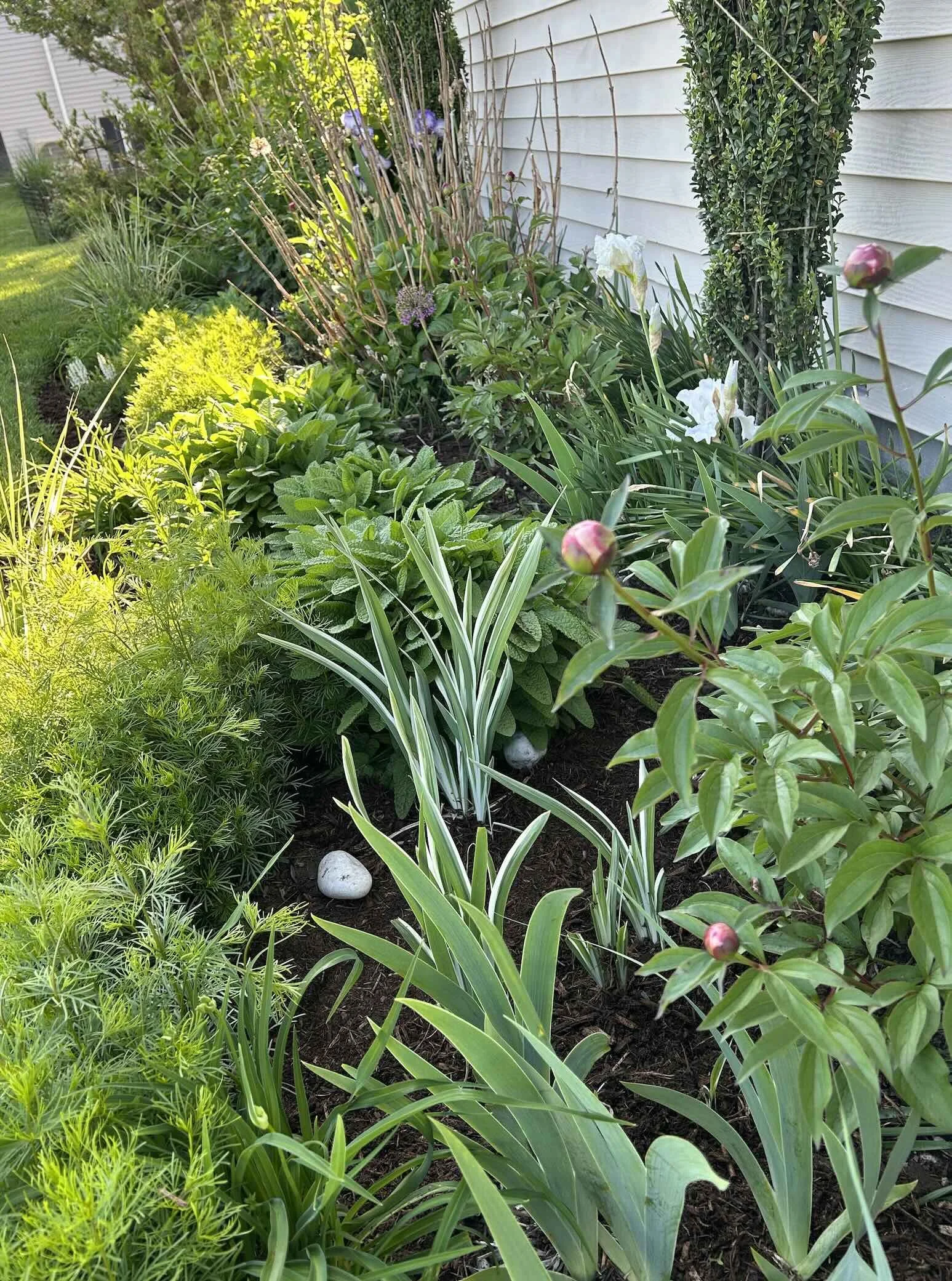
Coreopsis drift in South bed.
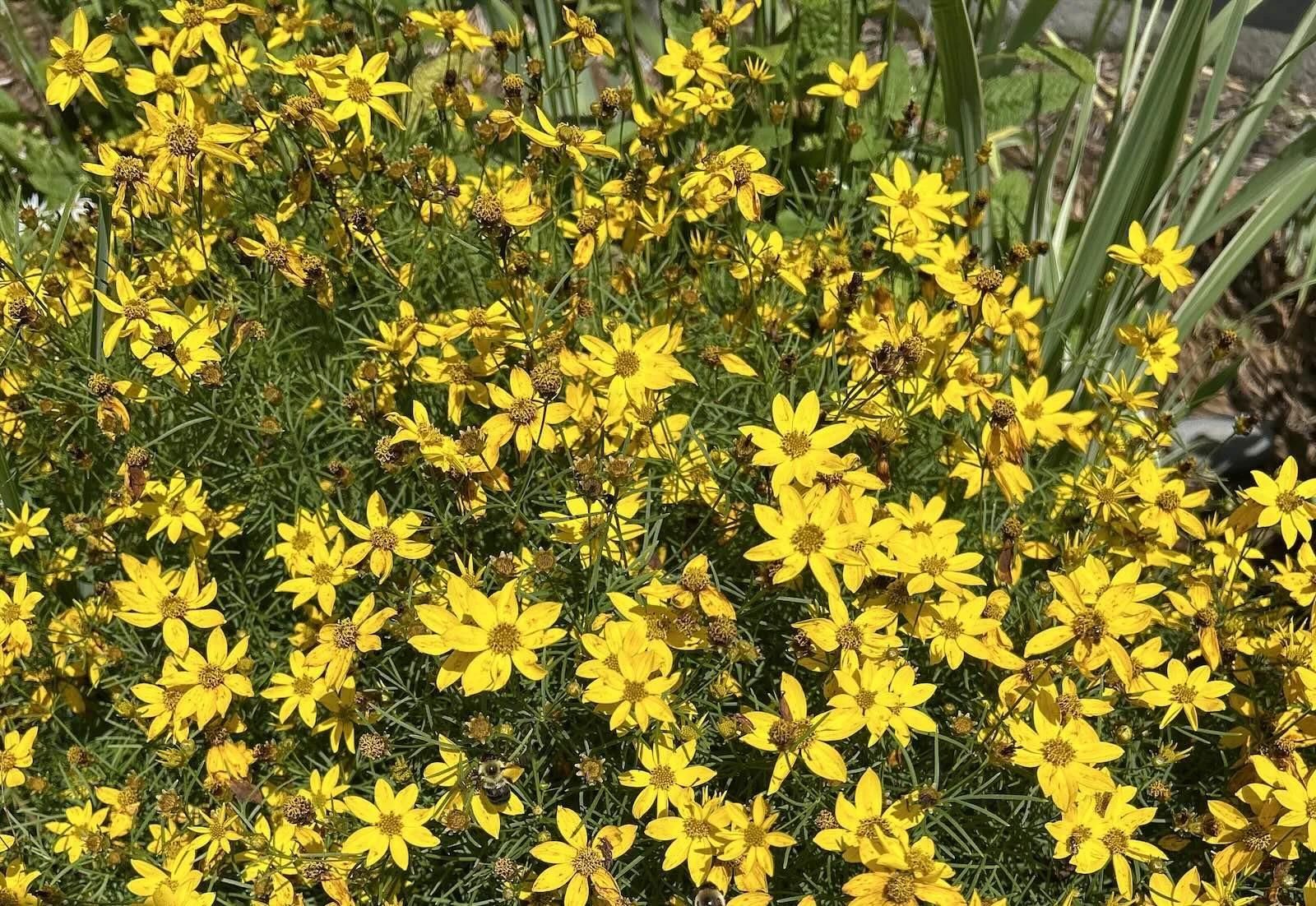
Coreopsis in bloom.
Recent purchases include a Japanese dappled willow that repeats another in the landscape, creating soft, airy movement and a sense of tranquility.
Two other panicle hydrangeas I’m excited to add are Pinky Winky Prime, which I’m placing near the Stewartia to extend the season into fall, and Bobo hydrangeas. I’ve wanted the diminutive Bobos for a long time; they'll dot the landscape like little sheep.
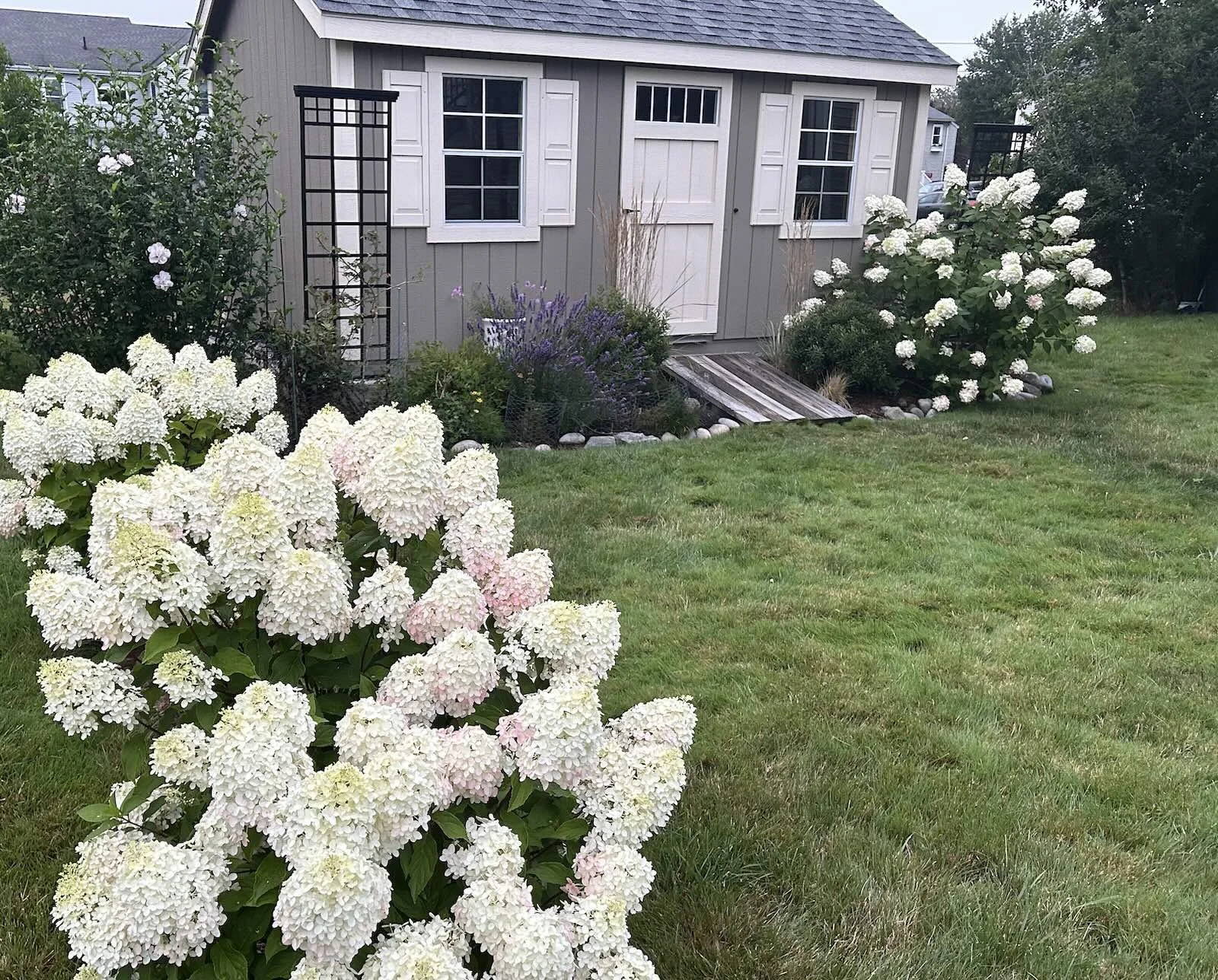
The Hydrangea room in the backyard.
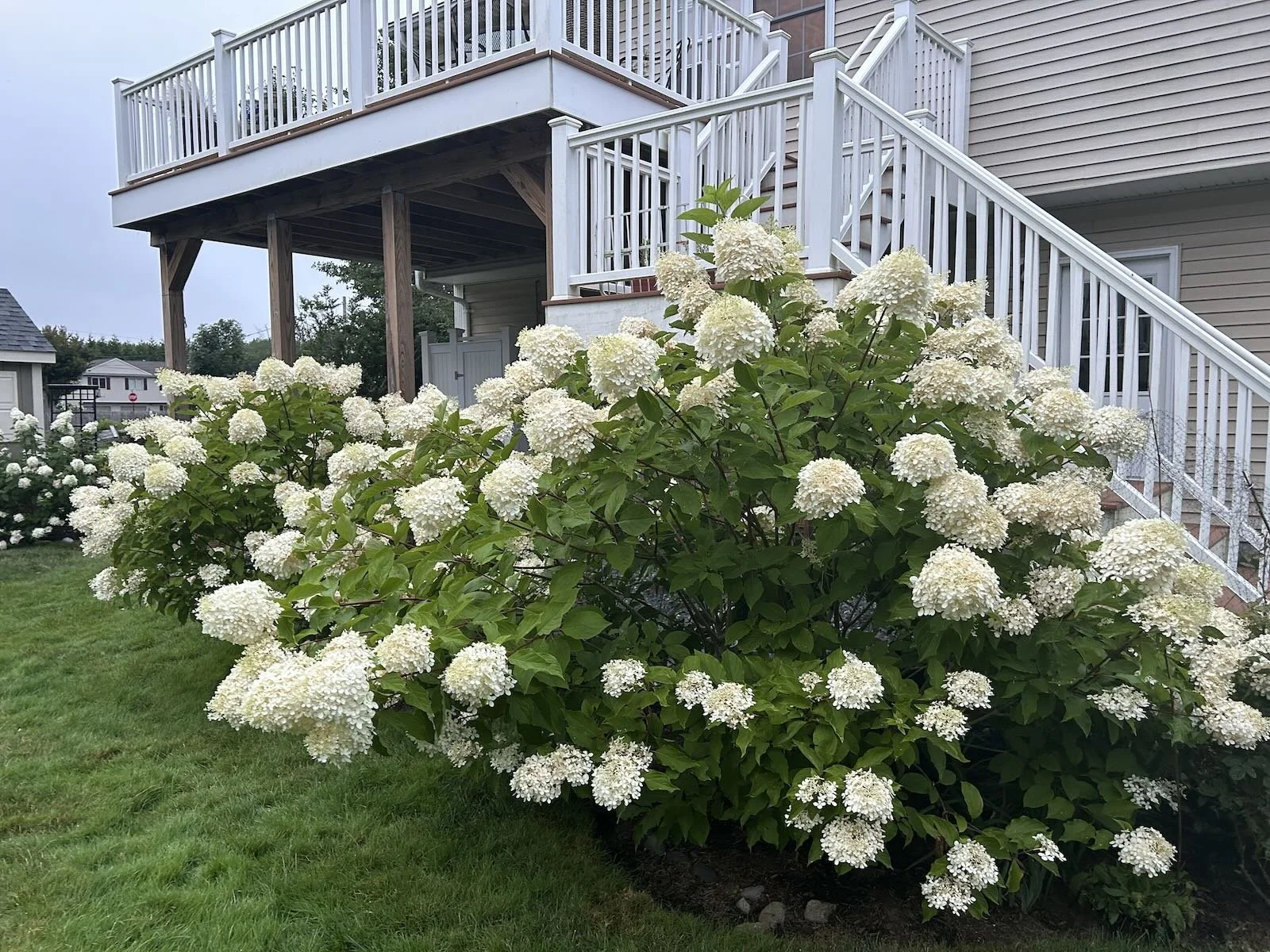
The Hydrangea room in the backyard.
Emphasis (Focal Point), Balance and Contrast
The Colorado spruce ‘The Blues,’ Acrocona spruce, and Hetzi Chinese juniper provide evergreen, sculptural focal points throughout the landscape. (‘The Blues’ was often mistaken for an intruder by the Chief Security Officer when it was first planted.)
In the South Garden, two upright Sky Pencil hollies punctuate the bed. Their vertical forms contrast with and balance their neighbors, mounding hydrangeas and peonies.
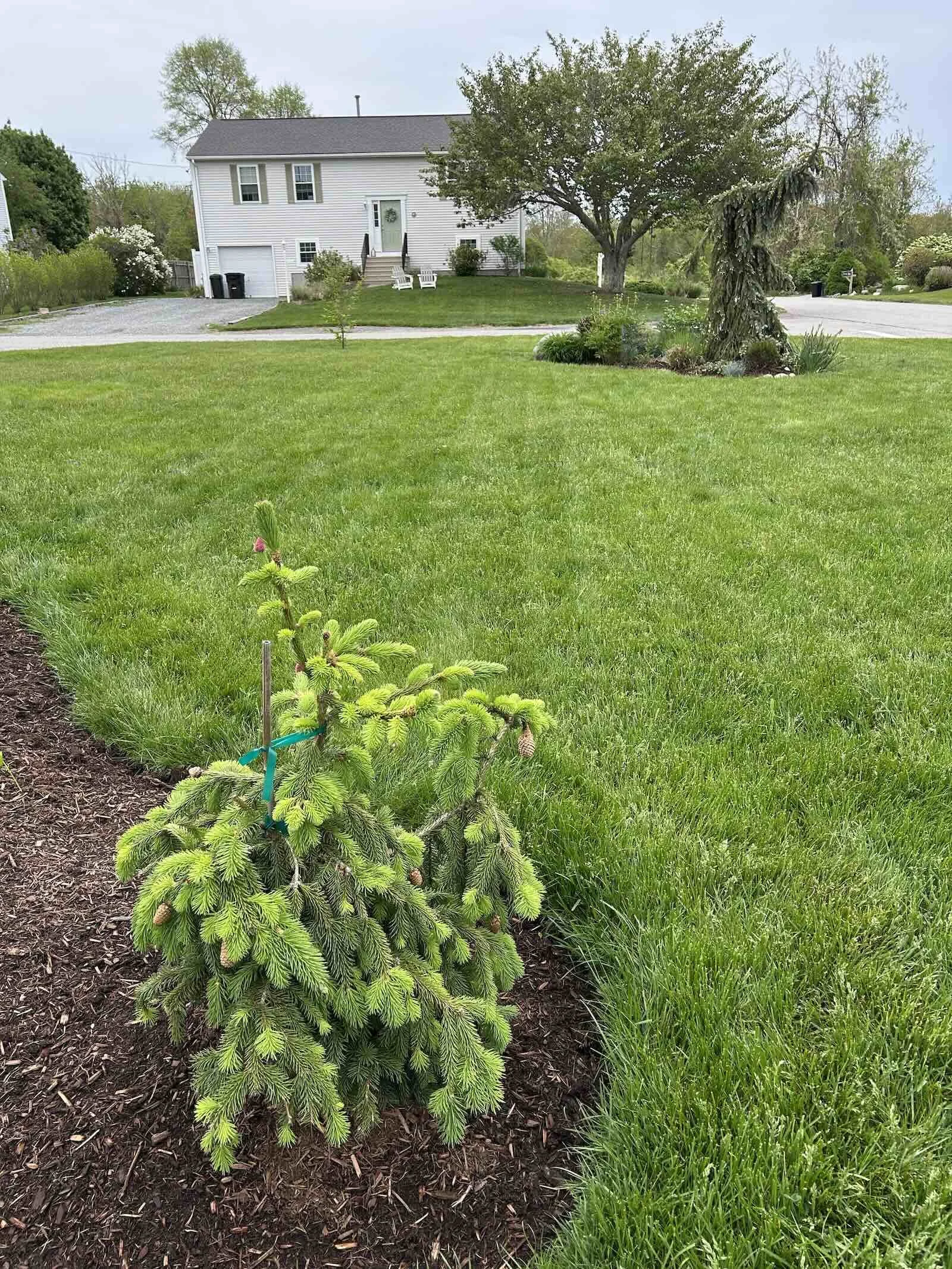
The Acrocona spruce has pink cones in spring, and the Colorado Blue Spruce in the corner berm.
Likewise, in the neighboring berm, dense, mounding hydrangeas balance the graceful movement of ornamental grasses.
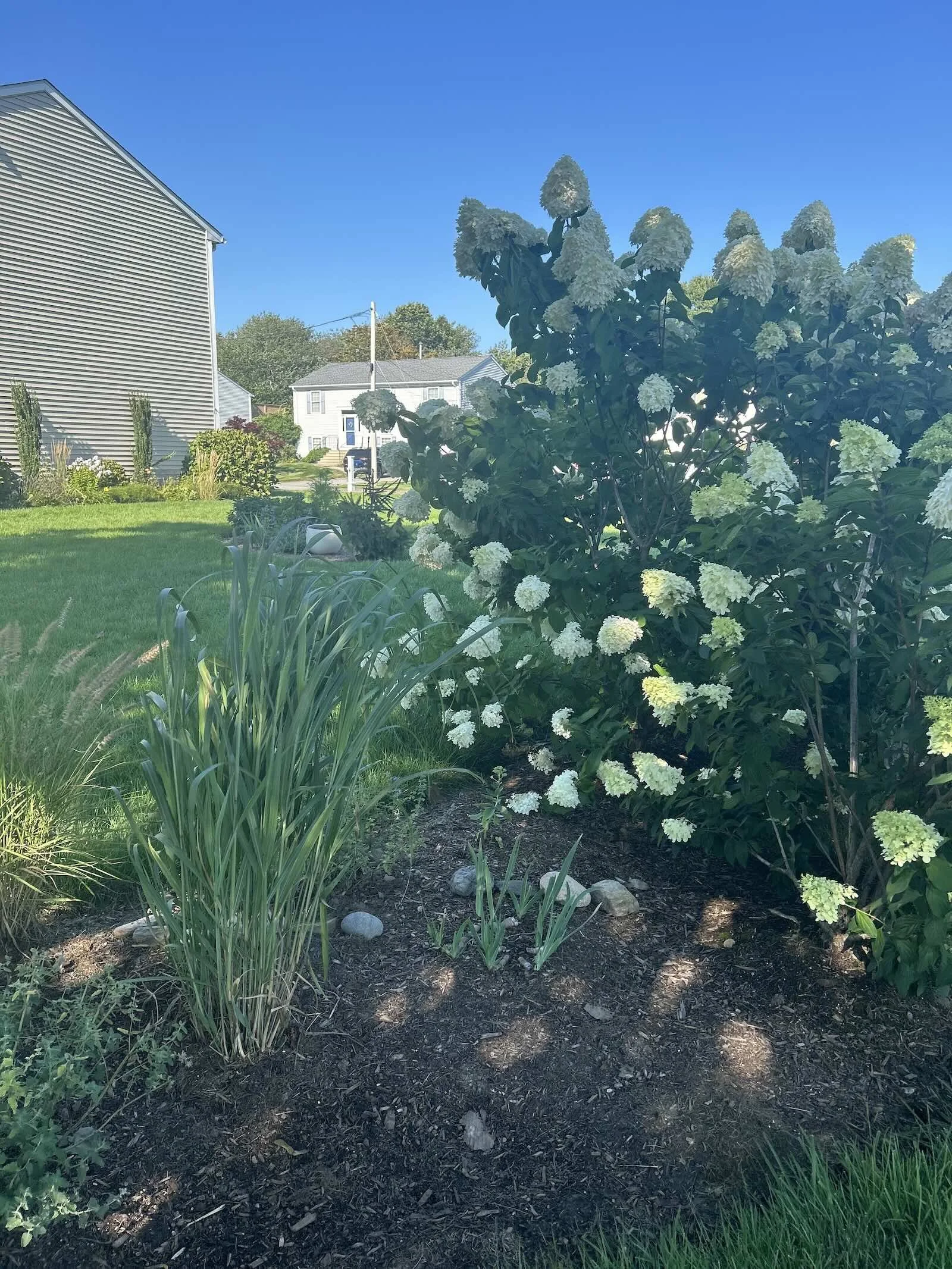
Hydrangeas with ornamental grasses, which recently replaced the hybrid tea roses. The Japanese sky pencil hollies with hydrangeas can be seen in the background.
My deciduous anchors provide seasonal highlights: the dogwood’s pink flowers in spring; the Japanese Stewartia’s white flowers in summer; vibrant foliage in fall; and exfoliating bark in winter.
Contrast comes not only from form and texture, but also from color. Some of my favorite combinations are purple alliums with apricot roses, or lavender with yellow daylilies or coreopsis, complementary colors on the color wheel that are especially pleasing to the eye.
Plants Don't Live in Isolation
One of the biggest lessons I’ve learned is that I can’t consider a plant in isolation. It has neighbors. Before adding something new, I now think about what will be growing beside it. Do they have similar light and water requirements? Will their forms and textures complement each other? Will the colors work together? What will the composition look like when one plant is blooming, and another isn’t? And, perhaps most importantly, what will they look like several years from now?
I had to consider all of this recently when I pulled two underperforming peonies from the South Garden and replaced them with two roses: David Austin’s ‘Strawberry Hill,’ which will eventually climb an obelisk, and Flavorette, an edible honey-apricot rose from Proven Winners.
The decision sounds simple. It wasn’t.
The roses sit near a mophead hydrangea, which has greater water needs. They have to contend with deer pressure. ‘Strawberry Hill’ introduces an obelisk and another vertical element into the composition. By removing the peonies, I gave up the impact of a mass planting in exchange for a longer bloom season.
Then there was color. Would the roses work with the rest of the South Garden as their colors changed throughout the season?
These are the kinds of questions I ask now. Not simply, Do I like this plant? But Does this plant belong here?
Companion planting isn't only about which plants can grow together. It's also about which plants make each other better.
A Garden Is Never Finished
When I first started gardening, I tried growing agapanthus because my mother loved them. So, naturally, when I learned that a garden in Newport had successfully grown them, I was determined to grow them, too. I tried for years, to no avail. They kept dying.
Eventually, I gave up and retired the tags to a section of my garage wall I now call the “Graveyard.” Every time a plant dies, its tag goes there.
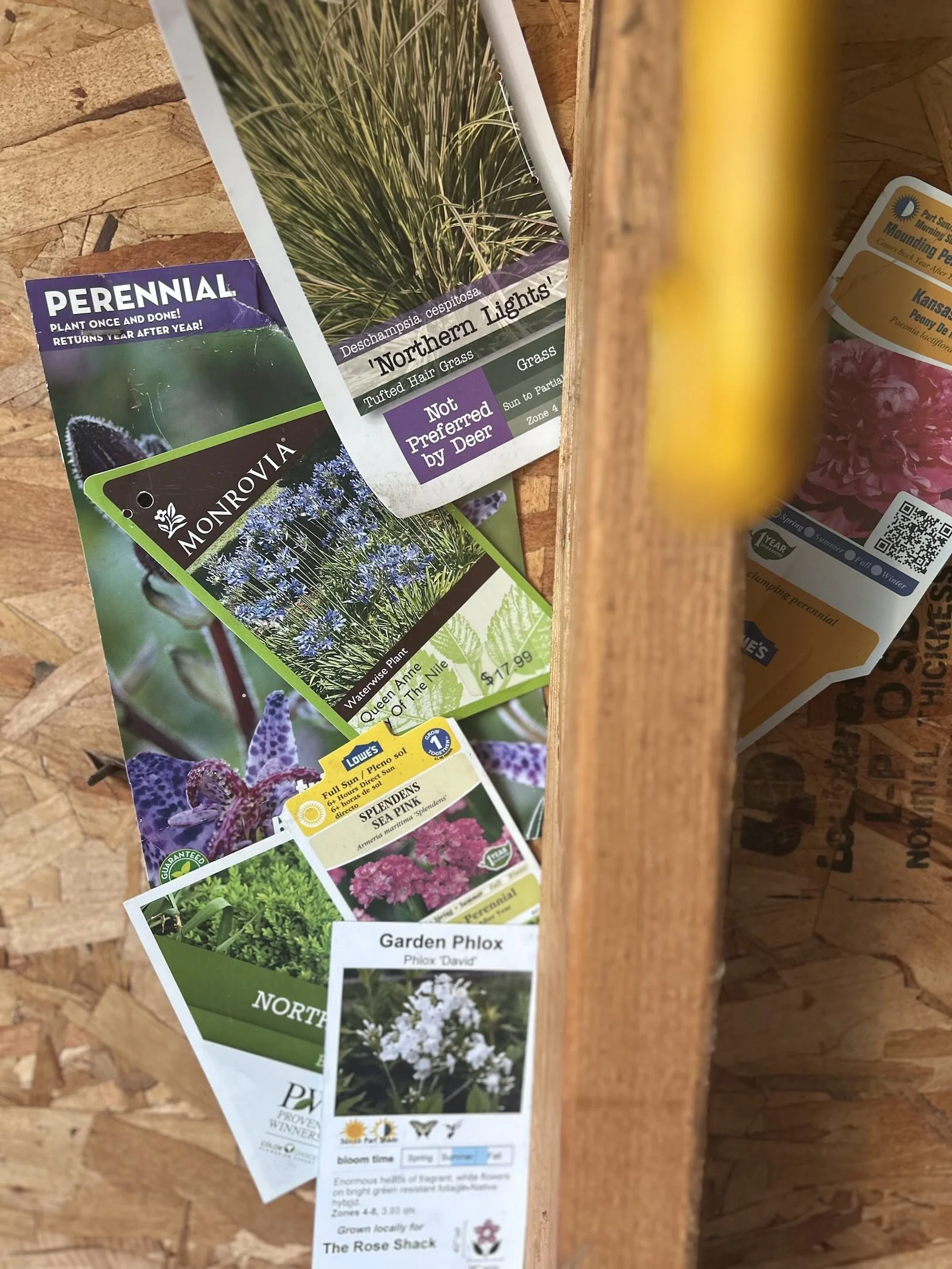
The “Graveyard” of plants in my garage, a record of my work in progress.
But I’ve learned over time that moving a plant isn't failure. Removing something isn't failure. Dividing something and repeating it elsewhere isn't failure.
A garden isn't designed once. It's always changing.
Ten years later, I realized: Design taught me how to compose. Gardening taught me how to compose with change.
Whenever someone says, “You have such a nice garden,” I always respond, “Thanks. But it’s a work in progress.”
It always will be.
Continue Reading